Water infiltration through the wall: what to do?
Water seeping through a wall can lead to structural damage and mold. Learn how to respond quickly and prevent further issues.
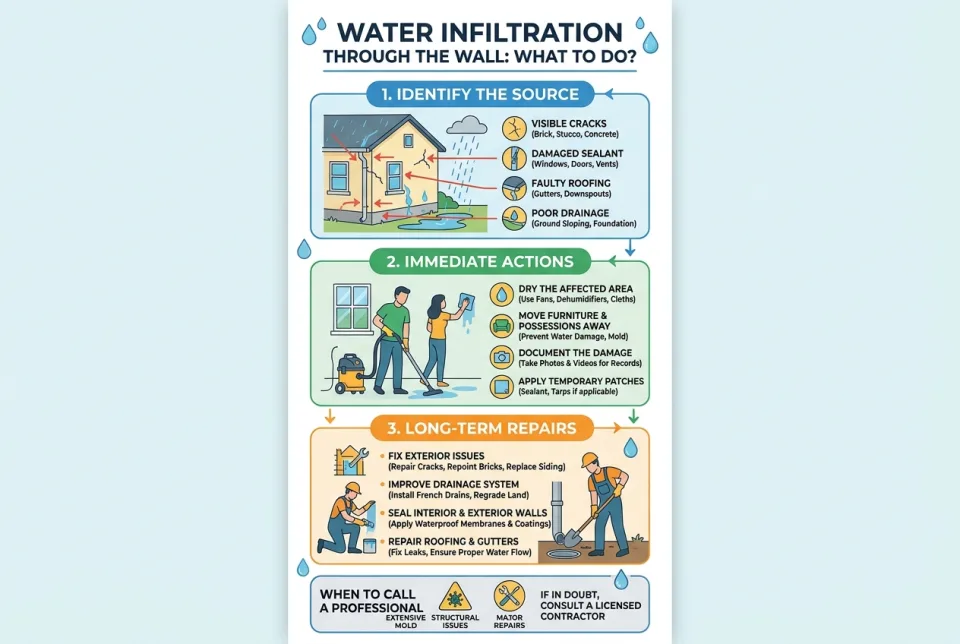
Quick answer
5 steps — read this before anything else
-
1
Stop the water source if possible (e.g., shut off supply, repair leaks).
-
2
Remove standing water and dry the area immediately.
-
3
Document damage with photos for insurance claims.
-
4
Contact a professional to assess and repair the infiltration.
-
5
Monitor for mold growth and address it promptly.
Warning
Water near electrical outlets or wiring can cause electric shock or fire. Turn off power at the breaker if safe, and evacuate if you see sparks or smell burning.
Discovering water infiltration through a wall can be alarming, but a quick, methodical response can minimize damage and health risks. This guide outlines steps to take when you notice water coming through walls, ceilings, or floors.
What is happening?
Water infiltration occurs when water penetrates the building envelope through cracks, gaps, or porous materials. Common causes include plumbing leaks, roof damage, poor drainage, or high humidity. Ignoring it can lead to structural deterioration, mold growth, and electrical hazards.
Emergency warning
If the infiltration is severe, near electrical outlets, or accompanied by sagging ceilings or structural cracks, evacuate and call local emergency services immediately. Water and electricity are a dangerous combination.
What to do first
- Stay safe: Avoid contact with water if electrical outlets or wiring are nearby. Turn off power at the breaker if it is safe to do so.
- Stop the source: If the leak is from plumbing, shut off the main water valve. For roof leaks, place buckets to catch drips and move valuables away.
- Remove standing water: Use a wet/dry vacuum or towels to soak up water. Dry the area with fans and dehumidifiers to prevent mold.
- Document the damage: Take photos and videos of the affected areas and any damaged belongings for insurance purposes.
- Call a professional: Contact a qualified contractor or water damage specialist to assess the extent of infiltration and recommend repairs.
What NOT to do
- Do not ignore the problem: Small leaks can quickly become major structural issues.
- Do not use electrical appliances in wet areas: This includes vacuums or fans if the area is still wet and power is on.
- Do not attempt major repairs yourself: Improper fixes can worsen damage or lead to mold.
- Do not delay drying: Mold can start growing within 24-48 hours.
When to call for help
Seek professional help immediately if:
- Water is near electrical panels or outlets.
- The wall is bulging or the ceiling is sagging.
- You suspect a sewage leak (which requires special handling).
- You cannot identify or stop the source.
- Mold is visible or you experience health symptoms like coughing or headaches.
What to monitor
After the initial response, monitor the area for:
- Mold growth: Check for musty odors or discoloration.
- Structural changes: Look for new cracks or warping.
- Recurring leaks: Note if water returns after drying, indicating an unresolved issue.
How to prevent it
- Maintain your roof and gutters: Clear debris and repair damaged shingles.
- Check plumbing regularly: Fix leaks promptly and insulate pipes to prevent freezing.
- Improve drainage: Ensure gutters direct water away from the foundation.
- Seal cracks: Inspect exterior walls and seal any openings.
- Control indoor humidity: Use exhaust fans and dehumidifiers in damp areas.
Acting quickly can save you from costly repairs and health hazards. If you are unsure about the severity, consult a professional. Remember, this guide is for informational purposes; always prioritize safety and seek expert advice for serious issues.
Spotted an error? Report it — we correct factual mistakes promptly.
Read next
Wet carpet after a leak: what to do?
A wet carpet after a leak can lead to mold and structural damage if not handled quickly. Learn the safe steps to dry it, prevent mold, and know when to call a professional.
Mold growing behind furniture on outer walls: what to do?
Mold behind furniture on outer walls is usually caused by trapped moisture and poor air circulation. Learn safe steps to remove it, fix the cause, and prevent it from returning.
Ponding water around the house foundation: what to do?
Standing water near your foundation can lead to costly water damage and structural issues. Learn how to identify the cause, take immediate action, and prevent future problems.
Swimming pool water level dropping daily: what to do?
A pool that loses water every day is usually leaking or evaporating too fast. Learn how to tell the difference, find the cause, and fix it safely.
Related handy tools
Checklists, decision guides, scenarios and quizzes for the same situation.