Hot water tank burst: what to do?
A burst hot water tank can cause serious water damage and poses electrical and burn risks. Act quickly to shut off the water and power, then call a professional.
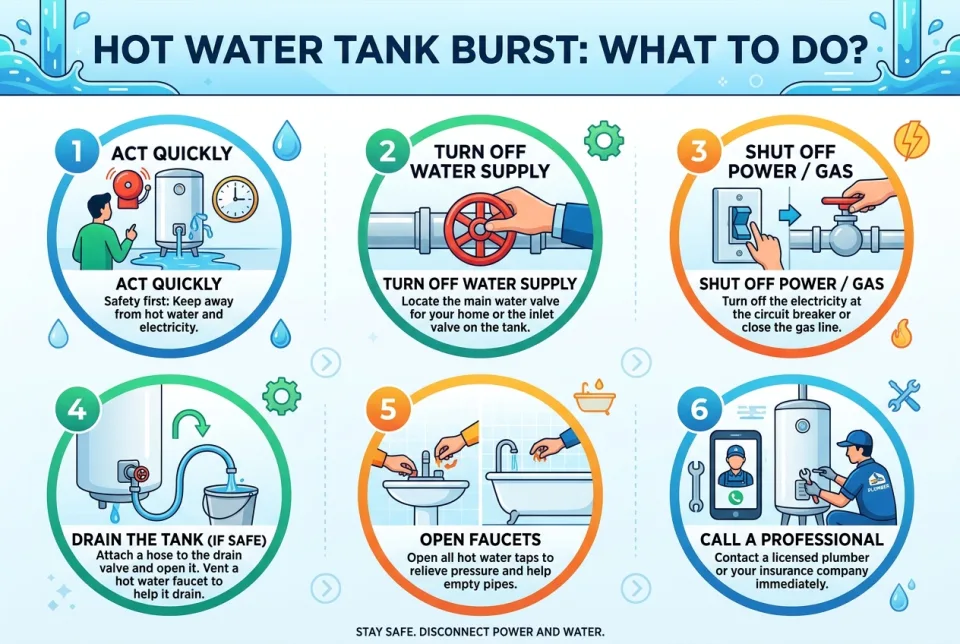
Quick answer
5 steps — read this before anything else
-
1
Shut off the water supply to the tank (turn the valve clockwise).
-
2
Turn off the power to the water heater at the breaker or gas valve.
-
3
Open a hot water tap to drain pressure and reduce flooding.
-
4
Call a licensed plumber immediately.
-
5
Document damage with photos for insurance.
Warning
Risk of electrical shock if water reaches electrical outlets or the panel. Do not touch electrical devices while standing in water. If you smell gas, leave immediately and call emergency services.
Important — please read
This content is general educational and informational only, and is not a substitute for professional medical advice, diagnosis or treatment. Always seek the advice of a qualified health provider with any questions you may have about a medical condition. Never disregard or delay seeking professional medical care because of something you read here. In an emergency or life-threatening situation, call your local emergency services (police, fire or ambulance) immediately.
A burst hot water tank releases scalding water and can cause rapid flooding, electrical hazards, and structural damage. Stay calm and act fast to minimize harm.
What is happening
The tank has ruptured, likely due to corrosion, high pressure, or age. Water may be pouring out, and if the heater is electric, there is a risk of electrical shock. If gas, there may be a gas leak.
Emergency warning
If water is near electrical outlets, panels, or appliances, do not touch anything electrical. Call your local emergency services if there is a fire, gas smell, or risk of electrocution.
What to do first
- Shut off the water supply. Turn the valve on the cold water inlet pipe to the tank clockwise until it stops. If you can't find it, turn off the main water valve to the house.
- Turn off the power. For electric heaters, switch off the breaker at the main panel. For gas, turn the gas valve to the off position (usually a quarter turn).
- Open a hot water tap (e.g., a sink or tub) to relieve pressure and drain remaining water.
- Call a licensed plumber for repair or replacement.
- Document the damage with photos and contact your insurance company.
What NOT to do
- Do not stand in water while touching electrical switches or appliances.
- Do not attempt to repair the tank yourself.
- Do not ignore a gas smell; leave the house and call the gas company or emergency services.
- Do not use electrical devices near the water.
When to call for help
Call emergency services if there is a fire, gas leak, or someone is injured. For water damage, call a plumber immediately. If the water is near electrical panels, call an electrician.
What to monitor
Watch for signs of structural damage (sagging ceilings, cracks) and mold growth in the coming days. Keep the area ventilated and dry out as much as possible.
How to prevent it
Regularly maintain your water heater: flush the tank annually to remove sediment, check the pressure relief valve, and replace the anode rod every few years. Consider installing a leak detector and a drip pan.
This is general information and not a substitute for professional advice. In an emergency, call your local emergency services.
Sources & references
Spotted an error? Report it — we correct factual mistakes promptly.
Read next
Leaking roof during rain: what to do?
A leaking roof during rain can quickly cause damage. Learn safe, immediate steps to contain the leak, protect your home, and prevent further problems.
Water infiltration through the wall: what to do?
Water seeping through a wall can lead to structural damage and mold. Learn how to respond quickly and prevent further issues.
Ponding water around the house foundation: what to do?
Standing water near your foundation can lead to costly water damage and structural issues. Learn how to identify the cause, take immediate action, and prevent future problems.
Swimming pool water level dropping daily: what to do?
A pool that loses water every day is usually leaking or evaporating too fast. Learn how to tell the difference, find the cause, and fix it safely.
Related handy tools
Checklists, decision guides, scenarios and quizzes for the same situation.