Leaking roof during rain: what to do?
A leaking roof during rain can quickly cause damage. Learn safe, immediate steps to contain the leak, protect your home, and prevent further problems.
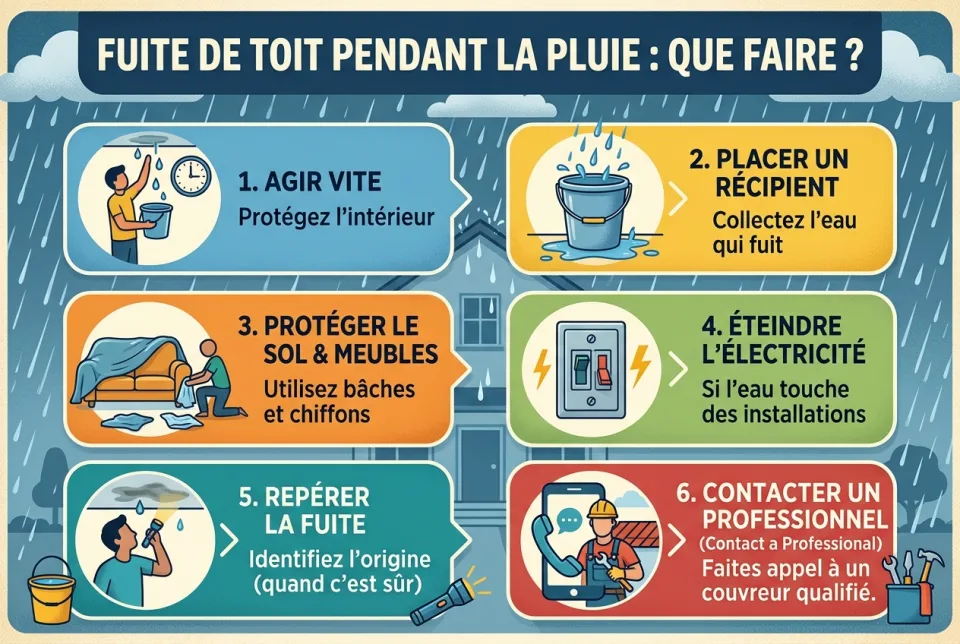
Quick answer
5 steps — read this before anything else
-
1
Stay safe: avoid electrical hazards and slippery areas.
-
2
Contain the water with buckets and towels.
-
3
Move valuables away from the leak.
-
4
Document the damage with photos.
-
5
Call a professional roofer for repairs.
Warning
Never climb onto a wet roof or touch wet electrical fixtures. If water is near electrical systems, turn off power only if safe, otherwise evacuate and call for help.
A leaking roof during a rainstorm can be stressful and potentially dangerous. The priority is to stay safe, minimize damage, and address the leak as soon as possible. This guide provides practical steps to take while it is still raining and beyond.
Emergency warning
If water is near electrical outlets, light fixtures, or your electrical panel, do not touch anything. Turn off the power at the main breaker only if it is safe to do so without standing in water. If you cannot safely access the breaker, evacuate and call an electrician or emergency services.
What to do first
- Stay safe. Avoid standing in water. If the ceiling is bulging or sagging, stay out of the room and call a professional immediately.
- Contain the leak. Place buckets, pots, or pans under the drip. Use towels or plastic sheets to protect floors and furniture.
- Move valuables. Relocate electronics, furniture, and other items away from the leak.
- Document the damage. Take photos or videos of the leak and any damage for insurance claims.
- Call a professional. Contact a licensed roofer or emergency repair service. If the leak is severe, consider calling a water damage restoration company.
What NOT to do
- Do not climb onto the roof during rain or storms. It is extremely dangerous.
- Do not ignore electrical hazards. Never touch wet electrical fixtures or stand in water near electricity.
- Do not use a ladder in wet or windy conditions. Wait for the weather to improve.
- Do not attempt temporary fixes that require roof access. Focus on interior containment.
When to call for help
Call a professional roofer as soon as possible. If the leak is causing structural damage (e.g., sagging ceiling), or if water is near electrical systems, call for emergency repairs immediately. If you suspect mold growth after the leak is fixed, consult a mold remediation specialist.
What to monitor
- Check for water stains on ceilings and walls, which can indicate hidden leaks.
- Monitor for mold growth in the days following the leak.
- Watch for signs of structural damage, such as cracks or sagging.
How to prevent future leaks
- Schedule regular roof inspections, especially before rainy seasons.
- Keep gutters and downspouts clear of debris.
- Trim tree branches away from the roof.
- Address minor roof issues promptly.
After the rain stops, have a professional assess and repair the roof. Keep records of all repairs and communicate with your insurer if you plan to file a claim.
This is general information and not a substitute for professional advice. In case of emergency, call local emergency services.
Sources & references
Spotted an error? Report it — we correct factual mistakes promptly.
Read next
Rain leaking through the window frame: what to do?
A window leak can quickly lead to water damage and mold. Learn how to stop the leak temporarily, protect your home, and fix the underlying cause.
Swimming pool water level dropping daily: what to do?
A pool that loses water every day is usually leaking or evaporating too fast. Learn how to tell the difference, find the cause, and fix it safely.
Ice dam forming on the roof edge: what to do?
An ice dam traps melting snow and can push water under your shingles and into the house. Act early to remove the hazard safely and stop the leak.
Ceiling water stain appears: what to do?
A new water stain on your ceiling can signal a leak, condensation, or a roof problem. Act quickly to limit damage and prevent mold.
Related handy tools
Checklists, decision guides, scenarios and quizzes for the same situation.