Ponding water around the house foundation: what to do?
Standing water near your foundation can lead to costly water damage and structural issues. Learn how to identify the cause, take immediate action, and prevent future problems.
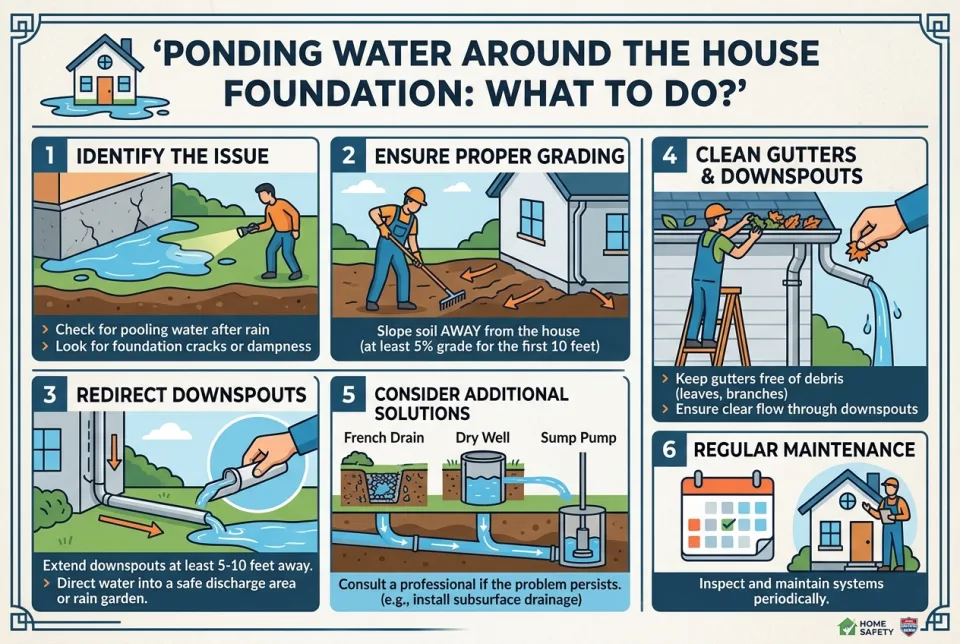
Quick answer
4 steps — read this before anything else
-
1
Check for and clear any visible blockages in gutters, downspouts, and drainage channels.
-
2
Ensure the ground slopes away from the foundation (at least 6 inches over the first 10 feet).
-
3
If water is entering the home or the foundation is visibly damaged, call a professional immediately.
-
4
Do not ignore persistent ponding; it can weaken the foundation over time.
Warning
If water is entering your home or you suspect foundation damage, call a professional immediately. Do not attempt structural repairs yourself.
Ponding water around your house foundation is more than a nuisance; it can lead to serious structural and water damage if left unaddressed. This guide explains why it happens, what to do right away, and how to prevent it from recurring.
What Is Happening?
Ponding occurs when water collects in a depression near the foundation instead of draining away. Common causes include poor grading (the ground slopes toward the house), clogged gutters or downspouts, a high water table, or compacted soil that drains slowly. Over time, this water can seep into the foundation, causing cracks, basement flooding, and even foundation settlement.
Emergency Warning
If water is actively entering your home, or if you see signs of foundation failure (large cracks, bowing walls, uneven floors), evacuate and call a qualified professional immediately. Do not attempt to repair structural damage yourself.
What to Do First
- Clear gutters and downspouts. Remove leaves and debris to ensure water flows freely away from the house. Make sure downspouts discharge at least 6 feet from the foundation.
- Check the slope. The ground should slope away from the foundation at a rate of about 6 inches over the first 10 feet. If it doesn't, you may need to regrade the soil.
- Inspect for obvious leaks. Look for leaking pipes, irrigation systems, or pooling from recent rain. Fix any leaks promptly.
- Remove standing water. Use a pump or a wet/dry vacuum to remove water that has already accumulated. Never use electrical equipment in standing water.
- Document the issue. Take photos and notes of the affected area, which will help professionals diagnose the problem.
What NOT to Do
- Do not ignore the problem. Ponding water can silently damage your foundation and lead to expensive repairs.
- Do not pile soil against the foundation without proper grading. This can trap moisture and cause rot or pest issues.
- Do not use electrical equipment in wet conditions. Avoid shock hazards.
- Do not attempt major regrading or foundation repairs without professional advice. Improper work can worsen the problem.
When to Call a Professional
Contact a licensed contractor or foundation specialist if:
- Water is entering your basement or crawl space.
- You notice cracks in the foundation walls or floors.
- The ground around the foundation is consistently soggy, even days after rain.
- You have a high water table or poor drainage that requires a more complex solution like a French drain or sump pump.
What to Monitor
After taking initial steps, monitor the area during and after rainstorms. Check for:
- Recurring puddles in the same spot.
- New cracks or widening of existing cracks.
- Musty odors or dampness in the basement.
- Signs of soil erosion around the foundation.
How to Prevent It
- Maintain gutters and downspouts regularly. Clean them at least twice a year.
- Ensure proper grading. Add soil to create a slope away from the foundation, but avoid covering siding or brick.
- Install a French drain or sump pump if the problem is persistent.
- Consider landscaping that absorbs water, such as rain gardens, but keep plants at least 2 feet away from the foundation.
- Inspect your foundation annually for signs of damage.
By acting quickly and taking preventive measures, you can protect your home from water damage and maintain a stable foundation. If you're unsure about the severity of the issue, consult a professional for an assessment.
Spotted an error? Report it — we correct factual mistakes promptly.
Read next
Mold growing behind furniture on outer walls: what to do?
Mold behind furniture on outer walls is usually caused by trapped moisture and poor air circulation. Learn safe steps to remove it, fix the cause, and prevent it from returning.
Swimming pool water level dropping daily: what to do?
A pool that loses water every day is usually leaking or evaporating too fast. Learn how to tell the difference, find the cause, and fix it safely.
Ice dam forming on the roof edge: what to do?
An ice dam traps melting snow and can push water under your shingles and into the house. Act early to remove the hazard safely and stop the leak.
Refrigerator water line leaks: what to do?
A leaking refrigerator water line can cause serious water damage. Learn how to stop the leak, clean up safely, and prevent future problems.
Related handy tools
Checklists, decision guides, scenarios and quizzes for the same situation.