Mold growing behind furniture on outer walls: what to do?
Mold behind furniture on outer walls is usually caused by trapped moisture and poor air circulation. Learn safe steps to remove it, fix the cause, and prevent it from returning.
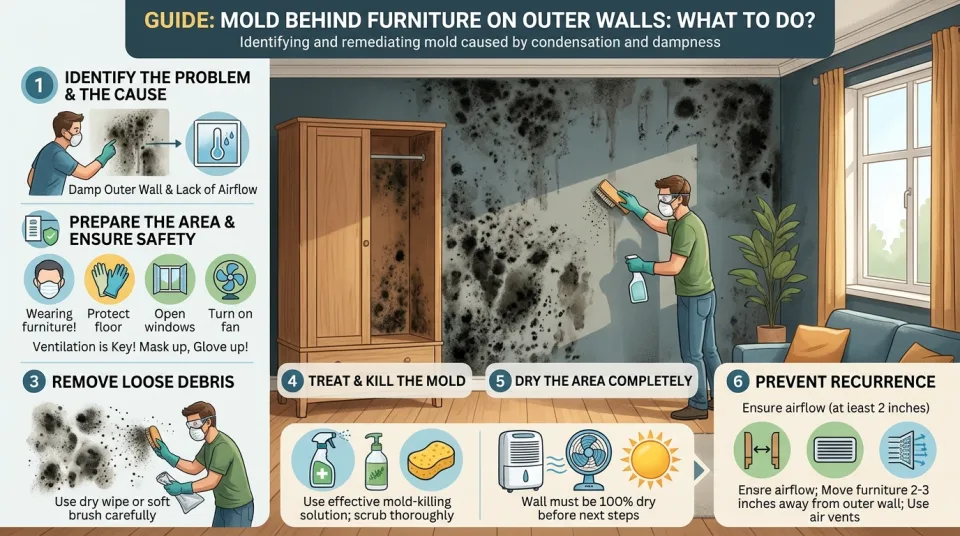
Quick answer
5 steps — read this before anything else
-
1
Put on gloves, eye protection, and an N95 mask before disturbing the mold.
-
2
Move the furniture away from the wall and ventilate the room.
-
3
Clean small areas with detergent and water, then dry thoroughly.
-
4
Find and fix the moisture source: condensation, leaks, or poor insulation.
-
5
If mold covers more than about 1 square meter or keeps returning, get professional help.
Warning
Mold can cause allergic reactions and respiratory problems. Wear protective gear when cleaning, and never mix cleaning products such as bleach and ammonia, which can produce toxic gases.
Mold behind furniture on outer walls is a common problem, especially in cool climates or humid rooms. It usually signals that moisture is being trapped where air cannot circulate. The good news is that small areas can often be managed yourself, provided you fix the underlying cause.
What is happening
Outer walls are colder than interior walls. When warm, humid indoor air meets that cold surface, condensation forms. Furniture pushed tight against the wall blocks airflow, so the moisture cannot dry out. Mold spores, which are always present in the air, then settle and grow on the damp surface. This is often condensation mold, but it can also indicate a leak or rising damp.
What to do first
- Protect yourself. Wear waterproof gloves, eye protection, and an N95 or FFP2 mask. Keep children and pets out of the room.
- Move the furniture. Pull it at least 5-10 cm away from the wall to allow air to circulate. Open windows and doors to ventilate.
- Assess the extent. If the mold covers more than about 1 square meter, or if the wall feels soft, crumbly, or wet, stop and call a professional. Porous materials like plasterboard or wallpaper may need removal.
- Clean small areas. Use a damp cloth with a mild detergent solution. Wipe gently, then dry the area thoroughly with a clean cloth. Do not dry-brush, as this spreads spores.
- Dispose of waste safely. Seal used cloths and gloves in a plastic bag and throw them away. Wash your hands and clothes afterwards.
What NOT to do
- Do not use bleach as a long-term fix; it can damage surfaces and does not address the moisture source.
- Do not paint or seal over mold without cleaning and fixing the cause first.
- Do not ignore a musty smell or recurring mold; it usually means moisture is still present.
- Do not push furniture back against the wall until the area is completely dry.
Fix the underlying cause
Cleaning alone will not stop mold from returning. Check for:
- Condensation: Improve insulation on the cold wall, or use a dehumidifier to keep indoor humidity between 30% and 50%.
- Leaks: Look for water stains, dripping pipes, or damaged roof flashing. Repair any leaks promptly.
- Airflow: Keep furniture at least 5 cm from outer walls. Use spacers if needed.
- Ventilation: Open windows daily, use extractor fans in bathrooms and kitchens, and avoid drying laundry indoors without ventilation.
When to seek professional help
Call a qualified mold remediation specialist or building surveyor if:
- The mold covers an area larger than about 1 square meter.
- Mold keeps returning after cleaning and fixing condensation.
- You suspect a hidden leak or structural damp.
- Anyone in the home has asthma, allergies, or a weakened immune system.
What to monitor
After cleaning, check the area weekly for the first month. Look for new spots, a musty smell, or peeling paint. Use a hygrometer to monitor indoor humidity and keep it below 50%. If mold reappears, the moisture source is still active.
Taking these steps promptly will protect your home and health. If you are unsure, consult a professional to assess the wall and moisture levels.
Sources & references
Spotted an error? Report it — we correct factual mistakes promptly.
Read next
What Should You Do If You Find Mold in Your Home?
Mold needs moisture to grow, so the key is to fix the water source and remove the mold safely. Here are 10 practical steps for dealing with mold and moisture problems.
Damp patches on basement walls after snow melts: what to do?
Spring thaw can push water through foundation walls and cause damp patches in your basement. Learn how to find the source, dry the area safely, and prevent future problems.
Ceiling water stain appears: what to do?
A new water stain on your ceiling can signal a leak, condensation, or a roof problem. Act quickly to limit damage and prevent mold.
Refrigerator water line leaks: what to do?
A leaking refrigerator water line can cause serious water damage. Learn how to stop the leak, clean up safely, and prevent future problems.
Related handy tools
Checklists, decision guides, scenarios and quizzes for the same situation.