Ceiling water stain appears: what to do?
A new water stain on your ceiling can signal a leak, condensation, or a roof problem. Act quickly to limit damage and prevent mold.
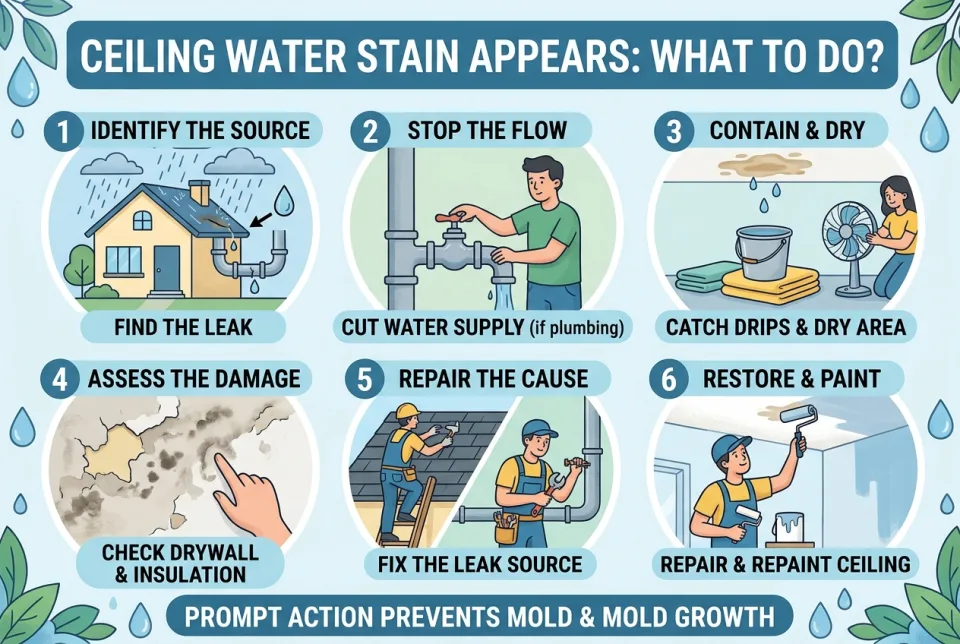
Quick answer
5 steps — read this before anything else
-
1
Place a bucket or towel under the stain to catch drips.
-
2
Turn off electricity to the affected area if water is near fixtures.
-
3
Find and stop the source of the water if safe to do so.
-
4
Document the stain with photos and contact a professional.
-
5
Monitor for mold and further damage.
Warning
Water near electrical fixtures can cause shock or fire. Turn off power at the breaker if safe, and never touch wet electrical components.
A water stain on your ceiling is a warning sign. It means moisture has penetrated your home's structure, and ignoring it can lead to mold, structural damage, and costly repairs. The right response depends on whether the stain is actively wet or just a discoloration, and on what is causing it.
What is happening
Water stains typically appear as brown, yellow, or copper-colored rings or patches. They can be caused by a leaking roof, a plumbing leak, condensation from poor ventilation, or an overflowing fixture. The stain itself is the visible result of water soaking into drywall or plaster and then drying, leaving minerals and dirt behind.
Emergency warning
If water is actively dripping or pouring from the ceiling, or if the ceiling is bulging or sagging, treat it as an emergency. Water near electrical outlets, light fixtures, or wiring can cause shock or fire. Turn off the power to the affected area at the circuit breaker if you can do so safely, and call a qualified professional immediately. If the ceiling appears ready to collapse, evacuate the room and keep others out.
What to do first
- Contain the water. Place a bucket or large towel under the stain to catch drips and protect your floor.
- Turn off electricity if needed. If water is near any electrical fixture, switch off the breaker for that circuit. Do not touch wet switches or outlets.
- Locate the source. If the stain is wet, look for a plumbing leak above (e.g., bathroom, kitchen) or a roof leak. If it is dry and you have had recent rain, suspect the roof. If it is near a bathroom, check for condensation or a leaky pipe.
- Stop the water if safe. If you can identify a leaking pipe or fixture, shut off the water supply to that area. Do not attempt major repairs yourself.
- Document and call a professional. Take photos of the stain and any damage. Contact a plumber or roofer to find and fix the source. A handyman or restoration company can assess the extent of the damage.
What NOT to do
- Do not ignore it. A small stain can indicate a big problem that will worsen over time.
- Do not paint over the stain before the source is fixed. The stain will return and mold may grow.
- Do not poke or press a bulging ceiling. It could collapse and release a large amount of water.
- Do not use electrical appliances in a wet area.
- Do not assume it is just condensation. Always rule out a leak first.
When to call for help
Call a professional if you cannot find the source, if the stain grows, if water is actively dripping, or if you see mold. For roof leaks, contact a roofer. For plumbing leaks, call a plumber. If the ceiling is sagging, call a contractor immediately.
What to monitor
Watch the stain for changes in size or color. Check for musty odors, which can indicate mold. Look for peeling paint or soft spots in the drywall. If you see mold, do not disturb it; call a mold remediation specialist.
How to prevent it
- Inspect your roof and gutters annually, especially after storms.
- Fix plumbing leaks promptly.
- Ensure proper ventilation in bathrooms and kitchens to reduce condensation.
- Insulate pipes to prevent condensation in cold weather.
Addressing a ceiling water stain quickly can save you from bigger headaches. If you are unsure, call a professional to assess the situation.
Spotted an error? Report it — we correct factual mistakes promptly.
Read next
Wet carpet after a leak: what to do?
A wet carpet after a leak can lead to mold and structural damage if not handled quickly. Learn the safe steps to dry it, prevent mold, and know when to call a professional.
Water infiltration through the wall: what to do?
Water seeping through a wall can lead to structural damage and mold. Learn how to respond quickly and prevent further issues.
Ponding water around the house foundation: what to do?
Standing water near your foundation can lead to costly water damage and structural issues. Learn how to identify the cause, take immediate action, and prevent future problems.
Swimming pool water level dropping daily: what to do?
A pool that loses water every day is usually leaking or evaporating too fast. Learn how to tell the difference, find the cause, and fix it safely.
Related handy tools
Checklists, decision guides, scenarios and quizzes for the same situation.