Rain leaking through the window frame: what to do?
A window leak can quickly lead to water damage and mold. Learn how to stop the leak temporarily, protect your home, and fix the underlying cause.
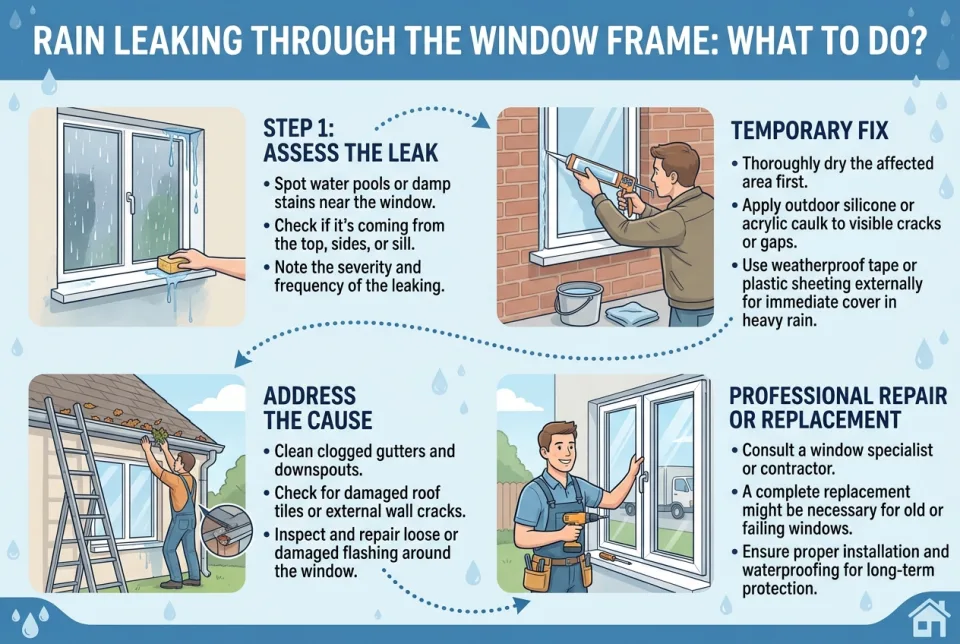
Quick answer
5 steps — read this before anything else
-
1
Move valuables away and place towels or a bucket to catch water.
-
2
If safe, clear debris from outside drains and check the window is closed.
-
3
Apply a temporary sealant or plastic sheeting to stop the leak.
-
4
Dry the area thoroughly and monitor for mold.
-
5
Contact a professional to repair the window and fix drainage.
Warning
Do not attempt to repair exterior windows or climb on ladders during storms or wet conditions. If water has entered electrical outlets or fixtures, turn off power at the breaker and call an electrician.
Rain leaking through a window frame is more than a nuisance: it can damage walls, flooring, and belongings, and lead to mold if not addressed quickly. The steps below will help you manage the immediate leak and reduce the risk of further problems.
What is happening
Water is entering through gaps in the window frame, failed seals, or clogged drainage channels. Common causes include worn weatherstripping, cracked glazing, improperly installed flashing, or blocked weep holes that should let water escape.
What to do first
- Protect your belongings: Move furniture, electronics, and rugs away from the leak. Place towels or a bucket to catch dripping water.
- Check the window: Ensure it is fully closed and latched. If it is a sliding window, check that the tracks are clear of debris.
- Clear exterior drains (if safe): If you can safely reach them, remove leaves and dirt from gutters and window weep holes to help water drain away from the frame.
- Apply a temporary seal: Use a waterproof sealant (like silicone caulk) or self-adhesive flashing tape on the outside of the frame if accessible and safe. Alternatively, cover the window with plastic sheeting on the outside to divert water.
- Dry the area: Use towels and a fan to dry the interior. Remove any standing water to prevent mold growth.
What NOT to do
- Do not ignore the leak: small leaks can cause hidden rot and mold.
- Do not use a heat gun or open flame to dry the area.
- Do not seal the leak from the inside only; this can trap moisture and worsen damage.
- Do not climb on ladders or roofs in wet or stormy conditions.
When to seek professional help
Contact a qualified window contractor or water damage specialist if:
- The leak persists after temporary fixes.
- You see water stains, bubbling paint, or soft spots on walls or ceilings.
- Mold appears (musty odors, visible growth).
- The window frame is damaged or rotted.
What to monitor
After the leak stops, keep an eye on the area for signs of moisture: dampness, peeling paint, or mold. Use a dehumidifier if needed. Check the window during the next rain to ensure the leak is fixed.
How to prevent it
- Inspect and replace weatherstripping and caulk annually.
- Keep gutters and window drains clear of debris.
- Ensure windows are properly installed with correct flashing.
- Consider installing a window awning or exterior sealant for extra protection.
By acting quickly and addressing the root cause, you can prevent costly water damage and keep your home dry.
Spotted an error? Report it — we correct factual mistakes promptly.
Read next
Water infiltration through the wall: what to do?
Water seeping through a wall can lead to structural damage and mold. Learn how to respond quickly and prevent further issues.
Ceiling water stain appears: what to do?
A new water stain on your ceiling can signal a leak, condensation, or a roof problem. Act quickly to limit damage and prevent mold.
Refrigerator water line leaks: what to do?
A leaking refrigerator water line can cause serious water damage. Learn how to stop the leak, clean up safely, and prevent future problems.
Gutters overflowing in heavy rain: what to do?
When gutters overflow during a storm, quick action can prevent water damage. Learn safe steps to take during the downpour and how to fix the problem afterward.
Related handy tools
Checklists, decision guides, scenarios and quizzes for the same situation.