Home flooding: what to do?
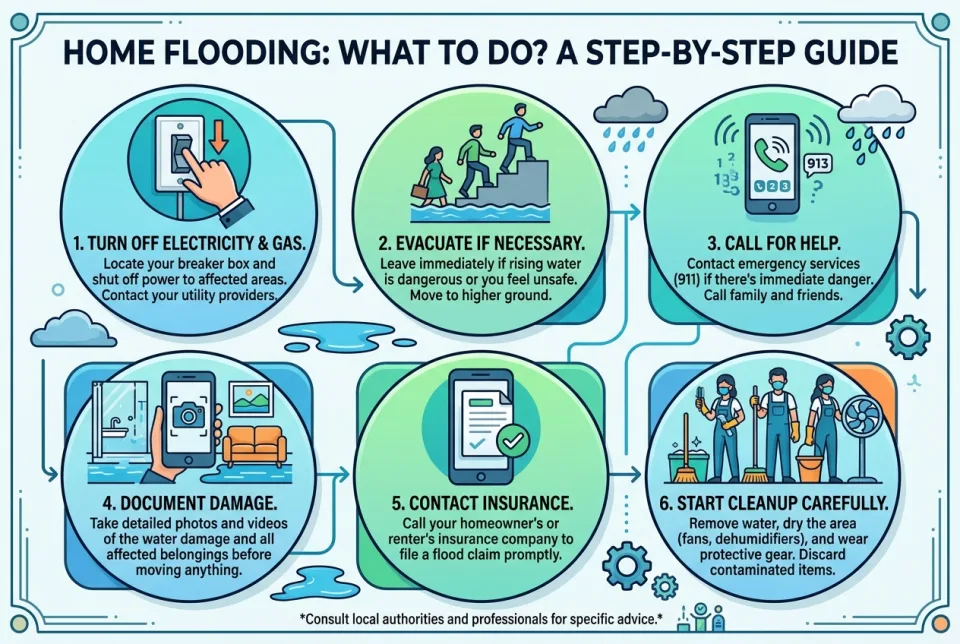
When your home floods, safety comes first: avoid floodwater, shut off utilities if safe, and document damage only after the area is secure.
Quick answer
5 steps — read this before anything else
-
1
Get to higher ground and call local emergency services if water is rising or anyone is in danger.
-
2
Do not walk, swim, or drive through floodwater; it can hide hazards and carry disease.
-
3
If safe, turn off electricity at the main breaker and gas at the meter before water reaches them.
-
4
Avoid contact with floodwater; wear gloves and boots if you must be near it.
-
5
Document damage with photos only after the area is declared safe.
Warning
Floodwater can hide live electrical wires, sharp debris, and sewage. Never enter a flooded area if you can avoid it, and never touch electrical panels while standing in water.
Important — please read
This content is general educational and informational only, and is not a substitute for professional medical advice, diagnosis or treatment. Always seek the advice of a qualified health provider with any questions you may have about a medical condition. Never disregard or delay seeking professional medical care because of something you read here. In an emergency or life-threatening situation, call your local emergency services (police, fire or ambulance) immediately.
Flooding in your home is dangerous and stressful. The priority is to protect people, not property. Floodwater can carry sewage, chemicals, sharp debris, and hidden electrical hazards. Follow these steps to stay safe and reduce harm.
Emergency warning
If water is rising quickly, if anyone is trapped or injured, or if you smell gas or see sparks, call local emergency services immediately. Do not wait. If you are in immediate danger, evacuate to higher ground or a safe location.
What to do first
- Get to safety. Move to a higher floor or leave the building if instructed. Never enter a flooded basement or room with standing water.
- Call for help if needed. If you are trapped or see downed power lines, call emergency services. Do not approach downed lines.
- Shut off utilities only if you can do so safely and without wading through water. Turn off electricity at the main breaker and gas at the meter. If the area is wet or you must stand in water, do not touch the panel; wait for a professional.
- Avoid contact with floodwater. It can contain bacteria, viruses, and chemicals. If you must be near it, wear rubber boots and gloves. Wash hands thoroughly after any contact.
- Document damage when safe. Once the area is secure and water has receded, take photos and videos for insurance claims. Do not enter unsafe structures.
What NOT to do
- Do not walk, swim, or drive through floodwater. Just six inches of moving water can knock you down, and a foot can sweep away a vehicle.
- Do not touch electrical equipment or outlets in wet areas. This includes cords, appliances, and the breaker panel if you are standing in water.
- Do not use gas appliances or generators indoors. Carbon monoxide can build up silently and kill.
- Do not eat or drink anything that touched floodwater. Throw away food, bottled water, and medications that were submerged.
- Do not re-enter your home until authorities say it is safe. Structural damage and contamination may not be visible.
When to seek professional help
Call a licensed electrician, plumber, or restoration professional if your home has been flooded. They can assess hidden damage, check for mold, and ensure utilities are safe to restore. If you experience symptoms like fever, nausea, or breathing problems after cleanup, seek medical care.
What to monitor
- Water levels and weather warnings from local authorities.
- Structural signs: cracks, sagging ceilings, or doors that no longer close.
- Gas odors or hissing sounds; leave immediately and call the gas company from a safe distance.
- Mold growth in the days after flooding; it can cause respiratory issues.
How to prevent future flooding
- Keep gutters and drains clear.
- Install a sump pump with a battery backup if you have a basement.
- Elevate electrical panels and appliances above expected flood levels.
- Consider flood barriers or landscaping that directs water away from your foundation.
After a flood, your safety and health come first. Follow guidance from local emergency officials, and do not rush back into a damaged home. For insurance claims, contact your provider once it is safe to do so.
This is general information and not a substitute for professional emergency or medical advice. In an emergency, call your local emergency services immediately.
Sources & references
Spotted an error? Report it — we correct factual mistakes promptly.
Read next
Hot water tank burst: what to do?
A burst hot water tank can cause serious water damage and poses electrical and burn risks. Act quickly to shut off the water and power, then call a professional.
Wet carpet after a leak: what to do?
A wet carpet after a leak can lead to mold and structural damage if not handled quickly. Learn the safe steps to dry it, prevent mold, and know when to call a professional.
Dishwasher flooded the kitchen floor: what to do?
A flooded kitchen from a dishwasher can cause damage and safety hazards. Act quickly to stop the water, cut power, and prevent further issues.
Ponding water around the house foundation: what to do?
Standing water near your foundation can lead to costly water damage and structural issues. Learn how to identify the cause, take immediate action, and prevent future problems.
Related handy tools
Checklists, decision guides, scenarios and quizzes for the same situation.