Wet carpet after a leak: what to do?
A wet carpet after a leak can lead to mold and structural damage if not handled quickly. Learn the safe steps to dry it, prevent mold, and know when to call a professional.
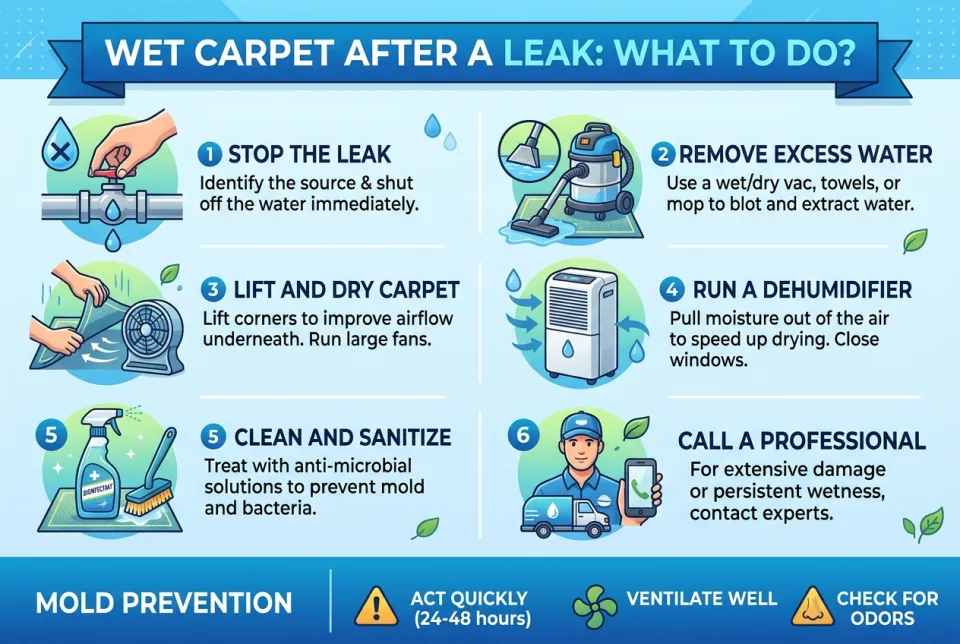
Quick answer
4 steps — read this before anything else
-
1
Stop the water source and turn off electricity to wet areas.
-
2
Remove standing water with a wet/dry vacuum or towels.
-
3
Lift carpet and pad to dry, using fans and dehumidifiers.
-
4
Call a water damage professional if the leak is contaminated or area is large.
Warning
Never enter a room with standing water if electrical outlets or cords are submerged. Turn off power at the breaker first if safe, and call an electrician. If you smell gas, leave immediately and call emergency services.
Discovering a wet carpet after a leak is stressful, but acting quickly can save your flooring and prevent bigger problems like mold and structural damage. This guide walks you through the safe, practical steps to take.
What is happening
Water from a leak has soaked into your carpet and likely the padding underneath. Carpet is like a sponge: it holds moisture, and if not dried properly within 24-48 hours, mold can begin to grow. The source of the water matters: clean water from a pipe is less hazardous than water from a toilet, dishwasher, or outdoor flooding, which may contain bacteria and contaminants.
Emergency warning
If the leak is near electrical outlets, appliances, or your fuse box, do not touch anything. Turn off the power at the main breaker if it is safe to do so, and call an electrician. If water is near gas lines or you smell gas, leave the house immediately and call your gas provider and emergency services.
What to do first
- Stop the water source. If a pipe burst, shut off the main water valve. If an appliance is leaking, turn it off and disconnect it.
- Ensure safety. Turn off electricity to affected rooms at the breaker panel if you can do so without standing in water. Wear rubber boots and gloves.
- Remove standing water. Use a wet/dry vacuum, mop, or towels to soak up as much water as possible. Work from the edges toward the center.
- Lift the carpet and padding. Carefully pull up the carpet and cut away the wet padding (it usually cannot be saved). Prop up the carpet to allow air circulation.
- Dry the area thoroughly. Use fans, a dehumidifier, and open windows if humidity is low. Aim for 24-48 hours of continuous drying. A moisture meter can help you confirm dryness.
- Clean and disinfect. If the water was contaminated (e.g., from a toilet or flood), wear protective gear and clean with a disinfectant approved for mold and bacteria. For clean water leaks, a mild detergent solution is usually enough.
What NOT to do
- Do not ignore the padding. It traps moisture and will grow mold even if the carpet surface feels dry.
- Do not use a regular vacuum to suck up water; it can cause electric shock or damage the machine.
- Do not walk on wet carpet more than necessary; it spreads moisture and dirt.
- Do not turn on fans or dehumidifiers if there is any chance of electrical hazard. Ensure the area is safe first.
- Do not delay. Mold can start within 24-48 hours.
When to call a professional
Call a water damage restoration professional if:
- The leak involved contaminated water (sewage, floodwater, or from a toilet).
- The affected area is larger than about 10 square feet (roughly 1 square meter).
- You cannot dry the area within 48 hours.
- You see or smell mold.
- The carpet is glued down or you cannot lift it.
What to monitor
After drying, check for musty odors, discoloration, or peeling paint. Use a moisture meter to ensure the carpet and subfloor are dry. Monitor for signs of mold, such as black spots or a persistent earthy smell. If mold appears, do not try to clean large areas yourself; call a mold remediation specialist.
How to prevent it
- Fix leaks promptly and maintain plumbing and appliances.
- Install a water leak detector near water heaters, washing machines, and under sinks.
- Keep gutters and downspouts clear to prevent basement flooding.
- Consider waterproof flooring in high-risk areas like basements and bathrooms.
Acting fast and drying thoroughly is key to saving your carpet and avoiding mold. If in doubt, call a professional for an assessment. This is general information and not a substitute for professional advice.
Sources & references
Spotted an error? Report it — we correct factual mistakes promptly.
Read next
Mold growing behind furniture on outer walls: what to do?
Mold behind furniture on outer walls is usually caused by trapped moisture and poor air circulation. Learn safe steps to remove it, fix the cause, and prevent it from returning.
Damp patches on basement walls after snow melts: what to do?
Spring thaw can push water through foundation walls and cause damp patches in your basement. Learn how to find the source, dry the area safely, and prevent future problems.
Ice dam forming on the roof edge: what to do?
An ice dam traps melting snow and can push water under your shingles and into the house. Act early to remove the hazard safely and stop the leak.
Refrigerator water line leaks: what to do?
A leaking refrigerator water line can cause serious water damage. Learn how to stop the leak, clean up safely, and prevent future problems.
Related handy tools
Checklists, decision guides, scenarios and quizzes for the same situation.