Smoke detector beeping low battery: what to do?
A chirping smoke detector usually means a low battery. Learn how to safely silence it, replace the battery, and keep your home protected.
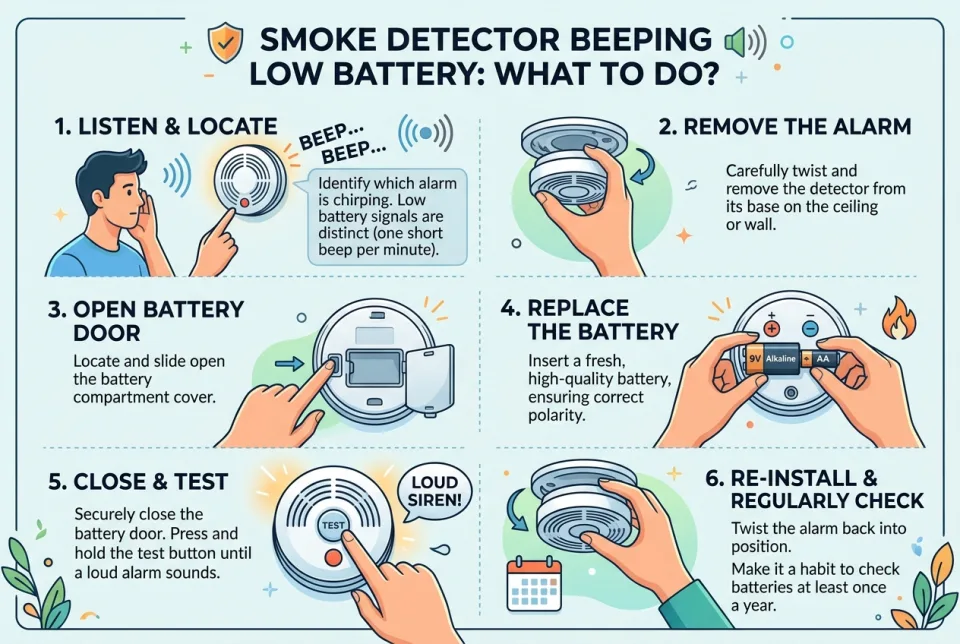
Quick answer
5 steps — read this before anything else
-
1
Identify which detector is beeping.
-
2
Press the hush/test button to temporarily silence it.
-
3
Replace the battery with the correct type.
-
4
Test the detector after replacement.
-
5
If chirping continues, replace the detector or call a professional.
Warning
Never disable a smoke detector by removing its battery without replacing it. A disabled detector leaves you unprotected in a fire.
That intermittent chirp from your smoke detector is more than an annoyance: it is a critical safety warning. The most common cause is a low battery, but it can also signal a malfunction or the end of the device's lifespan. Addressing it promptly keeps your home protected.
What is happening
Smoke detectors are designed to alert you when their power source is failing. A short beep every 30 to 60 seconds typically indicates a low battery. Some models also chirp when the sensor is dirty, when the battery is missing, or when the unit has reached its expiration date (usually 10 years from manufacture).
Emergency warning
If the alarm is sounding continuously or you see smoke or fire, evacuate immediately and call your local emergency services from a safe location. Do not attempt to troubleshoot the detector until everyone is safe.
What to do first
- Locate the beeping detector. Walk through your home and listen carefully; it may be in a hallway, bedroom, or near the kitchen.
- Silence the chirp temporarily. Press the hush or test button on the unit. This buys you time to get a replacement battery.
- Replace the battery. Use only the type specified by the manufacturer (often a 9V or AA lithium battery). Do not mix old and new batteries or different types.
- Test the detector. After inserting the new battery, press and hold the test button until the alarm sounds. This confirms it is working.
- If chirping persists, the detector may be dirty or defective. Clean it gently with a vacuum brush, or replace the entire unit if it is older than 10 years.
What NOT to do
- Do not remove the battery and leave the detector disabled. This removes your protection entirely. If you cannot replace the battery immediately, replace the whole unit.
- Do not ignore the chirp. A low battery can fail completely without warning, leaving you unprotected in a fire.
- Do not use rechargeable batteries unless the manufacturer explicitly allows them; they often have lower voltage and shorter runtime.
- Do not paint over or cover the detector to muffle the sound.
When to seek professional help
If the detector continues to chirp after a fresh battery and cleaning, or if it is hardwired and you are unsure how to safely disconnect the power, contact a qualified electrician or your building manager. Never attempt electrical work you are not trained for.
What to monitor
After replacement, listen for any further chirps over the next 24 hours. Also check the expiration date on the back of the unit and note it in your calendar. Test all detectors monthly and replace batteries at least once a year, or sooner if chirping occurs.
How to prevent it
- Mark a recurring reminder to replace batteries annually (e.g., when you change clocks for daylight saving).
- Replace the entire smoke detector every 10 years.
- Keep detectors clean and free of dust and cobwebs.
- Install interconnected detectors so that if one sounds, they all do.
Addressing a chirping detector takes only a few minutes and restores a vital layer of safety. If you are unsure about the cause or the unit's condition, err on the side of replacement or professional inspection.
This is general information and not a substitute for professional advice. In an emergency, call your local emergency services immediately.
Sources & references
Spotted an error? Report it — we correct factual mistakes promptly.
Read next
Gasoline smell in the garage: what to do?
A strong gasoline smell in your garage is a fire and health hazard. Act quickly to eliminate ignition sources, ventilate, and find the source.
Elderly parent living alone: safety setup
A practical, room-by-room safety setup for an older adult living alone, covering falls, emergencies, medication, and daily check-ins.
Expired fire extinguisher: what to do?
An expired fire extinguisher may not work when you need it most. Learn how to check its condition, what to do with it, and how to replace it safely.
Suspicious person at your door: what to do?
A stranger at your door can be unsettling. Learn how to stay safe, assess the situation, and respond without putting yourself at risk.
Related handy tools
Checklists, decision guides, scenarios and quizzes for the same situation.