Home break-in suspected: what to do?
If you think someone has broken into your home, your safety comes first. Learn how to assess the situation, when to call emergency services, and what to do (and not do) next.
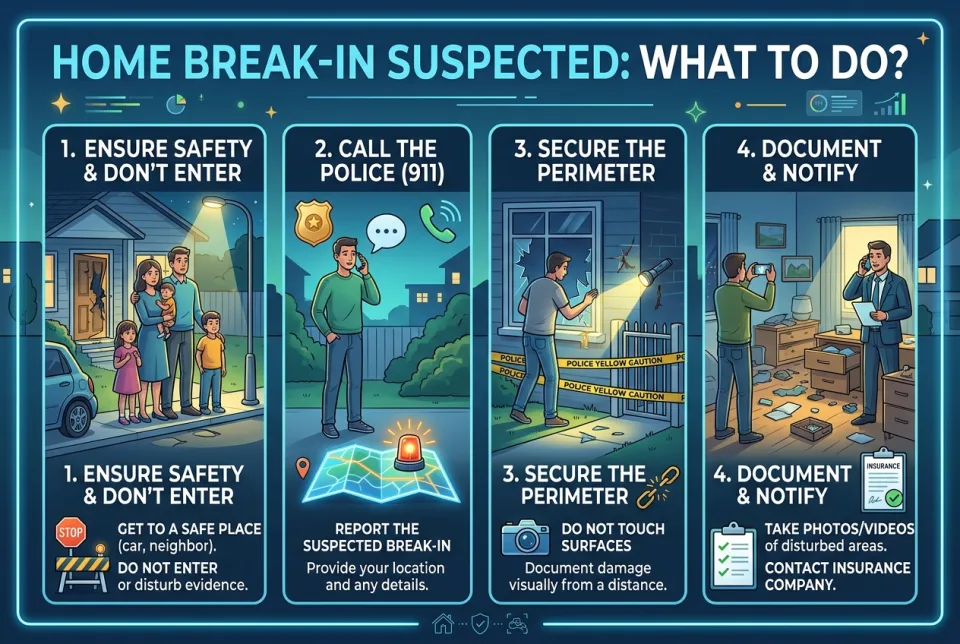
Quick answer
5 steps — read this before anything else
-
1
If you are outside and see signs of a break-in, do not enter. Call emergency services from a safe location.
-
2
If you are inside and hear or see an intruder, get out if you can do so safely, then call emergency services.
-
3
If you cannot leave, hide in a locked room, stay quiet, and call emergency services.
-
4
Do not confront the intruder or try to scare them off.
-
5
Once safe, follow police instructions and do not touch anything until they arrive.
Warning
If you suspect an intruder is inside your home, do not confront them. Leave if you can do so safely, or hide and call emergency services. Your safety is more important than any possession.
Important — please read
This content is general educational and informational only, and is not a substitute for professional medical advice, diagnosis or treatment. Always seek the advice of a qualified health provider with any questions you may have about a medical condition. Never disregard or delay seeking professional medical care because of something you read here. In an emergency or life-threatening situation, call your local emergency services (police, fire or ambulance) immediately.
Discovering that your home may have been broken into is frightening. Your priority is to protect yourself and others, not to protect property. This guide explains what to do in the first few minutes and how to stay safe until help arrives.
If you are outside and suspect a break-in
Do not enter your home. Move to a safe distance, such as a neighbor's house or your car, and call your local emergency number. Tell the dispatcher what you observed (for example, a broken window, an open door, or unfamiliar noises) and your exact address. Stay on the line until you are told it is safe to hang up. Do not approach anyone leaving the property.
If you are inside and hear or see an intruder
Your best option is to escape if you can do so without crossing paths with the intruder. Use a door or window away from the intruder and go to a safe place. Once outside, call emergency services. If escape is not possible, hide in a room you can lock, such as a bedroom or bathroom. Stay quiet, silence your phone, and call emergency services. If you cannot speak, use text-to-911 if your area supports it, or make a noise that the dispatcher can interpret. Do not confront the intruder or try to protect belongings.
If you come home to signs of a break-in but see no one
Do not go inside. The intruder may still be there. Call emergency services from a safe location and wait for police to arrive. They will check the property and tell you when it is safe to enter.
What not to do
- Do not enter your home if you suspect someone is inside.
- Do not confront or chase an intruder.
- Do not touch anything that might be evidence, such as broken glass or items the intruder may have touched.
- Do not post about the break-in on social media while the situation is ongoing.
When to call for help
Call emergency services immediately if you see or hear an intruder, if anyone is injured, or if you are in immediate danger. If you are unsure whether a crime has occurred, call the non-emergency police line for advice. Never put yourself at risk to check.
After the police arrive
Follow their instructions. Provide any information you have, such as descriptions or vehicle details. Do not clean up or repair damage until police have finished their investigation. If you need support, ask the police about victim services or contact a local support organization.
Preventing future break-ins
Once the immediate crisis is over, consider simple security measures: lock doors and windows, use exterior lighting, and keep valuables out of sight. A home security assessment from local police may be available. These steps can reduce risk but cannot guarantee safety.
This is general information and not a substitute for professional advice. In an emergency, call your local emergency services immediately.
Spotted an error? Report it — we correct factual mistakes promptly.
Read next
Someone is following you on foot: what to do?
If you think someone is following you on foot, trust your instincts and act quickly. Learn how to confirm the threat, get to safety, and call for help.
Wasp nest near your entrance: what to do?
A wasp nest by your door can be dangerous, especially if someone is allergic. Learn how to stay safe, when to call a professional, and how to prevent future nests.
Gasoline smell in the garage: what to do?
A strong gasoline smell in your garage is a fire and health hazard. Act quickly to eliminate ignition sources, ventilate, and find the source.
Starting a neighborhood watch group: what to do?
Learn how to start a neighborhood watch group with step-by-step guidance, from assessing your community's needs to partnering with local law enforcement and organizing safely.
Related handy tools
Checklists, decision guides, scenarios and quizzes for the same situation.