Card theft in the souk: what to do?
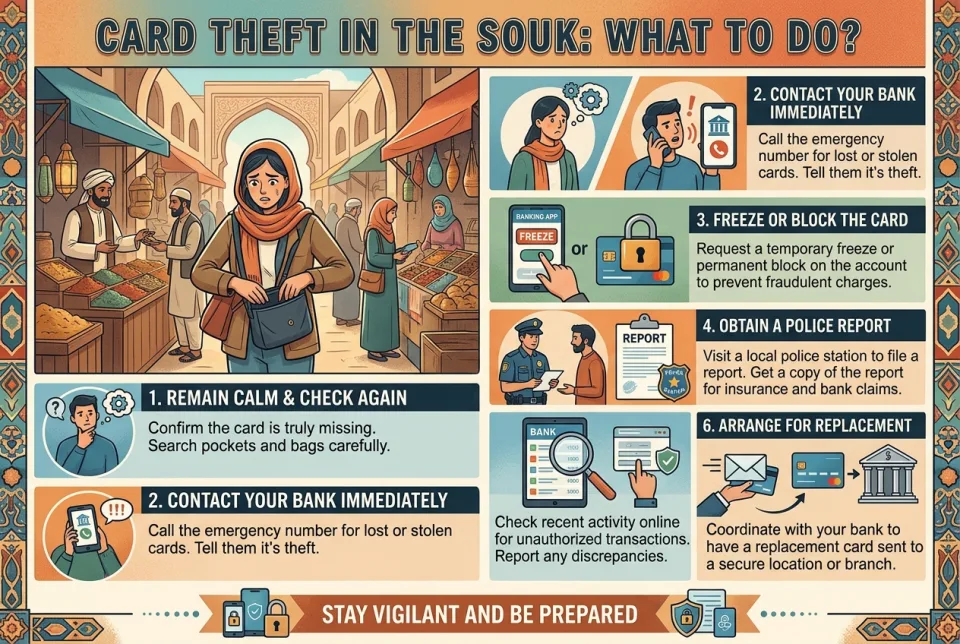
If your credit or debit card is stolen in a busy market, acting quickly can limit fraudulent charges. Here is a step-by-step guide to securing your accounts and reporting the theft.
Quick answer
5 steps — read this before anything else
-
1
Contact your bank immediately to block the card.
-
2
Report the theft to local police and get a report copy.
-
3
Monitor your accounts for unauthorized transactions.
-
4
Change PINs and passwords if you suspect compromise.
-
5
Keep a record of all actions taken.
Warning
If you are threatened or physically harmed during the theft, call local emergency services immediately. Your safety comes first.
Important — please read
This content is general educational and informational only, and is not a substitute for professional medical advice, diagnosis or treatment. Always seek the advice of a qualified health provider with any questions you may have about a medical condition. Never disregard or delay seeking professional medical care because of something you read here. In an emergency or life-threatening situation, call your local emergency services (police, fire or ambulance) immediately.
Having your card stolen in a crowded souk can be stressful, but swift action can reduce the risk of financial loss. This guide outlines practical steps to take if your credit or debit card is stolen in a market. It covers immediate actions, reporting, and prevention tips.
What to do first
- Contact your bank or card issuer immediately. Use the emergency number on the back of your card or the bank's app to report the theft and request a block on the card. Most banks have 24/7 hotlines for lost or stolen cards.
- Report to local police. File a theft report at the nearest police station. Obtain a copy of the report; it may be required by your bank or for insurance purposes.
- Check your accounts. Review recent transactions online or via your banking app. Report any unauthorized charges to your bank right away.
- Secure other cards and documents. If your wallet was stolen, cancel other cards and replace identification documents as needed.
- Change PINs and passwords. If you suspect your PIN was compromised, change it immediately. Also update passwords for online banking and shopping accounts.
What NOT to do
- Do not delay reporting. Waiting gives thieves time to use your card.
- Do not confront the thief. Your safety is more important than recovering the card.
- Do not share your PIN or card details with anyone except your bank's official customer service.
- Do not ignore small unauthorized charges. They can be test transactions before larger fraud.
When to seek professional help
If you notice unauthorized transactions, your bank will guide you through the dispute process. In some countries, you may also file a report with a consumer protection agency. If you are a victim of identity theft, consider contacting a credit counseling service or legal advisor.
What to monitor
- Bank statements and transaction alerts. Enable real-time notifications for card transactions.
- Credit reports. Check your credit report regularly for new accounts opened in your name.
- Phishing attempts. Be wary of emails or calls claiming to be from your bank; always verify by contacting the bank directly.
How to prevent card theft in busy markets
- Carry cards separately. Keep only one card in your wallet and leave others in a safe place.
- Use a money belt or front pocket. Avoid back pockets or open bags.
- Be aware of distractions. Thieves often work in teams; keep your belongings close in crowded areas.
- Use contactless payment cautiously. Consider a RFID-blocking wallet.
- Keep emergency contacts. Save your bank's hotline in your phone.
After a card theft, your priority is to block the card and report the incident. By acting quickly and monitoring your accounts, you can minimize the impact. Stay vigilant and follow your bank's instructions for replacement cards.
This information is general and not a substitute for professional financial advice. For specific concerns, consult your bank or a financial advisor.
Spotted an error? Report it — we correct factual mistakes promptly.
Read next
Smoke detector beeping low battery: what to do?
A chirping smoke detector usually means a low battery. Learn how to safely silence it, replace the battery, and keep your home protected.
Home security camera offline: what to do?
When your security camera goes offline, quick troubleshooting can restore it. Follow these steps to diagnose and fix common issues safely.
Suspicious charge on credit card: what to do?
A suspicious charge on your credit card can be alarming, but acting quickly can limit the damage. Here is a step-by-step guide to dispute it and protect your account.
Suspicious person at your door: what to do?
A stranger at your door can be unsettling. Learn how to stay safe, assess the situation, and respond without putting yourself at risk.
Related handy tools
Checklists, decision guides, scenarios and quizzes for the same situation.