Someone is following you on foot: what to do?
If you think someone is following you on foot, trust your instincts and act quickly. Learn how to confirm the threat, get to safety, and call for help.
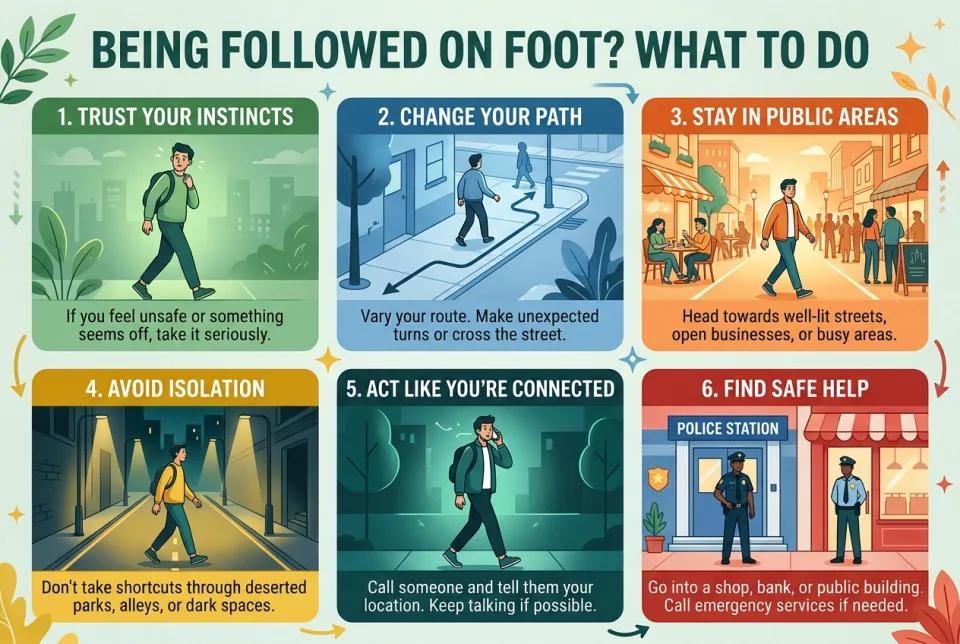
Quick answer
5 steps — read this before anything else
-
1
Trust your gut: if you feel unsafe, act immediately.
-
2
Cross the street or change direction to confirm the follower.
-
3
Head to a busy, well-lit public place like a shop or cafe.
-
4
Call local emergency services if you feel threatened.
-
5
Avoid going home or to isolated areas.
Warning
If you believe you are in immediate danger, call your local emergency number without delay.
Walking alone and noticing someone persistently behind you can be frightening. Your safety is the priority. This guide offers practical steps to assess the situation and get help.
What is happening?
Someone may be following you for various reasons, from coincidence to malicious intent. Most strangers are not a threat, but it is wise to stay alert. Trust your instincts: if something feels wrong, it probably is.
Emergency warning
If you are in immediate danger or feel threatened, call your local emergency number right away. Do not wait to confirm the person's intentions if you fear for your safety.
What to do first
- Stay calm and assess. Take a deep breath. Look around for exits and safe places. Avoid panicking, which can cloud judgment.
- Confirm the follower. Cross the street, change direction, or stop to let them pass. If they mirror your actions, it is a red flag.
- Head to a safe public place. Walk quickly toward a busy shop, restaurant, hotel, or anywhere with people and staff. Do not go home or to isolated areas.
- Make noise and draw attention. If approached, shout for help, knock on doors, or set off a personal alarm. Criminals dislike attention.
- Call for help. If you feel threatened, call emergency services. If you can, take a photo of the person or note details like clothing and direction.
What NOT to do
- Do not ignore your instincts. If you feel uneasy, act.
- Do not confront the person. Avoid escalation; you do not know their intentions or capabilities.
- Do not go to your home or a secluded area. This could lead to a more dangerous situation.
- Do not rely solely on your phone. Stay aware of your surroundings; looking down at your phone makes you vulnerable.
- Do not assume it is a coincidence if the person persists. Take it seriously.
When to call for help
Call emergency services if the person follows you for more than a short distance, if they approach you, if they make threats, or if you feel genuinely afraid. If you are in a public place, alert security or staff. If you are near home, consider asking a neighbor for help.
What to monitor
Keep track of the person's appearance, clothing, and any distinguishing features. Note the direction they came from and any vehicle they might be associated with. If you can safely do so, take a photo or video. This information can be crucial for authorities.
How to prevent it
- Stay aware. Avoid wearing headphones in both ears or being absorbed in your phone when walking alone, especially at night.
- Plan your route. Stick to well-lit, busy streets. Tell someone your route and expected arrival time.
- Walk with confidence. Look alert and purposeful. Avoid displaying valuables.
- Use safety apps. Consider apps that share your location with trusted contacts or have panic buttons.
- Trust your intuition. If a situation feels off, remove yourself from it early.
Remember, most people are not following you with bad intent, but it is always better to be safe. If you ever feel threatened, do not hesitate to call for help. Your safety is worth it.
This is general information and not a substitute for professional security advice. In an emergency, always call your local emergency services.
Spotted an error? Report it — we correct factual mistakes promptly.
Read next
Carbon monoxide detector alarm: what to do?
If your carbon monoxide detector sounds, treat it as an emergency: get everyone outside to fresh air and call for help. Learn the steps to take and mistakes to avoid.
Smoke detector beeping low battery: what to do?
A chirping smoke detector usually means a low battery. Learn how to safely silence it, replace the battery, and keep your home protected.
Wasp nest near your entrance: what to do?
A wasp nest by your door can be dangerous, especially if someone is allergic. Learn how to stay safe, when to call a professional, and how to prevent future nests.
Gasoline smell in the garage: what to do?
A strong gasoline smell in your garage is a fire and health hazard. Act quickly to eliminate ignition sources, ventilate, and find the source.
Related handy tools
Checklists, decision guides, scenarios and quizzes for the same situation.