Gasoline smell in the garage: what to do?
A strong gasoline smell in your garage is a fire and health hazard. Act quickly to eliminate ignition sources, ventilate, and find the source.
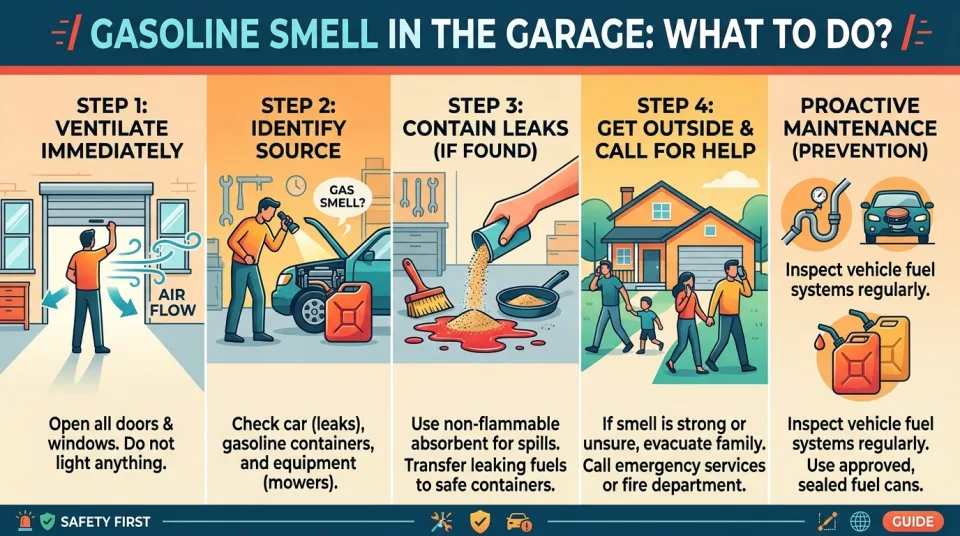
Quick answer
5 steps — read this before anything else
-
1
Do not start any vehicle, use any electrical switch, or create any spark.
-
2
Open the garage door and any windows to ventilate immediately.
-
3
Evacuate the area and keep everyone away until the smell is gone.
-
4
If the smell is strong or you cannot find the source, call 911 or your local emergency number from a safe location.
-
5
Once safe, locate and contain the source, and clean up any spill with proper materials.
Warning
Gasoline vapors are highly flammable and can ignite from a spark. Do not start vehicles, use electrical switches, or create any ignition source. Evacuate and call emergency services if the smell is strong.
Important — please read
This content is general educational and informational only, and is not a substitute for professional medical advice, diagnosis or treatment. Always seek the advice of a qualified health provider with any questions you may have about a medical condition. Never disregard or delay seeking professional medical care because of something you read here. In an emergency or life-threatening situation, call your local emergency services (police, fire or ambulance) immediately.
A gasoline smell in your garage is more than just an annoyance: gasoline vapors are highly flammable and can be harmful to breathe. Even a small spill or a slow leak can create a dangerous concentration of fumes. The steps below help you protect yourself and your property.
Emergency warning
If you smell gasoline strongly, see a puddle, or hear hissing, treat it as an emergency. Do not enter the garage. Call 911 or your local emergency number from a safe distance. Gasoline vapors can ignite from a spark, a pilot light, or even a static discharge.
What to do first
- Do not create sparks. Do not start or turn off any vehicle, do not use light switches, garage door openers, or any electrical device. Do not smoke or use a lighter.
- Ventilate. If you can safely reach the garage door, open it manually (if possible) and open any windows. If the door is electric, use the manual release.
- Evacuate. Get everyone out of the garage and the immediate area. Keep people and pets away.
- Call for help. If the smell is strong or you cannot identify the source, call 911 or your local emergency number from a safe location. Firefighters can detect and manage flammable vapors.
If the smell is faint and you are sure it is safe to investigate
Only do this if the odor is mild and you have ventilated the area. Never investigate if you feel dizzy, lightheaded, or nauseous.
- Look for spills. Check around lawn mowers, generators, fuel cans, and vehicles. A small spill may be the cause.
- Check containers. Ensure gasoline is stored only in approved, tightly closed containers. Move them to a well-ventilated area away from ignition sources.
- Inspect vehicles. Look for fresh drips under the car. A fuel leak requires a mechanic; do not start the vehicle.
What NOT to do
- Do not use a fan or any electrical device to air out the garage; the motor can spark.
- Do not try to soak up a large spill with paper towels or rags and then throw them in the trash; gasoline-soaked materials can spontaneously ignite.
- Do not store gasoline in unapproved containers or inside your home.
- Do not ignore a persistent smell; it may indicate a leak that needs professional repair.
Cleanup of a small spill
If the spill is small and you have ventilated the area, use an absorbent material (such as cat litter or sand) to soak up the gasoline. Place the soaked material in a sealed metal container and dispose of it according to local hazardous waste rules. Do not use water to wash it away; gasoline floats and can spread the hazard.
When to seek professional help
Call a professional if you cannot find the source, if the smell returns after cleaning, or if you suspect a vehicle or equipment leak. For any symptoms such as dizziness, headache, or nausea, move to fresh air and seek medical advice. If symptoms are severe, call emergency services.
This information is general and not a substitute for professional advice. In an emergency, always call your local emergency number.
Sources & references
Spotted an error? Report it — we correct factual mistakes promptly.
Read next
Helmet fitting for skateboards and scooters: what to do?
A properly fitted helmet is the most effective way to protect your head while skateboarding or scootering. Learn how to check size, adjust straps, and confirm a secure fit before you ride.
Elderly parent living alone: safety setup
A practical, room-by-room safety setup for an older adult living alone, covering falls, emergencies, medication, and daily check-ins.
BBQ gas canister safety checks: what to do?
A step-by-step guide to safely checking your BBQ gas canister and connections, including leak testing and what to do if you smell gas.
Carjacking prevention basics: what to do?
Learn practical steps to reduce your risk of carjacking and how to respond safely if you are threatened.
Related handy tools
Checklists, decision guides, scenarios and quizzes for the same situation.