Street map/taxi scam in Morocco: what to do?
Taxi overcharging and fake guide 'map' scams are common in Moroccan tourist areas. Learn how to avoid them, what to do if you are targeted, and how to get help safely.
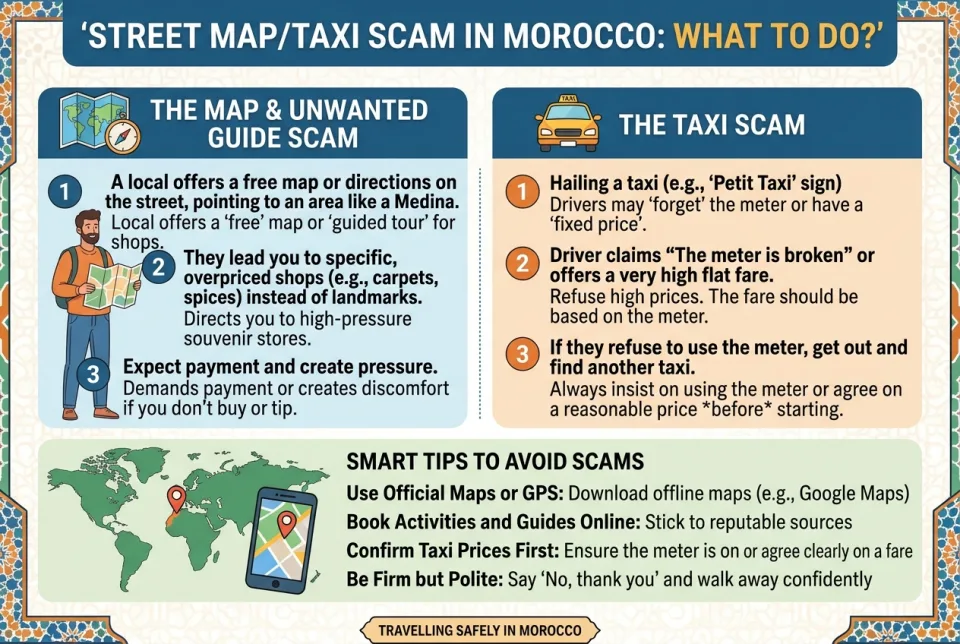
Quick answer
5 steps — read this before anything else
-
1
Agree on the fare or insist on the meter before getting in.
-
2
If a scam is attempted, stay calm, refuse firmly, and walk away to a busy public place.
-
3
Do not hand over your phone, wallet, or documents to anyone.
-
4
Report serious incidents to the local police (DGSN) or tourist police.
-
5
Use ride-hailing apps or licensed taxis from official ranks when possible.
Warning
If you are threatened, physically restrained, or robbed, call the police immediately on 19 (or 177 for the Gendarmerie). Do not resist physically if someone tries to grab your belongings; your safety comes first.
Morocco is a welcoming country, but in busy tourist areas such as Marrakech, Fez, and Casablanca, some visitors encounter taxi overcharging or 'helpful' strangers who use a map or directions to demand money. This guide explains how these scams work and what to do if you are targeted.
What is happening
In a taxi scam, a driver may refuse to use the meter, quote an inflated price, take a longer route, or claim your hotel is closed and offer an alternative. In a street map scam, someone approaches you with a map or offers directions, then walks you to a shop, restaurant, or 'official' guide and demands payment for their help. These are confidence tricks, not violent crimes, but they can be stressful.
What to do first
- Stay calm and keep your distance. Do not raise your voice or get into a physical confrontation.
- Refuse clearly. Say 'No, thank you' and walk away toward a busy street, hotel lobby, or shop.
- Do not hand over money or belongings. If you have already paid, do not pay again. If someone grabs your bag, let it go rather than risk injury.
- Move to a safe public place. Enter a hotel, café, or shop and ask staff for help if you feel followed.
- Report serious incidents. Contact the local police (DGSN) or the tourist police. In an emergency, call the police on 19 (or 177 for the Gendarmerie outside cities).
What NOT to do
- Do not get into an unmarked taxi or one whose driver refuses the meter without agreeing on a price first.
- Do not follow a stranger who offers to guide you to a 'special' shop or official office.
- Do not hand your phone to anyone to 'check a map' or make a call.
- Do not leave your bags unattended or let someone carry them without your clear agreement.
- Do not pay 'fines' or 'fees' on the spot to someone who claims to be an official.
When to call for help
Call the police immediately if you are threatened, physically restrained, robbed, or if someone refuses to let you leave. If you are in a taxi and feel unsafe, ask the driver to stop in a busy area and get out. If you are with a tour guide or driver arranged by a hotel or agency, report the incident to them as well.
How to prevent it
- Use ride-hailing apps (such as Careem or inDrive) or taxis from official ranks. Ask your hotel to call a trusted taxi.
- Insist on the meter ('compteur, s'il vous plaît') or agree on the fare before starting the journey.
- Know the approximate fare to your destination from your hotel or a guidebook.
- Keep small notes ready and avoid showing large amounts of cash.
- Politely decline unsolicited help with directions; use your own map or phone.
Most trips in Morocco are safe and pleasant. By staying calm, refusing firmly, and moving to a public place, you can handle a scam attempt and continue your journey. If you are ever in immediate danger, call the police on 19.
Sources & references
Spotted an error? Report it — we correct factual mistakes promptly.
Read next
Carbon monoxide detector alarm: what to do?
If your carbon monoxide detector sounds, treat it as an emergency: get everyone outside to fresh air and call for help. Learn the steps to take and mistakes to avoid.
Smoke detector beeping low battery: what to do?
A chirping smoke detector usually means a low battery. Learn how to safely silence it, replace the battery, and keep your home protected.
Gasoline smell in the garage: what to do?
A strong gasoline smell in your garage is a fire and health hazard. Act quickly to eliminate ignition sources, ventilate, and find the source.
Home security camera offline: what to do?
When your security camera goes offline, quick troubleshooting can restore it. Follow these steps to diagnose and fix common issues safely.
Related handy tools
Checklists, decision guides, scenarios and quizzes for the same situation.