Wasp nest near your entrance: what to do?
A wasp nest by your door can be dangerous, especially if someone is allergic. Learn how to stay safe, when to call a professional, and how to prevent future nests.
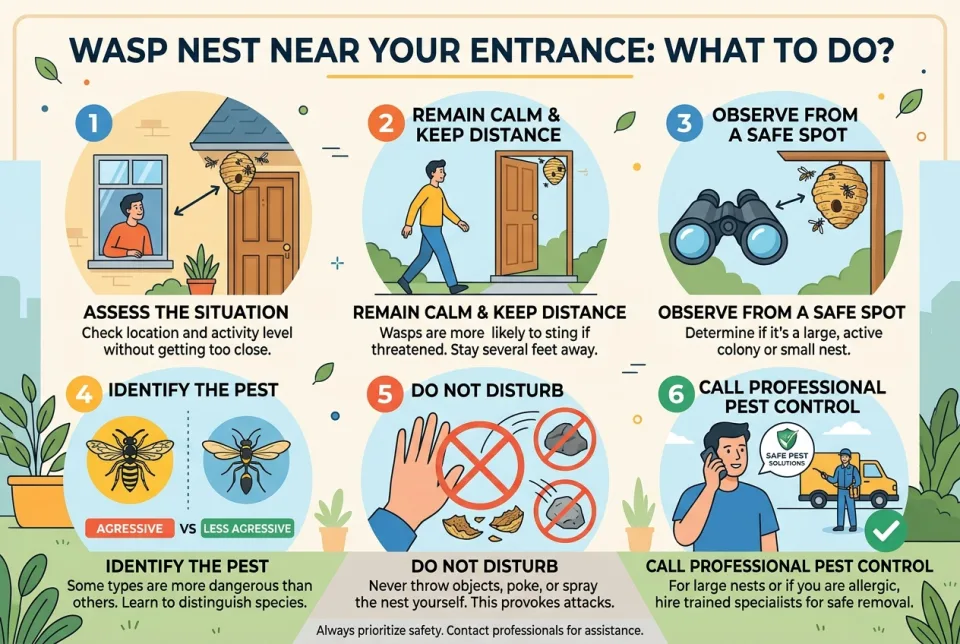
Quick answer
5 steps — read this before anything else
-
1
Keep a safe distance and do not disturb the nest.
-
2
Identify the type of insect and the nest location from afar.
-
3
Call a professional pest control service for removal.
-
4
Warn others and keep children and pets away.
-
5
If anyone is stung and shows severe allergic signs, call emergency services immediately.
Warning
Wasps can sting repeatedly and may attack in large numbers if provoked. Never attempt to remove a nest yourself, especially if you are allergic to stings. Call a professional.
Discovering a wasp nest near your entrance can be alarming, but panicking or trying to remove it yourself can lead to serious injury. Wasps can sting repeatedly and may attack in large numbers if they feel threatened. This guide explains what to do, what to avoid, and when to seek professional help.
What is happening?
Wasps often build nests in sheltered spots like doorways, eaves, or garages. The nest may be small at first, but it can grow quickly. Wasps become more aggressive if the nest is disturbed or if they feel their colony is under threat.
Emergency warning
If anyone is stung and shows signs of a severe allergic reaction (difficulty breathing, swelling of the face or throat, dizziness, or loss of consciousness), call emergency services immediately. This is a medical emergency.
What to do first
- Stay calm and keep your distance. Do not swat at wasps or attempt to remove the nest yourself.
- Identify the nest location and type of insect. Observe from a safe distance. Wasps are typically more aggressive than bees, but correct identification helps professionals.
- Keep people and pets away. Close windows and doors near the nest, and avoid using the entrance if possible.
- Call a professional pest control service. They have the protective gear and expertise to remove the nest safely.
- Warn others. Inform family members, neighbors, or coworkers about the nest so they can avoid the area.
What NOT to do
- Do not try to remove the nest yourself. DIY removal can provoke a mass attack.
- Do not use water hoses or throw objects at the nest. This agitates the wasps.
- Do not block the entrance completely. Wasps may find alternative exits and become more aggressive.
- Do not use insect sprays from a distance. They may not reach the nest and can anger the wasps.
- Do not assume the nest is empty during the day. Wasps are active during daylight hours.
When to call for help
Call a professional pest control service as soon as you notice a nest near a high-traffic area. If the nest is large or you suspect a severe allergy in the household, treat it as urgent. If someone is stung and shows severe symptoms, call emergency services immediately.
What to monitor
After professional removal, watch for returning wasps or new nest-building activity. Check the area periodically for a few weeks. If you see wasps hovering around the same spot, contact the pest control service again.
How to prevent future nests
- Seal entry points. Repair cracks in walls, gaps around windows, and openings in eaves.
- Remove food sources. Keep outdoor trash cans covered and clean up fallen fruit.
- Inspect your property regularly. Check sheltered areas in spring and early summer when wasps start building nests.
- Use preventive traps or decoys. These can deter wasps from settling, but they are not a substitute for professional removal if a nest already exists.
Remember, wasps are beneficial insects, but they pose a risk near entrances. Always prioritize safety and rely on professionals for nest removal. This information is general and not a substitute for professional pest control advice.
Spotted an error? Report it — we correct factual mistakes promptly.
Read next
Carbon monoxide detector alarm: what to do?
If your carbon monoxide detector sounds, treat it as an emergency: get everyone outside to fresh air and call for help. Learn the steps to take and mistakes to avoid.
Smoke detector beeping low battery: what to do?
A chirping smoke detector usually means a low battery. Learn how to safely silence it, replace the battery, and keep your home protected.
Gasoline smell in the garage: what to do?
A strong gasoline smell in your garage is a fire and health hazard. Act quickly to eliminate ignition sources, ventilate, and find the source.
Elderly parent living alone: safety setup
A practical, room-by-room safety setup for an older adult living alone, covering falls, emergencies, medication, and daily check-ins.
Related handy tools
Checklists, decision guides, scenarios and quizzes for the same situation.