Suspicious person at your door: what to do?
A stranger at your door can be unsettling. Learn how to stay safe, assess the situation, and respond without putting yourself at risk.
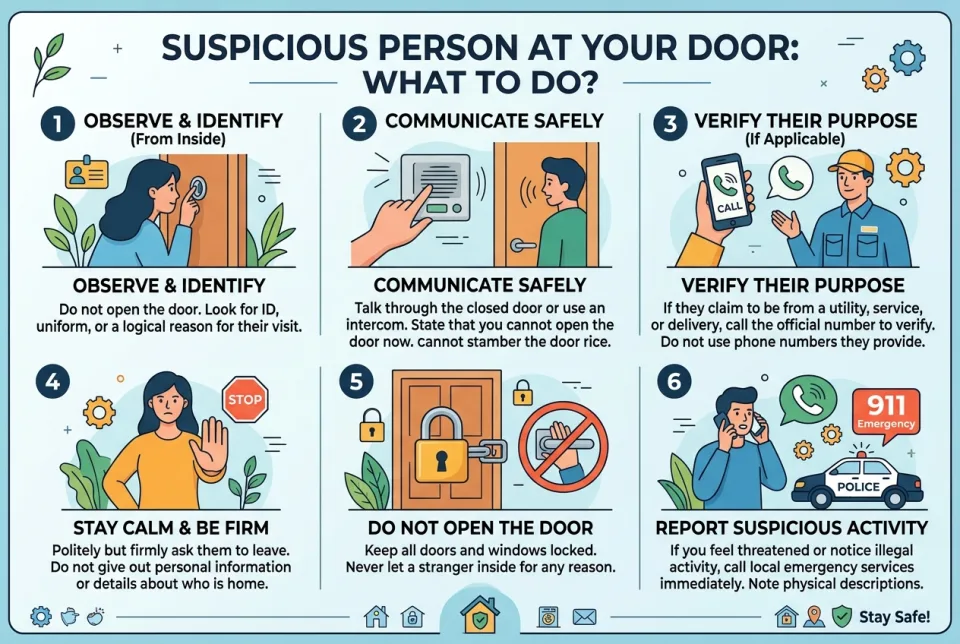
Quick answer
5 steps — read this before anything else
-
1
Do not open the door. Speak through the door or a window.
-
2
Make it clear someone is home and you are not interested.
-
3
If the person does not leave or acts threateningly, call the police.
-
4
Note a description and any vehicle details if safe to do so.
-
5
Never confront or chase the person.
Warning
Never open the door to a stranger if you feel unsafe. If the person tries to force entry or threatens you, call emergency services immediately.
Someone you do not recognize is at your door, and something feels off. Your safety comes first. Most strangers at the door are harmless, but you can take simple steps to stay secure without being rude or confrontational.
What is happening
A person may be at your door for many reasons: a delivery, a lost traveler, a salesperson, or someone with criminal intent. You cannot know their intention, so treat the situation with calm caution. The goal is to avoid opening the door while making it clear the home is occupied.
What to do first
- Do not open the door. Speak through the closed door or a nearby window. Keep the door locked.
- Let them know someone is home. Say clearly, "I am not interested" or "I cannot help you." A confident voice can deter someone with bad intentions.
- Ask them to state their business. If they claim to be a utility worker, delivery person, or official, ask for identification and a phone number to verify. Do not open the door to check ID.
- Use a peephole or window to observe the person from a safe distance. Note their appearance, clothing, and any vehicle.
- Call the police if the person does not leave, acts aggressively, tries to force entry, or loiters. Use the non-emergency number if it is not urgent; call emergency services if you feel immediate danger.
What NOT to do
- Do not open the door to a stranger, even if they seem friendly or claim an emergency.
- Do not confront, chase, or follow the person. Your safety is more important than property.
- Do not share personal information such as whether you live alone or your schedule.
- Do not leave the door unlocked after the person leaves. Check that it is secure.
- Do not post about the incident on social media while the person may still be nearby; it can reveal your location.
When to call for help
Call the police immediately if the person tries to force the door, displays a weapon, makes threats, or refuses to leave after you have asked. If you are in immediate danger, call emergency services. If the person leaves but you remain concerned, report the incident using the non-emergency line. Provide a description and any vehicle details.
What to monitor
After the person leaves, watch for any return or unusual activity. Keep doors and windows locked. If you have a home security system or camera, review footage. Alert neighbors if you feel comfortable doing so.
How to prevent it
- Keep doors locked at all times, even when you are home.
- Use a peephole, door chain, or video doorbell.
- Install motion-sensor lights and keep entrances well lit.
- Trim bushes near doors and windows to remove hiding spots.
- Teach everyone in the household, including children, never to open the door to strangers.
Stay calm, keep the door closed, and trust your instincts. If something feels wrong, call the police. Your safety is worth the call.
Spotted an error? Report it — we correct factual mistakes promptly.
Read next
Carbon monoxide detector alarm: what to do?
If your carbon monoxide detector sounds, treat it as an emergency: get everyone outside to fresh air and call for help. Learn the steps to take and mistakes to avoid.
Gasoline smell in the garage: what to do?
A strong gasoline smell in your garage is a fire and health hazard. Act quickly to eliminate ignition sources, ventilate, and find the source.
Elderly parent living alone: safety setup
A practical, room-by-room safety setup for an older adult living alone, covering falls, emergencies, medication, and daily check-ins.
BBQ gas canister safety checks: what to do?
A step-by-step guide to safely checking your BBQ gas canister and connections, including leak testing and what to do if you smell gas.
Related handy tools
Checklists, decision guides, scenarios and quizzes for the same situation.