Helmet fitting for skateboards and scooters: what to do?
A properly fitted helmet is the most effective way to protect your head while skateboarding or scootering. Learn how to check size, adjust straps, and confirm a secure fit before you ride.
Quick answer
5 steps — read this before anything else
-
1
Measure your head circumference and choose a helmet size that matches the manufacturer's chart.
-
2
Place the helmet level on your head, about two fingers above your eyebrows.
-
3
Adjust the rear fit dial or pads until the helmet is snug and does not shift when you shake your head.
-
4
Tighten the chin strap so you can fit only one finger under it, and form a V just below each ear.
-
5
Roll your head forward and backward to confirm the helmet stays in place and does not cover your eyes.
Warning
A helmet that is loose, unbuckled, or damaged may not protect you in a fall. Always wear a properly fitted, undamaged helmet when skateboarding or scootering.
A helmet only protects you if it fits correctly. A loose helmet can shift on impact, and a poorly adjusted one may not cover the right parts of your head. Whether you are skateboarding, scootering, or riding a bike, the steps below help you get a safe, secure fit.
What is happening
Skateboard and scooter helmets are designed to protect against falls and impacts. They work best when they sit level, stay in place during movement, and are worn every time you ride. A proper fit also keeps the helmet comfortable so you are more likely to wear it.
Step by step: fitting your helmet
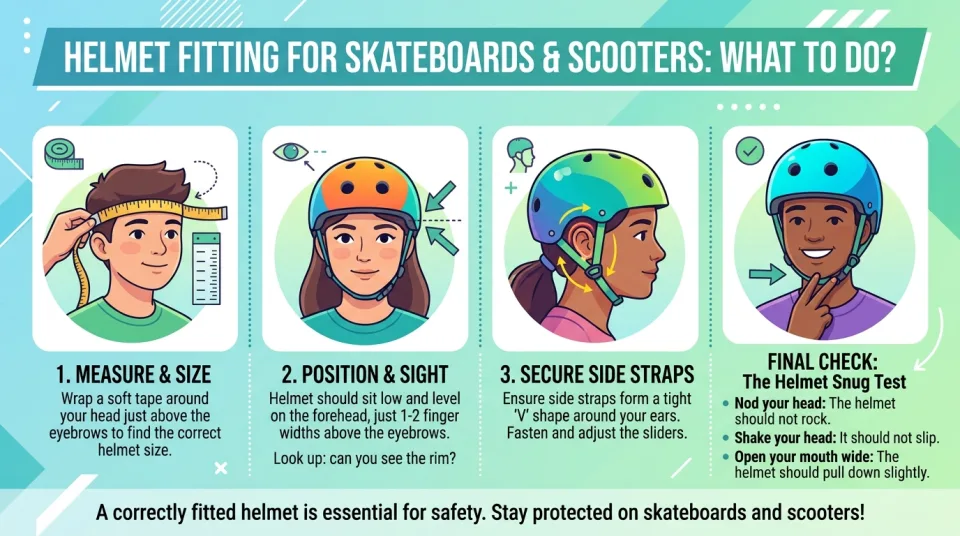
- Measure your head. Use a soft tape measure around the widest part of your head, just above your ears and across your forehead. Compare with the helmet maker's size chart. If you are between sizes, follow the manufacturer's advice, which is often to size up and use the included pads.
- Position the helmet. Place it on your head so it sits level, not tilted back. The front edge should be about two fingers' width above your eyebrows. A helmet tipped back leaves your forehead exposed.
- Adjust the rear fit system. Turn the dial or adjust the pads at the back until the helmet feels snug all around. It should not press painfully, but it should not wobble either.
- Check the chin strap. Fasten the buckle and tighten the strap until you can fit only one finger under it. The straps should form a V shape just below each ear. Adjust the side sliders if needed.
- Test the fit. Open your mouth wide: the helmet should pull down slightly on your forehead. Shake your head gently side to side and nod; the helmet should stay in place. Roll your head forward and back; the helmet should not slide over your eyes or lift off your head.
What NOT to do
- Do not wear a helmet tipped back or forward. It must sit level.
- Do not leave the chin strap loose or unbuckled. An unfastened helmet can come off in a fall.
- Do not use a helmet that is cracked, dented, or has been in a crash. Replace it.
- Do not share a helmet that does not fit you, even if it is the right size for someone else.
- Do not wear a hat or thick beanie under the helmet; it changes the fit.
When to replace a helmet
Replace your helmet after any impact, even if it looks fine. Also replace it if it no longer fits snugly, if the straps are frayed, or if the manufacturer's recommended replacement age has passed (check the label).
How to prevent problems
Check the fit before every ride: the helmet should be level, snug, and buckled. Teach children to do the same and check their helmets for them. Store your helmet away from heat and direct sunlight, which can damage the materials.
If you are unsure about the fit, ask a staff member at a reputable bike or skate shop to help you adjust it. A few minutes of checking now can make every ride safer.
Sources & references
Spotted an error? Report it — we correct factual mistakes promptly.
Read next
Card theft in the souk: what to do?
If your credit or debit card is stolen in a busy market, acting quickly can limit fraudulent charges. Here is a step-by-step guide to securing your accounts and reporting the theft.
Carbon monoxide detector alarm: what to do?
If your carbon monoxide detector sounds, treat it as an emergency: get everyone outside to fresh air and call for help. Learn the steps to take and mistakes to avoid.
Elderly parent living alone: safety setup
A practical, room-by-room safety setup for an older adult living alone, covering falls, emergencies, medication, and daily check-ins.
BBQ gas canister safety checks: what to do?
A step-by-step guide to safely checking your BBQ gas canister and connections, including leak testing and what to do if you smell gas.
Related handy tools
Checklists, decision guides, scenarios and quizzes for the same situation.