Carjacking prevention basics: what to do?
Learn practical steps to reduce your risk of carjacking and how to respond safely if you are threatened.
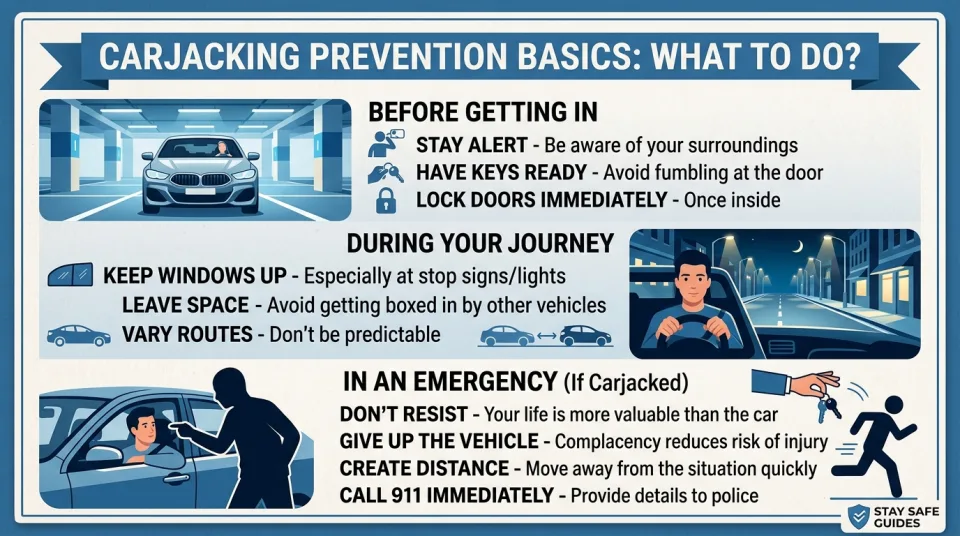
Quick answer
5 steps — read this before anything else
-
1
Stay alert and keep your doors locked and windows up while driving.
-
2
Park in well-lit, busy areas and avoid isolated spots.
-
3
If threatened, do not resist: give up the car and move away.
-
4
Call emergency services as soon as it is safe.
-
5
Report any suspicious activity to the police.
Warning
If you are threatened, do not resist. Your life is more valuable than your vehicle. Call emergency services as soon as it is safe.
Carjacking is a serious crime that can happen to anyone, but taking a few precautions can reduce your risk and help you stay safe. This guide covers practical prevention tips and what to do if you are confronted.
What is carjacking?
Carjacking is the act of stealing a vehicle by force, threat, or intimidation while the driver or passengers are present. It often occurs at intersections, parking lots, gas stations, and residential driveways.
Prevention: before you drive
- Plan your route and know where you are going. Avoid unfamiliar or isolated areas, especially at night.
- Park in well-lit, busy locations and lock your doors. Avoid parking next to large vehicles that can block visibility.
- Keep your keys ready as you approach your car, and check the back seat before getting in.
- Don't leave valuables in sight; put them in the trunk before you park.
Prevention: while driving
- Keep doors locked and windows up at all times.
- Stay alert at stoplights and intersections. Leave enough space to maneuver around the car in front.
- Avoid distractions like phone use, which can make you an easier target.
- Be cautious when someone approaches your car. If you feel uneasy, drive away if possible.
If you are threatened
Your safety is more important than your car. If someone demands your vehicle:
- Do not resist. Hand over your keys and step away from the vehicle.
- Keep your hands visible and avoid sudden movements.
- Move to a safe location and call emergency services immediately.
- Provide details to the police: description of the attacker, direction of travel, and license plate if you can do so safely.
What NOT to do
- Do not chase the carjacker or try to stop them.
- Do not argue or fight over the vehicle.
- Do not leave children or pets in the car when you exit.
- Do not assume it won't happen to you; stay vigilant.
When to call for help
Call emergency services immediately if you are threatened or if you witness a carjacking. If you are not in immediate danger but want to report suspicious activity, use the non-emergency police number.
After a carjacking
Once safe, contact the police and provide as much information as possible. If you have a tracking device or app, inform the authorities. Seek support from friends, family, or a counselor if you feel traumatized.
Remember: no car is worth your life. Stay calm, comply, and get to safety.
Spotted an error? Report it — we correct factual mistakes promptly.
Read next
Card theft in the souk: what to do?
If your credit or debit card is stolen in a busy market, acting quickly can limit fraudulent charges. Here is a step-by-step guide to securing your accounts and reporting the theft.
Carbon monoxide detector alarm: what to do?
If your carbon monoxide detector sounds, treat it as an emergency: get everyone outside to fresh air and call for help. Learn the steps to take and mistakes to avoid.
Elderly parent living alone: safety setup
A practical, room-by-room safety setup for an older adult living alone, covering falls, emergencies, medication, and daily check-ins.
BBQ gas canister safety checks: what to do?
A step-by-step guide to safely checking your BBQ gas canister and connections, including leak testing and what to do if you smell gas.
Related handy tools
Checklists, decision guides, scenarios and quizzes for the same situation.