BBQ gas canister safety checks: what to do?
A step-by-step guide to safely checking your BBQ gas canister and connections, including leak testing and what to do if you smell gas.
Quick answer
5 steps — read this before anything else
-
1
Always check for leaks outdoors, never with a flame.
-
2
Inspect the canister, hose, and regulator for damage or expiry.
-
3
Perform a soapy water test on all connections.
-
4
If you smell gas, turn off the canister, extinguish flames, and ventilate.
-
5
Call emergency services if you cannot stop the leak.
Warning
Gas leaks can cause fire or explosion. Never check for leaks with a flame. If you smell gas, turn off the canister if safe to do so, extinguish all flames, and call emergency services.
Before you fire up your BBQ, a few simple safety checks on the gas canister and connections can prevent accidents. This guide covers how to inspect your equipment, test for leaks, and what to do if you suspect a problem. Always follow the manufacturer's instructions for your specific BBQ and canister.
What is happening
Liquid petroleum gas (LPG) canisters are safe when used correctly, but leaks or damaged equipment can lead to fire or explosion. Regular checks reduce the risk. If you smell gas or hear a hissing sound, treat it as an emergency.
Emergency warning
If you smell gas or suspect a leak, do not light the BBQ or use any electrical switches. Move away from the area and call your local emergency services immediately if the leak is large or uncontrollable.
Step by step: safety checks
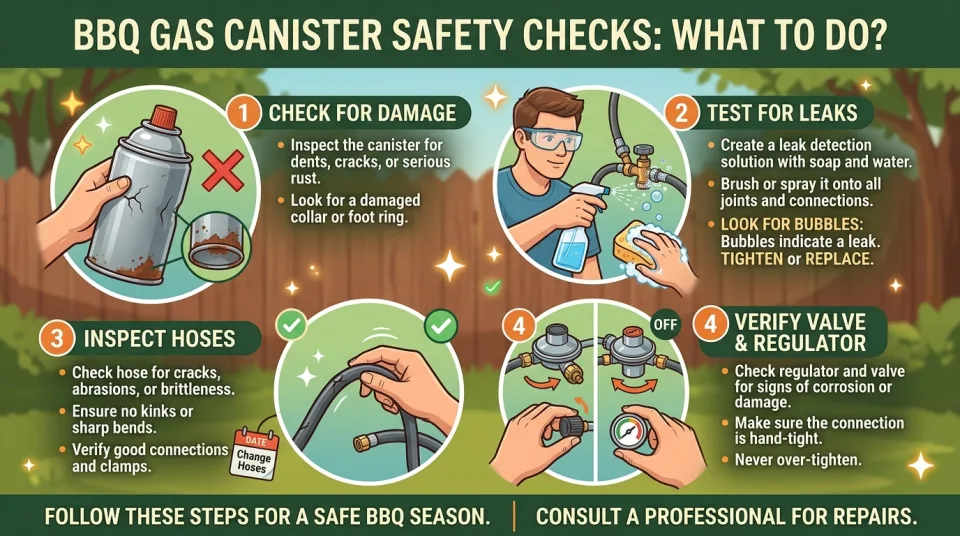
- Check the canister condition: Look for dents, rust, or damage. Ensure the canister is within its expiry date (usually stamped on the collar). Never use a damaged canister.
- Inspect the hose and regulator: Check for cracks, cuts, or wear. The hose should be flexible and free from kinks. Ensure the regulator is firmly attached to the canister and the hose connections are tight.
- Verify connections: Make sure the hose is securely connected to both the regulator and the BBQ inlet. Hand-tighten only; do not over-tighten with tools.
- Perform a leak test: Mix soapy water (a few drops of liquid soap in water) and brush it onto the canister valve, regulator, and hose connections. Turn on the gas at the canister (but do not light the BBQ). If bubbles form, there is a leak. Tighten the connection or replace the faulty part. Never use a flame to test for leaks.
- Check for blockages: Inspect the burner ports for spider webs or debris. Use a pipe cleaner or brush to clear them.
- Store safely: Store canisters upright in a well-ventilated area away from heat sources, and never indoors.
What NOT to do
- Never use a match or lighter to check for leaks.
- Do not use a canister that is damaged, rusty, or past its expiry date.
- Do not over-tighten connections; this can damage seals.
- Do not store gas canisters indoors or in enclosed spaces.
- Do not ignore a gas smell; always investigate.
When to call for help
If you cannot stop a leak by tightening connections, or if you smell gas strongly, evacuate the area and call your local emergency services. For minor issues, contact a qualified gas engineer.
What to monitor
After connecting, monitor for hissing sounds or the smell of gas during use. If the flame burns yellow instead of blue, it may indicate incomplete combustion; turn off and check the burner and air shutter.
How to prevent it
Regular maintenance and proper storage extend the life of your equipment. Replace hoses every few years, and have your BBQ serviced annually by a professional. Always follow the manufacturer's guidelines.
Stay safe by making these checks a routine before every BBQ. If in doubt, do not use the equipment and seek professional advice.
This is general information and not a substitute for professional advice. In an emergency, call your local emergency services.
Spotted an error? Report it — we correct factual mistakes promptly.
Read next
Card theft in the souk: what to do?
If your credit or debit card is stolen in a busy market, acting quickly can limit fraudulent charges. Here is a step-by-step guide to securing your accounts and reporting the theft.
Carbon monoxide detector alarm: what to do?
If your carbon monoxide detector sounds, treat it as an emergency: get everyone outside to fresh air and call for help. Learn the steps to take and mistakes to avoid.
Helmet fitting for skateboards and scooters: what to do?
A properly fitted helmet is the most effective way to protect your head while skateboarding or scootering. Learn how to check size, adjust straps, and confirm a secure fit before you ride.
Elderly parent living alone: safety setup
A practical, room-by-room safety setup for an older adult living alone, covering falls, emergencies, medication, and daily check-ins.
Related handy tools
Checklists, decision guides, scenarios and quizzes for the same situation.