Flooded basement: what to do?
A flooded basement can be dangerous due to electrical and health hazards. Follow these steps to stay safe and start cleanup.
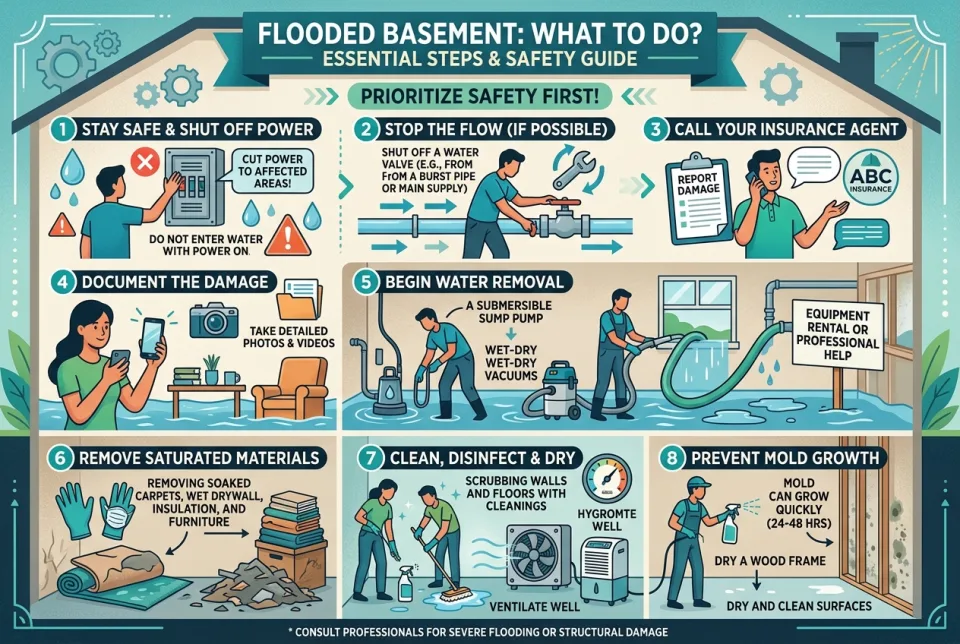
Quick answer
5 steps — read this before anything else
-
1
Stay out of the basement until you are sure it is safe.
-
2
Turn off electricity at the main breaker only if you can do so without touching water.
-
3
Call your utility company if you suspect a gas leak or downed power lines.
-
4
Wear protective gear and begin pumping water only after the area is safe.
-
5
Document damage with photos for insurance claims.
Warning
Never enter a flooded basement if the power is on or if you see downed power lines. Water can be electrically charged. Call 911 if there is immediate danger.
Important — please read
This content is general educational and informational only, and is not a substitute for professional medical advice, diagnosis or treatment. Always seek the advice of a qualified health provider with any questions you may have about a medical condition. Never disregard or delay seeking professional medical care because of something you read here. In an emergency or life-threatening situation, call your local emergency services (police, fire or ambulance) immediately.
A flooded basement is stressful, but your first priority is safety. Water and electricity are a deadly combination, and floodwater can hide sharp objects, sewage, and structural damage. Do not rush in. Follow these steps to protect yourself and your home.
Emergency warning
If water is rising quickly, if you see sparks or downed power lines, or if you smell gas, call 911 or your local emergency services immediately and evacuate. Do not enter the basement.
What to do first
- Stay out of the water. Do not wade into a flooded basement. The water may be electrically charged from outlets or appliances, and it can contain bacteria and chemicals.
- Shut off electricity safely. If you can reach the main breaker without stepping in water, turn it off. If the panel is in the flooded area, do not touch it. Call an electrician or your utility company.
- Check for gas leaks. If you smell gas or hear hissing, leave the house and call your gas company from outside.
- Call your insurance company. Report the damage as soon as possible. Take photos and videos before you start cleaning.
Step by step: safe cleanup
- Wait for the water to stop rising. If the flood is from a storm, wait until the rain stops and the water level is stable.
- Wear protective gear. Use rubber boots, gloves, and eye protection. Floodwater can contain sewage and harmful bacteria.
- Pump water out slowly. If the water is deep, pump it out in stages (about one-third of the depth per day). Removing all the water at once can cause walls to collapse due to hydrostatic pressure.
- Remove standing water and mud. Use a wet/dry vacuum and shovels. Dispose of debris according to local guidelines.
- Clean and disinfect. Scrub hard surfaces with soap and water, then disinfect with a solution of one cup of bleach per gallon of water. Never mix bleach with ammonia or other cleaners.
- Dry the area thoroughly. Use fans, dehumidifiers, and open windows to prevent mold growth. Mold can start within 24-48 hours.
- Check for structural damage. Look for cracks in the foundation, sagging ceilings, or warped walls. If you suspect damage, call a professional engineer or contractor before using the space.
What NOT to do
- Do not enter the basement if the power is still on or if you see electrical equipment in the water.
- Do not use a gas-powered pump or generator indoors; they produce deadly carbon monoxide.
- Do not pump all the water out at once if the water is deep; it can cause structural collapse.
- Do not ignore sewage backup; it requires professional cleanup.
- Do not skip protective clothing; floodwater is a health hazard.
When to call for help
Call a professional if:
- You suspect electrical damage or the breaker panel was submerged.
- There is sewage backup or the water is heavily contaminated.
- You see structural cracks or sagging.
- Mold covers more than 10 square feet.
Prevention for the future
- Install a sump pump with a battery backup.
- Keep gutters and downspouts clear and direct water away from the foundation.
- Seal cracks in the foundation and walls.
- Consider a backwater valve to prevent sewage backup.
After the immediate crisis, focus on drying and disinfecting to prevent mold. If you are unsure about safety, always err on the side of caution and call a professional.
Sources & references
Spotted an error? Report it — we correct factual mistakes promptly.
Read next
Wet carpet after a leak: what to do?
A wet carpet after a leak can lead to mold and structural damage if not handled quickly. Learn the safe steps to dry it, prevent mold, and know when to call a professional.
Dishwasher flooded the kitchen floor: what to do?
A flooded kitchen from a dishwasher can cause damage and safety hazards. Act quickly to stop the water, cut power, and prevent further issues.
Water infiltration through the wall: what to do?
Water seeping through a wall can lead to structural damage and mold. Learn how to respond quickly and prevent further issues.
Ponding water around the house foundation: what to do?
Standing water near your foundation can lead to costly water damage and structural issues. Learn how to identify the cause, take immediate action, and prevent future problems.
Related handy tools
Checklists, decision guides, scenarios and quizzes for the same situation.