Dishwasher flooded the kitchen floor: what to do?
A flooded kitchen from a dishwasher can cause damage and safety hazards. Act quickly to stop the water, cut power, and prevent further issues.
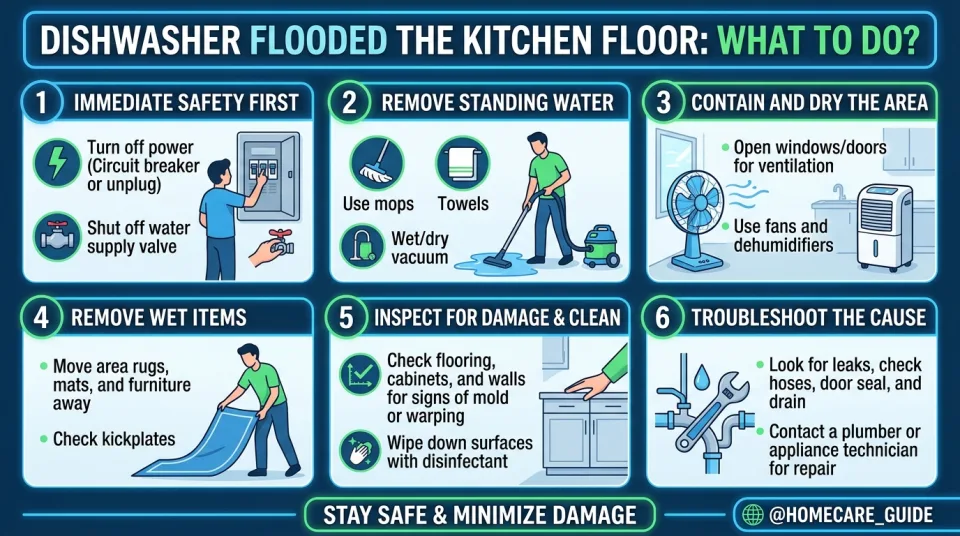
Quick answer
5 steps — read this before anything else
-
1
Stop the dishwasher and turn off its power at the circuit breaker.
-
2
Shut off the water supply valve under the sink or behind the dishwasher.
-
3
Remove standing water with towels or a wet/dry vacuum.
-
4
If water is near outlets or the electrical panel, do not touch anything electrical; call an electrician.
-
5
Call a plumber or appliance technician to fix the leak.
Warning
Water near electrical outlets or the breaker panel is a shock hazard. Do not touch anything electrical; call an electrician.
Important — please read
This content is general educational and informational only, and is not a substitute for professional medical advice, diagnosis or treatment. Always seek the advice of a qualified health provider with any questions you may have about a medical condition. Never disregard or delay seeking professional medical care because of something you read here. In an emergency or life-threatening situation, call your local emergency services (police, fire or ambulance) immediately.
Water spreading across your kitchen floor from a dishwasher is stressful, but quick action can limit damage and keep you safe. Stay calm and follow these steps.
What is happening
A dishwasher can leak from a worn door gasket, a loose hose connection, a faulty water inlet valve, or a clogged drain. The water may be clean or soapy, and it can pool under the appliance or spread across the floor.
Emergency warning
If water is near electrical outlets, power cords, or the electrical panel, do not touch anything electrical. Water and electricity are a dangerous combination. Call a qualified electrician immediately. If you see sparks or smell burning, evacuate and call local emergency services.
What to do first
- Stop the dishwasher. Press cancel or turn it off.
- Turn off power at the circuit breaker. If you can safely reach the breaker panel without touching water, switch off the dishwasher's circuit. If the panel is in a wet area, do not attempt it; call an electrician.
- Shut off the water supply. Look for a valve under the sink or behind the dishwasher and turn it clockwise until it stops.
- Remove standing water. Use towels, a mop, or a wet/dry vacuum. Work from the edges toward the center to contain the spread.
- Protect your belongings. Move rugs, furniture, and electrical items away from the wet area.
What NOT to do
- Do not use a regular vacuum to remove water; it can cause electric shock.
- Do not ignore water near electrical outlets or cords.
- Do not run the dishwasher again until it is repaired.
- Do not use harsh chemicals to clean up; they can damage floors and pose health risks.
When to call for help
Call a plumber or appliance repair service if you cannot stop the leak, if the dishwasher needs repair, or if water has soaked into cabinets or walls. If water has reached electrical outlets or the breaker panel, call an electrician. For extensive flooding or if you suspect a broken pipe, call a water damage restoration professional.
What to monitor
After cleanup, watch for signs of moisture: warped floorboards, musty odors, or bubbling paint. These may indicate hidden water damage that needs professional attention.
How to prevent it
- Check hoses and connections regularly for wear.
- Clean the filter and ensure the drain is clear.
- Inspect the door gasket for cracks or debris.
- Consider a leak detector or a drip pan under the dishwasher.
Acting quickly can minimize damage. If the leak is not obvious or you are unsure, call a professional.
This is general information and not a substitute for professional advice. In an emergency, call local emergency services.
Spotted an error? Report it — we correct factual mistakes promptly.
Read next
Damp patches on basement walls after snow melts: what to do?
Spring thaw can push water through foundation walls and cause damp patches in your basement. Learn how to find the source, dry the area safely, and prevent future problems.
Ceiling water stain appears: what to do?
A new water stain on your ceiling can signal a leak, condensation, or a roof problem. Act quickly to limit damage and prevent mold.
Refrigerator water line leaks: what to do?
A leaking refrigerator water line can cause serious water damage. Learn how to stop the leak, clean up safely, and prevent future problems.
Blocked toilet or overflowing drain: what to do?
A blocked toilet or overflowing drain can quickly turn into a mess or a health hazard. Here is how to stop the flow, clear a simple blockage safely, and know when to call a professional.
Related handy tools
Checklists, decision guides, scenarios and quizzes for the same situation.