Suspicious charge on credit card: what to do?
A suspicious charge on your credit card can be alarming, but acting quickly can limit the damage. Here is a step-by-step guide to dispute it and protect your account.
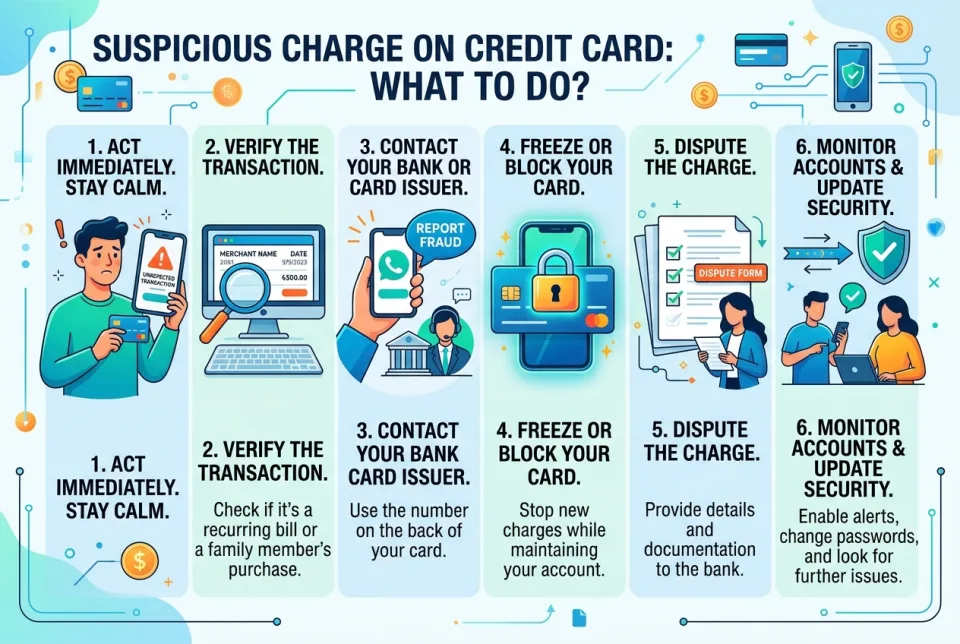
Quick answer
4 steps — read this before anything else
-
1
Contact your credit card issuer immediately to report the charge and lock your card.
-
2
Review recent transactions for other unauthorized activity.
-
3
File a dispute with your card issuer for the fraudulent charge.
-
4
Monitor your account closely and consider a credit freeze if identity theft is suspected.
Important — please read
This content is general educational and informational only, and is not a substitute for professional medical advice, diagnosis or treatment. Always seek the advice of a qualified health provider with any questions you may have about a medical condition. Never disregard or delay seeking professional medical care because of something you read here. In an emergency or life-threatening situation, call your local emergency services (police, fire or ambulance) immediately.
Discovering a charge you do not recognize on your credit card can be stressful. It might be a simple mistake, such as a merchant using a different name, or it could be fraud. Either way, swift action is key to protecting your finances.
What is happening?
A suspicious charge is any transaction you do not recognize or did not authorize. It could result from a merchant error, a subscription you forgot about, or fraudulent activity such as card theft or data breach. Your credit card issuer has processes to investigate and resolve such issues.
Step by step: what to do first
- Contact your card issuer immediately. Call the number on the back of your card or use the issuer's official app or website. Report the suspicious charge and ask them to block your card to prevent further unauthorized use.
- Review recent transactions. Check your statement carefully for other charges you do not recognize. Fraudsters often test with small amounts before making larger purchases.
- File a dispute. Your issuer will guide you through the process. They may ask you to sign a form or provide details. Under U.S. law (Fair Credit Billing Act), you are protected from unauthorized charges, but you must report them promptly.
- Update your account security. Change your online banking password and PIN if you suspect they are compromised. Enable two-factor authentication if available.
- Monitor your credit. Consider placing a fraud alert or credit freeze with the major credit bureaus (Equifax, Experian, TransUnion) if you suspect identity theft. You can also request free credit reports from AnnualCreditReport.com.
What NOT to do
- Do not ignore the charge hoping it will go away. Fraudulent charges rarely resolve on their own and can multiply.
- Do not contact the merchant directly if you suspect fraud; deal only with your card issuer to avoid tipping off a scammer.
- Do not share your card details with anyone who contacts you unexpectedly, even if they claim to be from your bank. Always call the official number.
- Do not delay reporting because you are unsure. Your issuer can help determine if it is fraud.
When to seek professional help
If you notice multiple unauthorized charges, suspect identity theft, or if your issuer does not resolve the issue satisfactorily, you may need to file a report with the police or a consumer protection agency. In the U.S., you can report identity theft to the Federal Trade Commission (FTC) at IdentityTheft.gov.
What to monitor
After reporting, keep a close eye on your account for at least a few months. Check your statements regularly and review your credit reports for any new accounts or inquiries you did not initiate. Set up transaction alerts with your issuer to be notified of large or unusual charges.
How to prevent future issues
- Use virtual card numbers for online purchases when available.
- Keep your card in sight during transactions and shield the keypad when entering your PIN.
- Regularly review your statements and credit reports.
- Be cautious with phishing emails and phone calls asking for card information.
Acting quickly and staying vigilant can minimize the impact of a suspicious charge. If you have reported the charge and followed your issuer's instructions, you have taken the right steps. For further assistance, contact your card issuer or a consumer protection agency.
Sources & references
Spotted an error? Report it — we correct factual mistakes promptly.
Read next
Bluetooth device refuses to pair: what to do?
When a Bluetooth device won't pair, the fix is usually simple. Follow these steps to get it connected.
Online order never arrived: what to do?
If your online order never arrives, act quickly: check tracking, contact the seller, and know your payment protections. Here is a step-by-step guide to get a refund or replacement.
Printer shows offline: what to do?
A printer showing offline is usually a simple connection or power issue. Follow these steps to get it back online quickly.
Laptop stolen: what to do?
If your laptop is stolen, act quickly to protect your data and accounts. Here is a step-by-step guide to secure your information and report the theft.
Related handy tools
Checklists, decision guides, scenarios and quizzes for the same situation.