Sump pump not working: what to do?
A failed sump pump can lead to basement flooding fast. Learn the safe, step-by-step actions to take when your sump pump stops working, including how to protect your home and when to call a professional.
Quick answer
4 steps — read this before anything else
-
1
Check if the power is on and the pump is plugged in; reset the breaker if tripped.
-
2
Inspect the float switch and clear any debris blocking it.
-
3
If water is rising, act immediately: remove valuables, use a backup pump or buckets, and consider calling a plumber.
-
4
Do not touch electrical components with wet hands or while standing in water.
Warning
Never touch electrical components or stand in water while troubleshooting a sump pump. If water is rising rapidly or electrical outlets are submerged, leave the area and call emergency services.
If your sump pump stops working, you need to act quickly to prevent water damage. A failed pump can cause your basement to flood within hours during heavy rain or snowmelt. Stay calm and follow these steps to troubleshoot safely and protect your home.
What is happening
A sump pump removes accumulated water from a sump pit, typically in a basement or crawlspace. When it fails, water can back up into your home. Common causes include power loss, a stuck float switch, a clogged intake, a broken pump, or a discharged battery in a backup system.
Emergency warning
If water is rising rapidly or you see electrical outlets, cords, or appliances submerged, do not enter the area. Call your local emergency services or a licensed electrician immediately. Water and electricity are a dangerous combination.
What to do first
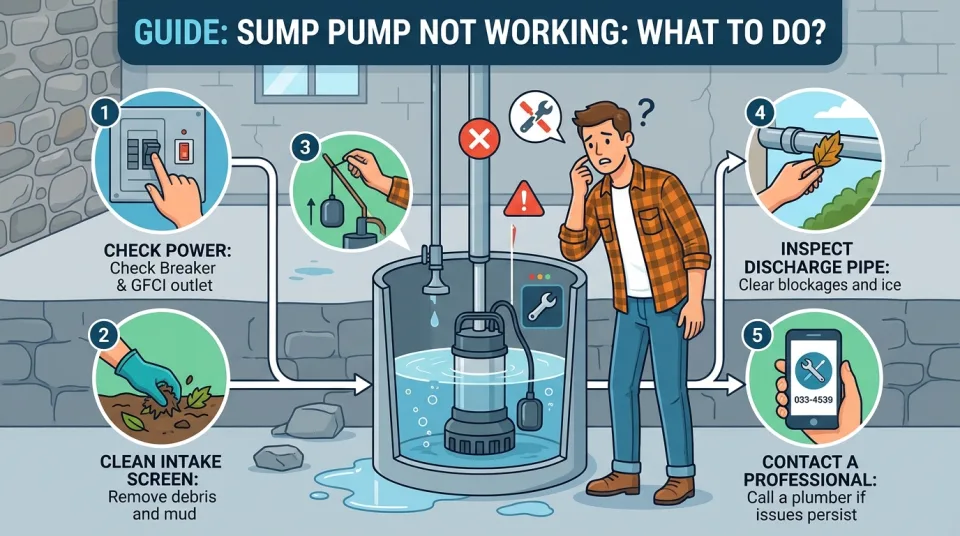
- Check the power. Ensure the pump is plugged into a working outlet. Check your home's circuit breaker panel for a tripped breaker and reset it once. If it trips again, stop and call an electrician.
- Test the float switch. Lift the float manually to see if the pump turns on. If it doesn't, the switch may be stuck or faulty. Clean any debris around it.
- Inspect for clogs. Turn off power to the pump before checking the intake screen or discharge pipe for obstructions. Clear any debris.
- Listen for the motor. If the pump hums but doesn't pump water, it may be jammed or the impeller may be blocked. Turn off power and consult a professional.
- Use a backup. If you have a battery backup sump pump, ensure it is charged and functioning. If not, consider renting or buying a temporary utility pump.
What NOT to do
- Do not stand in water or touch electrical equipment with wet hands. This can cause electrocution.
- Do not ignore the problem hoping it will resolve itself. Water damage can escalate quickly.
- Do not pour chemicals into the sump pit to clear clogs; they can damage the pump and harm the environment.
- Do not attempt major repairs unless you are experienced and have the right tools. Improper repairs can worsen the situation.
When to call for help
Call a licensed plumber or sump pump specialist if:
- The pump doesn't turn on after basic troubleshooting.
- You notice strange noises, vibrations, or burning smells.
- Water is rising despite your efforts.
- You are unsure about any step or feel unsafe.
For electrical issues, always call a qualified electrician.
What to monitor
After restoring function, monitor the pump during heavy rain. Check that it cycles on and off properly and that the discharge pipe directs water away from your foundation. Consider installing a water alarm to alert you to future failures.
How to prevent it
- Test your sump pump every few months by pouring water into the pit to ensure it activates.
- Keep the intake screen and pit clean of debris.
- Install a battery backup system for power outages.
- Have your pump inspected annually by a professional.
Taking quick action can save you from costly water damage. If you're ever in doubt, call a professional. This guide is for general information only and is not a substitute for professional advice.
Spotted an error? Report it — we correct factual mistakes promptly.
Read next
Dishwasher flooded the kitchen floor: what to do?
A flooded kitchen from a dishwasher can cause damage and safety hazards. Act quickly to stop the water, cut power, and prevent further issues.
Mold growing behind furniture on outer walls: what to do?
Mold behind furniture on outer walls is usually caused by trapped moisture and poor air circulation. Learn safe steps to remove it, fix the cause, and prevent it from returning.
Swimming pool water level dropping daily: what to do?
A pool that loses water every day is usually leaking or evaporating too fast. Learn how to tell the difference, find the cause, and fix it safely.
Damp patches on basement walls after snow melts: what to do?
Spring thaw can push water through foundation walls and cause damp patches in your basement. Learn how to find the source, dry the area safely, and prevent future problems.
Related handy tools
Checklists, decision guides, scenarios and quizzes for the same situation.