Stuck in an elevator between floors: what to do?
If an elevator stops between floors, stay calm and use the emergency call button. Never try to force the doors open or climb out.
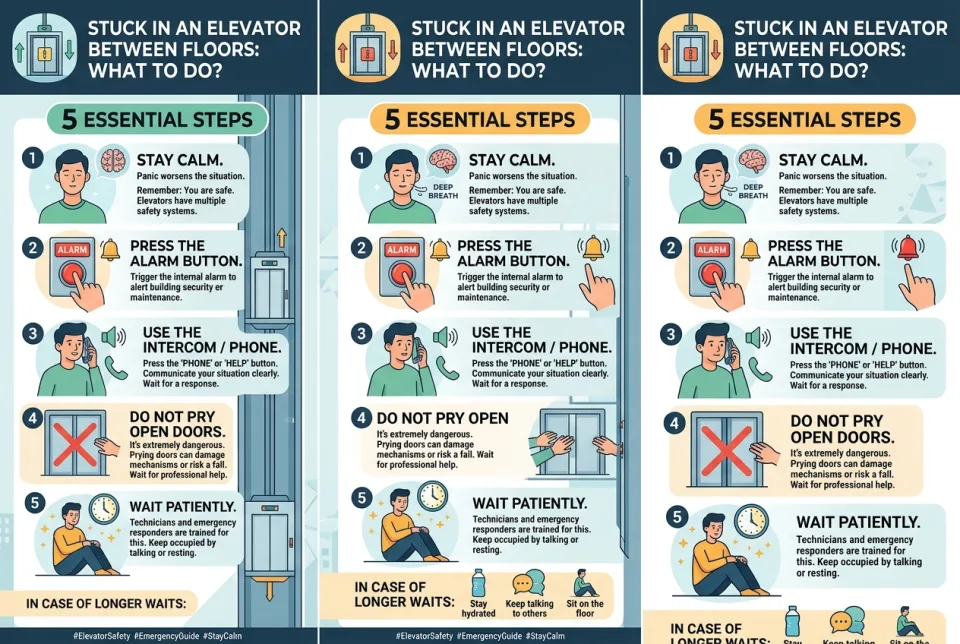
Quick answer
4 steps — read this before anything else
-
1
Press the emergency call button or use the intercom to alert building staff or the elevator monitoring service.
-
2
If no response, call your local emergency services (e.g., 911, 112, 999) and state you are trapped in an elevator.
-
3
Stay inside the car. Do not attempt to open the doors or climb out.
-
4
Conserve your phone battery and keep trying to get help if needed.
Warning
Never try to open the doors, climb out, or exit a stuck elevator on your own. You could fall down the shaft or be crushed. Stay inside and wait for trained help.
Important — please read
This content is general educational and informational only, and is not a substitute for professional medical advice, diagnosis or treatment. Always seek the advice of a qualified health provider with any questions you may have about a medical condition. Never disregard or delay seeking professional medical care because of something you read here. In an emergency or life-threatening situation, call your local emergency services (police, fire or ambulance) immediately.
Being stuck in an elevator between floors can be frightening, but it is usually a safe situation if you stay inside the car and call for help. Elevators have safety brakes that prevent them from falling, and the car is well ventilated. The main risks come from trying to escape on your own.
What is happening
An elevator may stop between floors due to a power outage, a mechanical fault, or a safety sensor detecting an issue. The car is designed to hold its position, and you are not in immediate danger. The priority is to get professional help and avoid injury.
Emergency warning
If anyone in the elevator is experiencing a medical emergency (chest pain, difficulty breathing, severe bleeding, fainting), call your local emergency services immediately. Also call emergency services if the elevator is filling with smoke, there is a fire in the building, or the car is taking on water.
What to do first
- Stay calm and reassure others. Take slow breaths. Panic can lead to poor decisions.
- Press the emergency call button or use the intercom to reach building security or the elevator monitoring center. Give your location, the elevator number if visible, and how many people are inside.
- If there is no response, call your local emergency services (such as 911, 112, or 999). Tell them you are trapped in an elevator between floors and provide the building address.
- Wait for instructions. Trained responders or elevator technicians will tell you what to do. Do not attempt to exit until they say it is safe and they are there to assist.
What NOT to do
- Do not try to force the doors open. The car may not be aligned with a floor, and you could fall down the shaft.
- Do not climb out through the ceiling hatch or attempt to reach an adjacent floor. This is extremely dangerous.
- Do not jump or shake the car in an attempt to restart it.
- Do not smoke or use lighters inside the elevator.
- Do not pry the doors open even if you see a floor nearby; the gap can be deceptive.
When to call for help
Call emergency services if the emergency button gets no response, if someone inside has a medical condition that could worsen, if there is smoke or fire, or if the elevator has been stuck for a long time and no one is coming. If you are alone and have no phone signal, press the alarm button repeatedly and shout for help at intervals.
What to monitor
Keep an eye on anyone who is anxious, elderly, or has a health condition. Watch for signs of distress such as difficulty breathing or chest pain. If the situation changes, call emergency services again and update them.
How to prevent it
Do not overload elevators, and do not force doors open or hold them with objects. Report any elevator that jerks, stops unevenly, or makes unusual noises. In a fire or earthquake, use the stairs, never the elevator.
Remember: staying put and calling for help is the safest action. Professional responders will get you out safely.
This is general information and not a substitute for professional medical or emergency advice. In an emergency, call your local emergency services immediately.
Spotted an error? Report it — we correct factual mistakes promptly.
Read next
How to check your tyre tread depth
Learn how to measure your tyre tread depth accurately using simple tools and know when to replace your tyres for safety.
Ants invading the kitchen counter: what to do?
Ants on your kitchen counter are a common nuisance that you can manage with simple sanitation and targeted baiting. Learn the safe, effective steps to eliminate them and prevent their return.
Mold on bathroom walls: what to do?
Mold on bathroom walls is common and usually manageable. Learn how to clean it safely, prevent it from returning, and when to call a professional.
Bee swarm settled in the garden: what to do?
A bee swarm in your garden is usually a temporary stopover. Learn how to stay safe, when to call a beekeeper, and what not to do.
Related handy tools
Checklists, decision guides, scenarios and quizzes for the same situation.