Burglar alarm false trigger: what to do?
A false alarm is annoying but manageable. Disarm safely, verify no real intrusion, reset the system, and fix the cause so it does not happen again.
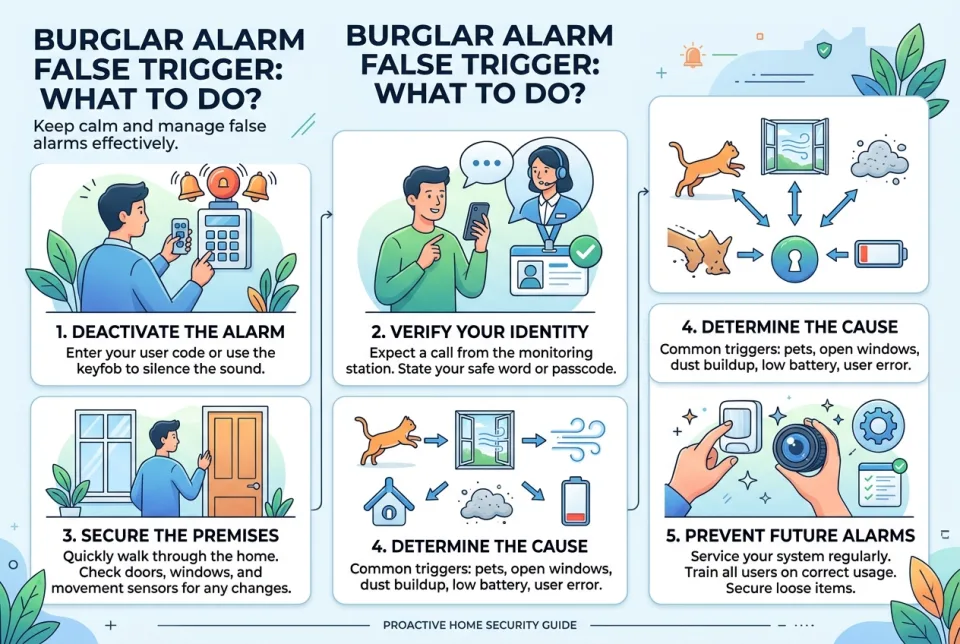
Quick answer
5 steps — read this before anything else
-
1
Disarm the alarm with your code and confirm it is a false trigger, not a real break-in.
-
2
Check the keypad for the zone or sensor that triggered it.
-
3
If you cannot confirm it is safe, leave and call the police from a safe place.
-
4
Reset the system and note the cause.
-
5
Fix the trigger (battery, drafts, pets, spider webs) to prevent repeats.
Warning
Never enter your home to investigate an alarm if you suspect a break-in. Leave, get to safety, and call your local emergency services.
A burglar alarm that goes off when nothing is wrong is a common problem, but you should never assume it is a false alarm until you have confirmed it. Treat every activation as real until you have checked. Then silence it, find the cause, and fix it so it does not happen again.
What is happening
Most false triggers come from a small number of causes: a door or window left slightly open, a pet moving in front of a motion sensor, drafts or heat sources setting off a sensor, low backup battery, loose wiring, insects or dust on a detector, or a keypad code entered incorrectly. Older systems and poorly maintained sensors are more prone to this.
Emergency warning
If you have any reason to believe someone is in your home, do not go inside to check. Leave, get to a safe place, and call your local emergency services immediately. A false alarm can be silenced later. Your safety cannot.
What to do first
- Disarm the system using your code at the keypad. If the siren has a separate silence button, press it. Do not rush and mistype the code, since many systems lock out after repeated wrong entries.
- Read the keypad display. Most panels show which zone or sensor triggered the alarm, such as "Zone 3" or "Back door." Note it.
- Confirm it is safe. If you are at home and the trigger is a sensor you can see, check that door or window. If anything looks disturbed, or you are unsure, leave and call the police from outside.
- Check whether the monitoring company or police were alerted. If your system is monitored, call the monitoring centre with your account details and cancel the response. If police may already be on the way, call the non-emergency line to explain it was a false alarm.
- Reset the system once you are satisfied it was a false trigger, following your panel's instructions.
What NOT to do
- Do not assume it is false and ignore it without checking, especially if you are away and only have an alert on your phone.
- Do not repeatedly enter wrong codes, which can lock the keypad or trigger a tamper alarm.
- Do not open the panel or rip out wiring to stop the noise. That can disable protection and may void monitoring.
- Do not leave the system disarmed and forget about it.
- Do not block or cover sensors to stop them triggering.
Find and fix the cause
- Doors and windows: check they are fully closed and the magnet on the contact lines up with the sensor.
- Motion sensors: look for pets, balloons, curtains moving in drafts, heaters, or direct sunlight. Remove the cause or ask your installer to adjust sensitivity.
- Battery: a low backup battery is a very common cause. Have it replaced.
- Insects or dust: clean the sensor face gently and check for spider webs.
- Loose wiring or a faulty sensor: call a qualified alarm technician.
When to call a professional
Call your alarm company or a qualified technician if the alarm triggers repeatedly with no obvious cause, if the keypad shows a fault or tamper message, if the battery warning will not clear, or if the system will not reset. If you rent, tell your landlord or building manager.
How to prevent repeats
Test your system regularly, keep batteries fresh, keep pets away from motion sensors, and make sure everyone in the household knows the code and how to cancel an alarm. Keep your monitoring company's number handy. A short log of each false trigger helps a technician find the pattern.
Next step: disarm, check the keypad zone, confirm your home is safe, then cancel any response and fix the cause.
Spotted an error? Report it — we correct factual mistakes promptly.
Read next
Kitchen smoke alarm goes off while cooking: what to do?
Learn how to safely handle a smoke alarm that activates while you are cooking, including how to silence it, prevent false alarms, and when to treat it as a real emergency.
Ants invading the kitchen counter: what to do?
Ants on your kitchen counter are a common nuisance that you can manage with simple sanitation and targeted baiting. Learn the safe, effective steps to eliminate them and prevent their return.
Neighbor plays loud music at night: what to do?
A step-by-step guide to handling a noisy neighbor playing loud music at night, from polite conversation to formal complaints, while staying safe and calm.
Spilled drink on a laptop: what to do?
Liquid and electricity do not mix. Acting in the first 30 seconds, then drying and waiting before you power on, gives your laptop the best chance of surviving a spill.
Related handy tools
Checklists, decision guides, scenarios and quizzes for the same situation.