Ants invading the kitchen counter: what to do?
Ants on your kitchen counter are a common nuisance that you can manage with simple sanitation and targeted baiting. Learn the safe, effective steps to eliminate them and prevent their return.
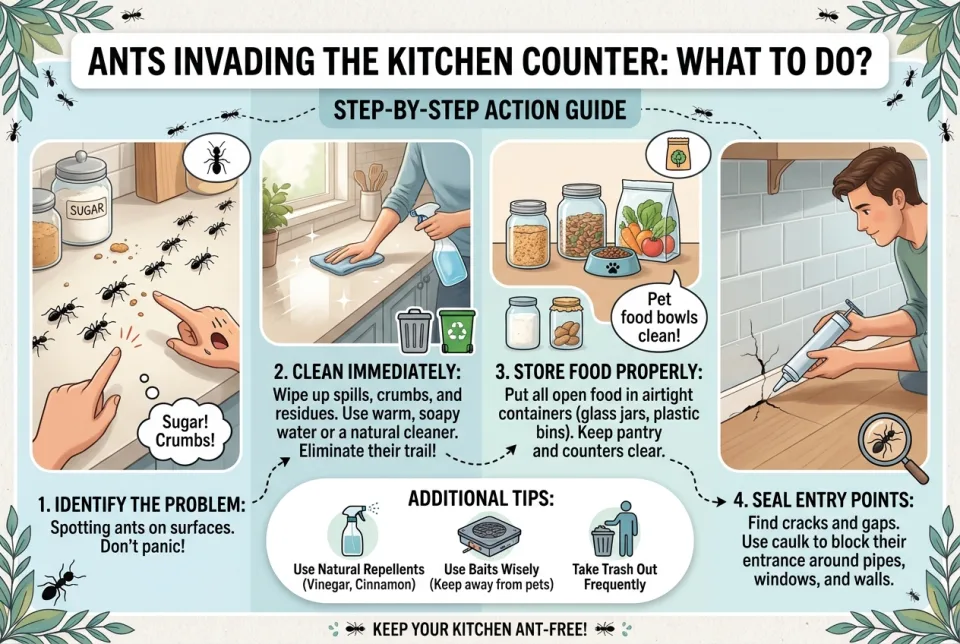
Quick answer
5 steps — read this before anything else
-
1
Wipe up crumbs and spills immediately, and store food in sealed containers.
-
2
Locate the ant trail and seal entry points with caulk or petroleum jelly.
-
3
Place ant baits near trails, out of reach of children and pets.
-
4
Avoid spraying pesticides on counters; use soapy water for cleanup.
-
5
If the infestation persists, contact a licensed pest control professional.
Warning
Keep ant baits and pesticides out of reach of children and pets. Never use outdoor or agricultural pesticides indoors.
Finding a line of ants marching across your kitchen counter is a common household problem. Ants are attracted to food, moisture, and shelter, and they can quickly establish trails once they find a reliable source. While they are mostly a nuisance, some species can contaminate food and cause minor property damage. The good news is that you can usually eliminate them with a few simple steps.
What is happening
Ants invade kitchens in search of food and water. They leave pheromone trails that other ants follow, which is why you often see them in a line. Common entry points include cracks in walls, gaps around windows and doors, and plumbing penetrations. Identifying the species can help, but the general approach is the same for most kitchen ants.
What to do first
- Clean thoroughly. Wipe down counters, sweep floors, and remove crumbs and spills. Pay attention to areas behind appliances and under the sink.
- Store food properly. Keep food in sealed containers, and clean up pet food and water bowls after meals.
- Find the entry point. Follow the ant trail to see where they are coming from. This may be a crack, a gap, or a hole around a pipe.
- Seal entry points. Use caulk or petroleum jelly to block cracks and gaps. For temporary relief, you can also use a vinegar-water solution to wipe down trails, which disrupts their pheromone paths.
- Set ant baits. Place bait stations near the trails, following label instructions. Baits are more effective than sprays because ants carry the poison back to the nest. Keep baits out of reach of children and pets.
What NOT to do
- Do not spray pesticides on kitchen counters or food preparation areas. This can contaminate food and surfaces, and it may cause the colony to split and spread.
- Do not use a vacuum to remove ants unless you empty it immediately; ants can survive and return.
- Do not leave dirty dishes or open food out overnight. This attracts more ants.
- Do not ignore the problem. A small trail can quickly become a larger infestation.
When to call for help
If you have tried baiting and sealing for a few weeks without success, or if you see ants in multiple rooms, it may be time to call a licensed pest control professional. Also seek professional help if you suspect carpenter ants or other wood-destroying species, which can cause structural damage.
What to monitor
Keep an eye on the areas where you have seen ants. Check for new trails and reapply bait as needed. Monitor for any signs of damage to wood or insulation if you suspect carpenter ants. After treatment, continue to keep the kitchen clean and food sealed to prevent reinfestation.
How to prevent it
- Keep counters and floors clean, and wipe up spills promptly.
- Store food in airtight containers, including pet food.
- Fix leaky pipes and eliminate standing water.
- Seal cracks and gaps around windows, doors, and utility lines.
- Trim vegetation away from the exterior of your home.
By taking these steps, you can usually get rid of kitchen ants and reduce the chance of them coming back. Remember to always follow label instructions when using any pest control product, and keep children and pets away from baits and traps.
Sources & references
Spotted an error? Report it — we correct factual mistakes promptly.
Read next
Kitchen smoke alarm goes off while cooking: what to do?
Learn how to safely handle a smoke alarm that activates while you are cooking, including how to silence it, prevent false alarms, and when to treat it as a real emergency.
Burglar alarm false trigger: what to do?
A false alarm is annoying but manageable. Disarm safely, verify no real intrusion, reset the system, and fix the cause so it does not happen again.
Frozen door lock in winter: what to do?
A frozen door lock can leave you locked out in the cold. Learn safe, effective ways to thaw it without damaging your lock or door.
Lost house keys: what to do?
Losing your house keys is stressful. Act quickly to secure your home, decide whether to rekey or replace locks, and avoid common mistakes that could put your safety at risk.
Related handy tools
Checklists, decision guides, scenarios and quizzes for the same situation.