Minor cut from a power tool: what to do?
A minor cut from a power tool still needs proper care to prevent infection and ensure healing. Follow these steps to clean, protect, and monitor the wound.
Quick answer
4 steps — read this before anything else
-
1
Stop the bleeding by applying firm pressure with a clean cloth.
-
2
Clean the wound gently with mild soap and water.
-
3
Apply a thin layer of antibiotic ointment and cover with a sterile bandage.
-
4
Watch for signs of infection and seek medical care if they appear.
Warning
If bleeding is severe or does not stop after 10-15 minutes of firm pressure, or if the cut is deep or involves numbness, seek emergency medical care immediately.
Important — please read
This content is general educational and informational only, and is not a substitute for professional medical advice, diagnosis or treatment. Always seek the advice of a qualified health provider with any questions you may have about a medical condition. Never disregard or delay seeking professional medical care because of something you read here. In an emergency or life-threatening situation, call your local emergency services (police, fire or ambulance) immediately.
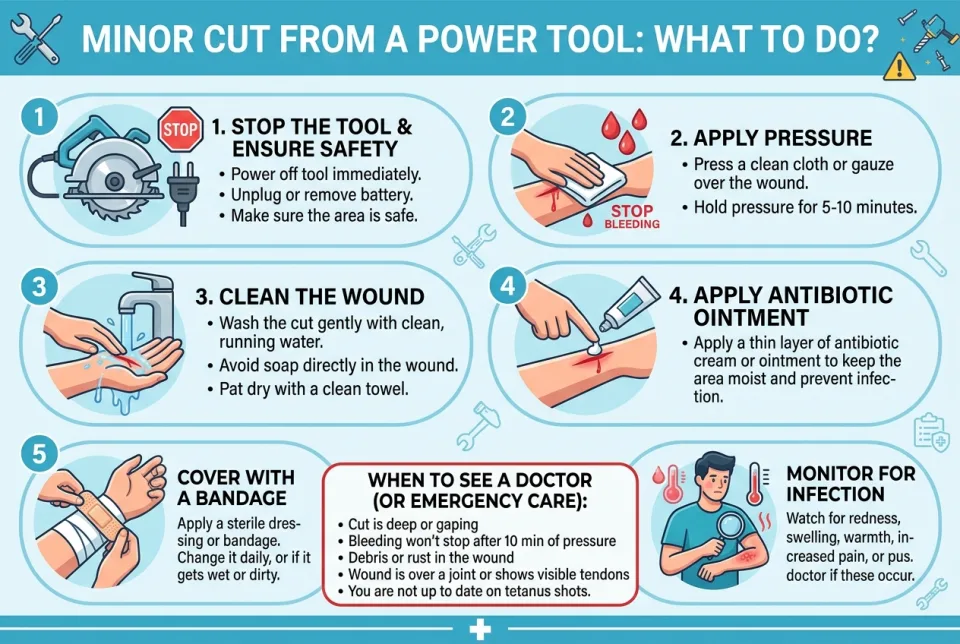
A cut from a power tool can be more serious than it looks, even if it seems minor. Power tools can cause jagged wounds, introduce debris, and damage deeper tissues. Proper first aid helps prevent infection and supports healing.
What to do first
- Ensure safety. Turn off and unplug the tool before tending to the injury.
- Stop the bleeding. Apply firm, direct pressure with a clean cloth or sterile gauze for several minutes. If blood soaks through, add more cloth on top without removing the first layer.
- Clean the wound. Once bleeding is controlled, rinse the cut gently with clean running water. Wash around the wound with mild soap. Avoid getting soap directly into the cut. Use tweezers cleaned with alcohol to remove any visible debris, but do not dig into the wound.
- Protect the wound. Apply a thin layer of over-the-counter antibiotic ointment (if you are not allergic) and cover with a sterile bandage or gauze. Change the bandage daily or whenever it becomes wet or dirty.
- Consider tetanus. If the wound is dirty or caused by metal, check your tetanus vaccination status. Tetanus boosters are recommended every 10 years, or within 5 years for deep or dirty wounds. Consult a healthcare provider if unsure.
What NOT to do
- Do not ignore the wound, even if it seems small. Power tool cuts can be deeper than they appear.
- Do not use hydrogen peroxide or alcohol directly on the wound; they can damage tissue and slow healing.
- Do not remove an object that is deeply embedded in the wound. Seek medical help instead.
- Do not apply a tight bandage that cuts off circulation.
- Do not use cotton balls or fluffy materials directly on the wound; fibers can stick.
When to seek medical care
Call your local emergency services or go to an emergency department if:
- Bleeding is severe, spurting, or does not stop after 10-15 minutes of firm pressure.
- The cut is deep, gaping, or you can see fat, muscle, or bone.
- The injury involves the face, hands, or joints, or you cannot move the affected area normally.
- There is numbness, tingling, or loss of function below the cut.
- You cannot remove dirt or debris from the wound.
- The wound was caused by a dirty or rusty object and you are unsure about your tetanus status.
Also seek medical advice if you have a weakened immune system, diabetes, or if the wound is on a foot (especially if you have poor circulation).
What to monitor
Watch for signs of infection over the next few days:
- Increasing redness, swelling, or warmth around the wound.
- Throbbing pain that worsens.
- Pus or cloudy drainage.
- Red streaks spreading from the wound.
- Fever or chills.
If any of these occur, contact a healthcare provider promptly.
How to prevent power tool cuts
- Always wear appropriate personal protective equipment, including safety glasses and gloves.
- Keep tools well-maintained and use the correct tool for the job.
- Secure your workpieces and keep hands away from moving blades.
- Stay focused and avoid distractions while operating power tools.
Even minor cuts deserve attention. If you are unsure about the severity, err on the side of caution and seek professional care. This information is general and not a substitute for professional medical advice. In an emergency, call your local emergency services immediately.
Sources & references
Spotted an error? Report it — we correct factual mistakes promptly.
Read next
Kitchen smoke alarm goes off while cooking: what to do?
Learn how to safely handle a smoke alarm that activates while you are cooking, including how to silence it, prevent false alarms, and when to treat it as a real emergency.
Burglar alarm false trigger: what to do?
A false alarm is annoying but manageable. Disarm safely, verify no real intrusion, reset the system, and fix the cause so it does not happen again.
Bad smell coming from bathroom drains: what to do?
A foul odor from bathroom drains is usually caused by a dry trap, buildup, or a blocked vent. Learn safe steps to find and fix the problem.
Frozen door lock in winter: what to do?
A frozen door lock can leave you locked out in the cold. Learn safe, effective ways to thaw it without damaging your lock or door.
Related handy tools
Checklists, decision guides, scenarios and quizzes for the same situation.