Mold on bathroom walls: what to do?
Mold on bathroom walls is common and usually manageable. Learn how to clean it safely, prevent it from returning, and when to call a professional.
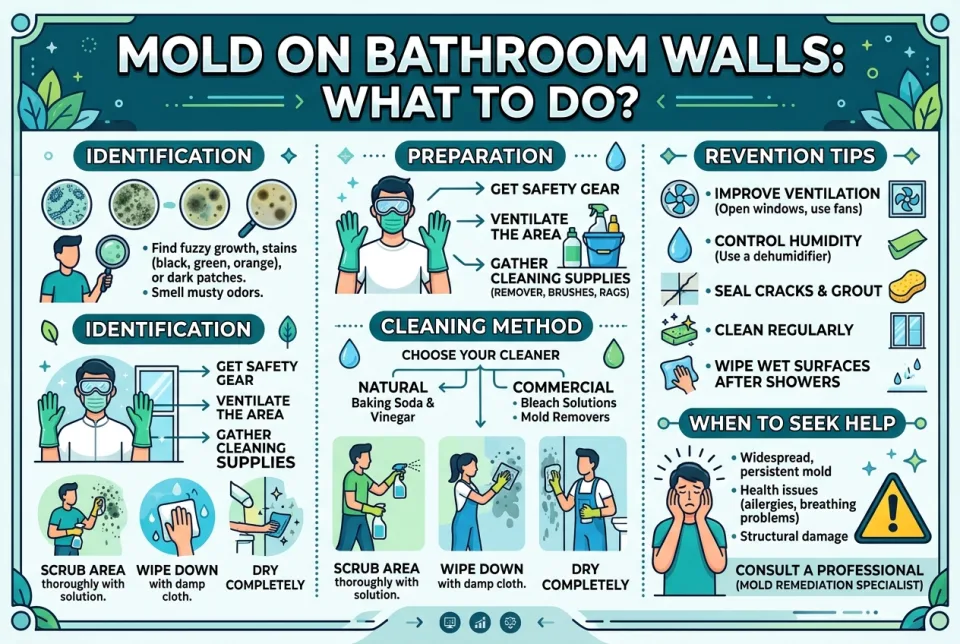
Quick answer
5 steps — read this before anything else
-
1
Put on gloves, eye protection, and an N95 respirator before you start.
-
2
Ventilate the room by opening a window and running the exhaust fan.
-
3
Scrub the mold with a detergent solution or a commercial mold cleaner.
-
4
Dry the area completely and fix the moisture source.
-
5
Call a professional if the mold covers more than about 10 square feet or keeps coming back.
Warning
Mold can cause allergic reactions and asthma attacks. Wear protective gear and ventilate the area. Seek emergency care for severe symptoms.
Mold on bathroom walls is a common problem, especially in damp, humid spaces. It is usually not dangerous for healthy people, but it can cause allergic reactions, trigger asthma, and damage your walls over time. The key is to remove it safely and stop the moisture that lets it grow.
What is happening
Mold spores are everywhere in the air. When they land on a damp surface, they can grow into visible patches. Bathrooms are ideal because of steam from showers, leaks, and poor ventilation. Common molds found indoors include Cladosporium, Penicillium, and Aspergillus. Most are not harmful to healthy people, but some can cause reactions.
Emergency warning
If you experience shortness of breath, chest tightness, or severe allergic reactions after exposure to mold, call your local emergency services immediately. Also call emergency services if you find mold after a sewage leak or if you suspect carbon monoxide (which has nothing to do with mold but can occur in bathrooms with fuel-burning appliances).
What to do first
- Protect yourself: Wear gloves, eye protection, and an N95 respirator. Avoid touching mold with bare skin.
- Ventilate: Open a window and run the exhaust fan to clear spores and fumes.
- Clean: Use a commercial mold cleaner or a solution of mild detergent and water. Scrub the moldy area with a stiff brush or sponge. For non-porous surfaces like tile or glass, you can use a diluted bleach solution (follow label instructions), but never mix bleach with ammonia or other cleaners.
- Dry: Wipe the area dry and let it air out completely. Use a fan or dehumidifier if needed.
- Find the source: Check for leaks, condensation, or poor ventilation. Fix any plumbing leaks and improve airflow.
What NOT to do
- Do not ignore it. Mold will spread and can damage drywall and paint.
- Do not dry-brush mold. This can release spores into the air. Use a damp cloth or a HEPA vacuum if available.
- Do not mix cleaning products. Bleach and ammonia create toxic fumes.
- Do not cover mold with paint or caulk. It will grow back and may worsen the problem.
- Do not skip protection. Always wear a respirator and gloves.
When to call a professional
Call a mold remediation professional if:
- The mold covers more than about 10 square feet (roughly 1 square meter).
- Mold is inside walls, ceilings, or HVAC systems.
- You have a persistent musty smell but cannot find the source.
- Mold returns quickly after cleaning.
- You have health concerns or a compromised immune system.
What to monitor
After cleaning, keep an eye on the area for a few weeks. Watch for new spots, musty odors, or peeling paint. Check for leaks under sinks and around the tub. Monitor humidity levels with a hygrometer; aim for below 50%.
How to prevent it
- Run the exhaust fan during and for 20-30 minutes after showers.
- Open windows or use a dehumidifier to keep humidity low.
- Fix leaks promptly.
- Wipe down wet surfaces and hang towels to dry.
- Use mold-resistant paint and caulk in bathrooms.
- Clean regularly with mold-inhibiting products.
By acting quickly and addressing moisture, you can keep your bathroom mold-free and healthy. If you are unsure or the problem is extensive, consult a professional.
This is general information and not a substitute for professional medical advice. If you have health concerns or an emergency, call your local emergency services.
Sources & references
Spotted an error? Report it — we correct factual mistakes promptly.
Read next
Kitchen smoke alarm goes off while cooking: what to do?
Learn how to safely handle a smoke alarm that activates while you are cooking, including how to silence it, prevent false alarms, and when to treat it as a real emergency.
Neighbor plays loud music at night: what to do?
A step-by-step guide to handling a noisy neighbor playing loud music at night, from polite conversation to formal complaints, while staying safe and calm.
Mold growing behind furniture on outer walls: what to do?
Mold behind furniture on outer walls is usually caused by trapped moisture and poor air circulation. Learn safe steps to remove it, fix the cause, and prevent it from returning.
Spilled drink on a laptop: what to do?
Liquid and electricity do not mix. Acting in the first 30 seconds, then drying and waiting before you power on, gives your laptop the best chance of surviving a spill.
Related handy tools
Checklists, decision guides, scenarios and quizzes for the same situation.