Bee swarm settled in the garden: what to do?
A bee swarm in your garden is usually a temporary stopover. Learn how to stay safe, when to call a beekeeper, and what not to do.
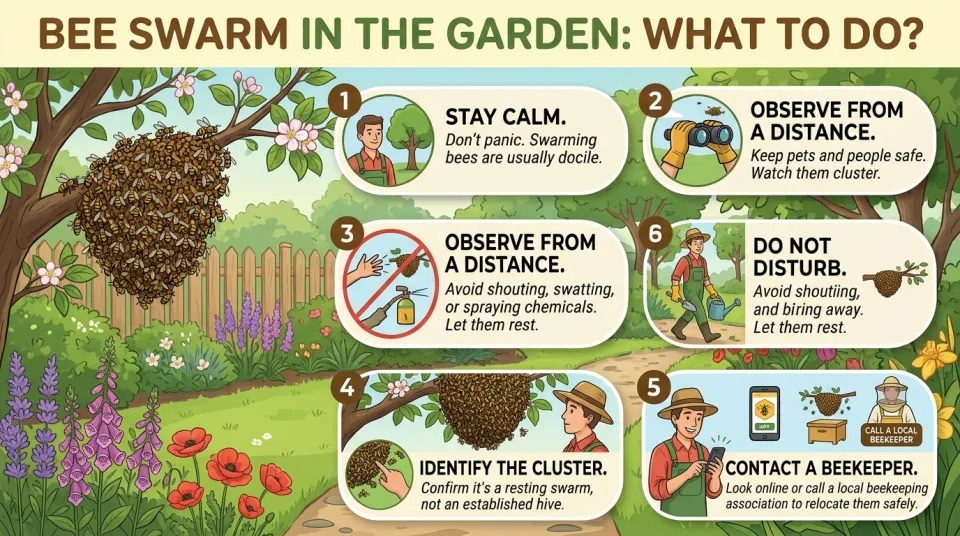
Quick answer
4 steps — read this before anything else
-
1
Keep a safe distance and keep children and pets away.
-
2
Do not spray, throw water, or disturb the swarm.
-
3
Contact a local beekeeper or swarm removal service.
-
4
If anyone is allergic or the swarm is indoors, call a professional immediately.
Warning
If anyone shows signs of a severe allergic reaction after a sting (difficulty breathing, swelling of the face or throat, dizziness), call emergency services immediately.
A cluster of bees hanging from a branch or fence post can be alarming, but it is usually a temporary stopover. Honeybee swarms are generally docile because they have no hive to defend and are focused on finding a new home. With a few precautions, you can keep everyone safe and help the bees move on.
What is happening
When a honeybee colony reproduces, the old queen leaves with about half the workers to find a new nesting site. They cluster together while scout bees search for a suitable cavity. This resting phase can last from a few hours to a few days. The bees are not aggressive unless provoked, but they will defend themselves if threatened.
What to do first
- Keep your distance. Stay at least 10-15 feet (3-5 meters) away and keep children and pets indoors or well away from the area.
- Do not disturb the swarm. Avoid throwing objects, spraying water, or making loud noises. Do not attempt to smoke them out.
- Contact a local beekeeper or swarm removal service. Many beekeeping associations offer free swarm collection. Search for "bee swarm removal" plus your town, or contact a local extension service or pest control company for a referral.
- If the swarm is in a dangerous location (inside a building, near a doorway, or where people cannot avoid it), call a professional immediately. Do not try to remove it yourself.
What NOT to do
- Do not spray the swarm with water or insecticide. This agitates the bees and can cause stings. It also kills beneficial pollinators.
- Do not poke, prod, or try to move the swarm yourself. Even docile bees will defend if threatened.
- Do not assume they will leave immediately. While most swarms move on within a few days, some may decide to build comb in a wall or tree cavity if left too long.
- Do not block their exit if they are already entering a structure. This traps them inside and makes removal harder.
When to call for help
Call a professional beekeeper or pest control service if:
- The swarm is inside a building, wall, or chimney.
- The swarm is near a high-traffic area and cannot be avoided.
- Anyone in the household is allergic to bee stings.
- The swarm has been in the same spot for more than a few days and appears to be building comb.
If someone is stung and shows signs of a severe allergic reaction (difficulty breathing, swelling of the face or throat, dizziness, or loss of consciousness), call emergency services immediately.
What to monitor
Watch the swarm from a safe distance. If bees begin entering a hole or crevice in a building, they are establishing a hive and should be removed by a professional. Also monitor for any signs of aggression, such as bees flying toward people or pets.
How to prevent future swarms
If you have a bee-friendly garden, you can reduce the chance of swarms settling in structures by sealing cracks and gaps in walls, eaves, and chimneys. Providing a dedicated "bee hotel" or leaving a known swarm trap can also encourage bees to choose a safer location. However, never attempt to handle a swarm without proper training.
In most cases, a swarm will move on within a day or two. Stay calm, keep your distance, and let a professional handle removal if needed. For any life-threatening reaction to a sting, call emergency services right away.
This is general information and not a substitute for professional medical advice. In an emergency, call your local emergency services.
Spotted an error? Report it — we correct factual mistakes promptly.
Read next
Ants invading the kitchen counter: what to do?
Ants on your kitchen counter are a common nuisance that you can manage with simple sanitation and targeted baiting. Learn the safe, effective steps to eliminate them and prevent their return.
How to test and replace a smoke alarm battery
Regular testing and timely battery replacement keep your smoke alarm working. Learn how to test your alarm and replace the battery safely.
Neighbor plays loud music at night: what to do?
A step-by-step guide to handling a noisy neighbor playing loud music at night, from polite conversation to formal complaints, while staying safe and calm.
Wardrobe emergency on event day: what to do?
A stain, tear, or broken zipper right before an event can feel like a disaster. Use this calm, practical guide to fix common wardrobe malfunctions quickly and get to your event on time.
Related handy tools
Checklists, decision guides, scenarios and quizzes for the same situation.