Ice dam forming on the roof edge: what to do?
An ice dam traps melting snow and can push water under your shingles and into the house. Act early to remove the hazard safely and stop the leak.
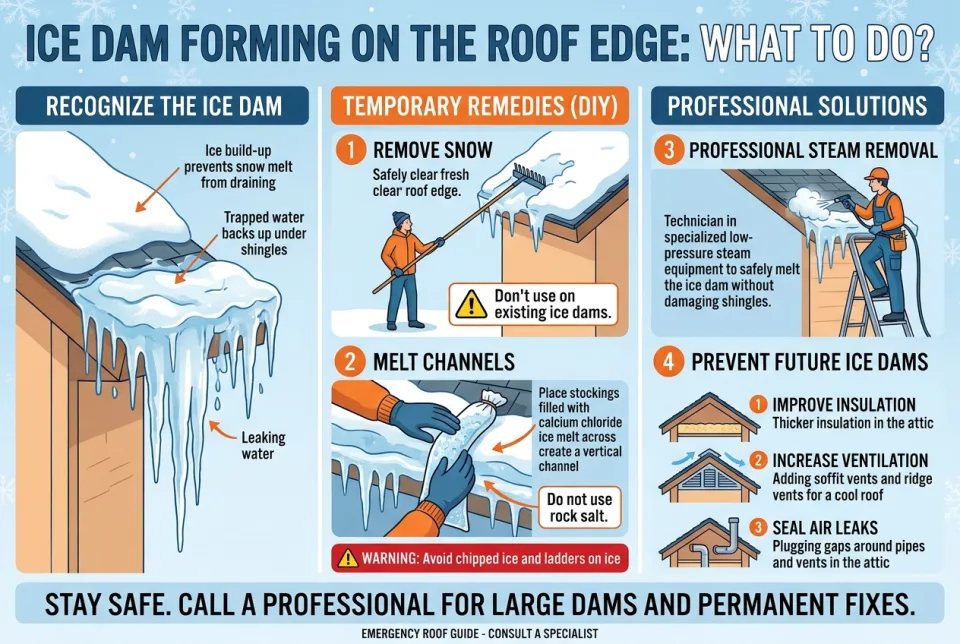
Quick answer
5 steps — read this before anything else
-
1
Clear snow from the roof edge with a roof rake from the ground, never climb onto an icy roof.
-
2
Do not chip or hammer the ice; fill a leg of a pair of pantyhose with calcium chloride ice melter and lay it across the dam to melt a channel.
-
3
Watch indoor ceilings and walls near exterior walls for stains, drips, or bulging.
-
4
Move valuables and electronics away from any leak and place a bucket underneath.
-
5
Call a roofing or ice dam professional if water is entering the home or the dam is large.
Warning
Never climb onto a snowy or icy roof, and never chip ice with an axe or hammer. Falls and roof damage are far more costly than the ice dam itself. Keep away from wet electrical fixtures and call for help if a ceiling is bulging or water is pouring through.
An ice dam is a ridge of ice that forms at the lower edge of a roof and prevents melting snow from draining off. Water backs up behind it and can work under shingles, through the roof deck, and into ceilings and walls. It is a common winter problem in cold climates and is best handled early, before it causes interior water damage.
What is happening
Ice dams usually form when heat escaping from the house warms the upper roof, melting snow that then refreezes at the colder eaves. The result is a growing ice ridge with trapped water behind it. Icicles along the edge and a band of ice at the gutter are the visible signs.
Emergency warning
Do not climb onto a snow-covered or icy roof. Falls from ladders and roofs are a leading cause of serious winter injuries. If you see sagging ceilings, water pouring through a light fixture, or a ceiling that feels soft or bulging, treat it as a structural and electrical hazard: keep people away, do not touch wet electrical fixtures, and call a qualified contractor or your local emergency services if there is immediate danger.
What to do first
- Clear snow from the roof edge safely. Use a long-handled roof rake while standing on the ground. Pull snow off the lower few feet of the roof, keeping clear of overhead power lines. Never stand under the area where snow may slide off.
- Melt a channel through the ice dam. Fill the leg of a pair of pantyhose with calcium chloride ice melter, tie it off, and lay it vertically across the dam so it reaches the gutter. This melts a path for trapped water to drain. Do not use rock salt, which can damage roofing and plants.
- Protect the interior. Move furniture, electronics, and stored items away from exterior walls and ceilings. Place buckets under drips and towels along the base of walls.
- Relieve pressure safely. If water is pooling above a ceiling, a professional may need to drain it. Do not cut into a ceiling yourself if wiring or a light fixture is nearby.
- Call a professional. Roofing contractors and ice dam services use steam to remove ice safely. This is the right call for large dams or active leaks.
What NOT to do
- Do not climb on the roof or use a ladder on ice and snow.
- Do not chop, chip, or hammer the ice; you can puncture shingles, gutters, and flashing.
- Do not pour hot water on the roof; it refreezes and can cause more damage.
- Do not use a blowtorch or open flame to melt ice.
- Do not ignore a leak; small drips can become major water damage fast.
When to call for help
Call a roofing professional if water is entering the home, the ice dam is thick and widespread, gutters are pulling away, or you cannot safely reach the roof edge from the ground. For any electrical hazard or ceiling collapse risk, keep clear and call for emergency help.
How to prevent it
The lasting fix is to keep the roof cold: seal air leaks and add insulation and ventilation in the attic so warm air does not reach the roof deck. Clear gutters before winter and remove snow from the roof edge after heavy storms. A roofing professional can assess attic insulation and ventilation.
Act now: rake the lower roof edge from the ground, set up a calcium chloride channel, and call a professional if water is getting inside.
Sources & references
Spotted an error? Report it — we correct factual mistakes promptly.
Read next
Dishwasher flooded the kitchen floor: what to do?
A flooded kitchen from a dishwasher can cause damage and safety hazards. Act quickly to stop the water, cut power, and prevent further issues.
Mold growing behind furniture on outer walls: what to do?
Mold behind furniture on outer walls is usually caused by trapped moisture and poor air circulation. Learn safe steps to remove it, fix the cause, and prevent it from returning.
Refrigerator water line leaks: what to do?
A leaking refrigerator water line can cause serious water damage. Learn how to stop the leak, clean up safely, and prevent future problems.
Gutters overflowing in heavy rain: what to do?
When gutters overflow during a storm, quick action can prevent water damage. Learn safe steps to take during the downpour and how to fix the problem afterward.
Related handy tools
Checklists, decision guides, scenarios and quizzes for the same situation.