Lost house keys: what to do?
Losing your house keys is stressful. Act quickly to secure your home, decide whether to rekey or replace locks, and avoid common mistakes that could put your safety at risk.
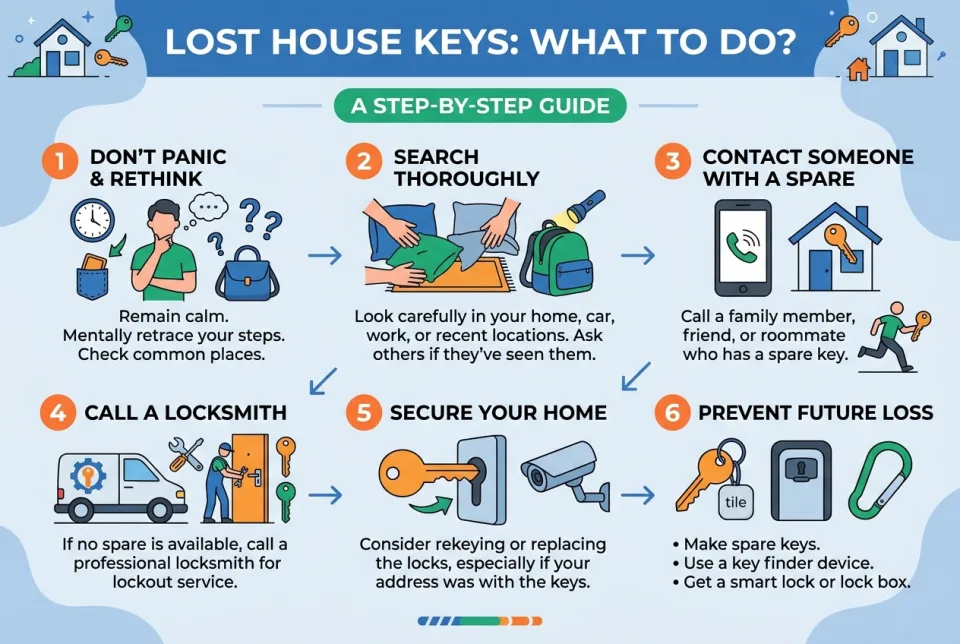
Quick answer
5 steps — read this before anything else
-
1
Check your pockets, bags, and recent locations first.
-
2
If keys are lost outside, consider the risk: if they were stolen or your address is identifiable, rekey or replace locks.
-
3
Call a licensed locksmith or your landlord if you are locked out.
-
4
Report the loss to your insurer if you have key replacement coverage.
-
5
Prevent future loss with a spare key strategy and trackers.
Warning
If your keys were stolen or lost with identification, your home may be at risk. Consider rekeying or replacing locks and report the theft to the police.
Losing your house keys can be alarming, but a calm, step-by-step approach will help you secure your home and avoid unnecessary stress. This guide covers what to do first, how to decide whether to change your locks, and how to prevent it from happening again.
What to do first
- Retrace your steps. Check pockets, bags, and places you visited recently. Ask family members or roommates if they have seen them.
- If you are locked out, call a licensed locksmith. If you rent, contact your landlord first; they may have a spare key or a preferred locksmith. Avoid unlicensed "lockout" services that may overcharge.
- Assess the risk. If the keys were lost in a public place and there is any chance they could be linked to your address (for example, a keyring with your address, or a wallet with ID), treat it as a security risk.
- Decide on rekeying or replacement. If you are concerned about security, have a locksmith rekey or replace the locks. Rekeying changes the internal pins so old keys no longer work, which is often cheaper than replacing the entire lock.
- Notify your insurer if you have key replacement coverage. Check your policy; some home insurance policies cover lock replacement after a theft or loss.
What NOT to do
- Do not ignore the risk if your keys were stolen or lost with identification. A lost key can be copied or used to access your home.
- Do not hide a spare key outside in an obvious place like under a doormat or flowerpot. Thieves know these spots.
- Do not use a random online "locksmith" without checking credentials; unlicensed locksmiths may charge excessive fees or perform poor work.
- Do not delay rekeying if you suspect your keys were stolen and your address is identifiable.
When to call a professional
- You are locked out and cannot gain entry safely.
- You want to rekey or replace locks after a loss or theft.
- You need advice on securing your home.
How to prevent lost keys
- Use a bright keychain or a Bluetooth tracker to help locate keys.
- Establish a fixed place for keys at home, such as a hook by the door.
- Keep a spare key with a trusted neighbor or family member, not hidden outside.
- Consider a keyless entry system (smart lock) if you frequently lose keys.
- If you rent, ask your landlord about their key replacement policy.
Losing your keys is a common problem. By acting quickly and making a few smart decisions, you can keep your home secure and reduce future stress.
Spotted an error? Report it — we correct factual mistakes promptly.
Read next
Kitchen smoke alarm goes off while cooking: what to do?
Learn how to safely handle a smoke alarm that activates while you are cooking, including how to silence it, prevent false alarms, and when to treat it as a real emergency.
Burglar alarm false trigger: what to do?
A false alarm is annoying but manageable. Disarm safely, verify no real intrusion, reset the system, and fix the cause so it does not happen again.
Home security camera offline: what to do?
When your security camera goes offline, quick troubleshooting can restore it. Follow these steps to diagnose and fix common issues safely.
Bed bugs suspected at home: what to do?
If you think you have bed bugs, act quickly to confirm the problem and prevent them from spreading. Learn the safe steps to take and what to avoid.
Related handy tools
Checklists, decision guides, scenarios and quizzes for the same situation.