Bed bugs suspected at home: what to do?
If you think you have bed bugs, act quickly to confirm the problem and prevent them from spreading. Learn the safe steps to take and what to avoid.
Quick answer
5 steps — read this before anything else
-
1
Inspect your bed and nearby areas for bed bugs, their shed skins, or dark spots.
-
2
Capture a sample in a sealed container or take clear photos for identification.
-
3
Wash and dry all bedding and clothing on the hottest settings.
-
4
Contact a licensed pest control professional for an inspection and treatment plan.
-
5
Avoid using DIY insecticides indoors; they can be dangerous and ineffective.
Warning
Never use outdoor or DIY insecticides indoors; they can cause serious poisoning. Keep children and pets away from treated areas and follow professional instructions.
Discovering signs of bed bugs can be stressful, but a calm, methodical approach helps you confirm the problem and deal with it safely. Bed bugs are small, reddish-brown insects that feed on blood, usually at night. They do not transmit disease, but their bites can cause itching and discomfort, and infestations spread quickly if ignored.
What is happening?
Bed bugs hide in cracks and crevices near where people sleep: mattress seams, bed frames, headboards, and nearby furniture. You may notice itchy bite marks, small blood spots on sheets, dark fecal spots, or shed skins. Bites alone are not proof, so look for the insects themselves.
What to do first
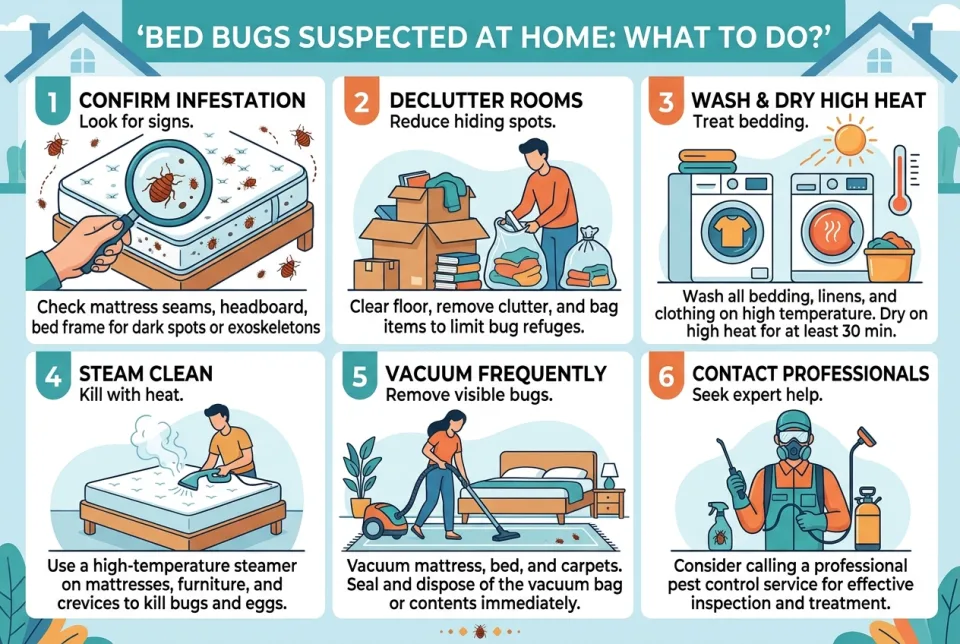
- Inspect carefully. Use a flashlight to check mattress seams, tufts, bed frame joints, headboards, and nearby furniture. Look for live bugs, shed skins, or tiny dark spots.
- Capture evidence. If you find a bug, place it in a sealed jar or plastic bag, or take a clear close-up photo. This helps a professional confirm the species.
- Reduce clutter. Remove items from around the bed and store them in sealed plastic bins or bags to limit hiding places.
- Launder bedding and clothing. Wash items in the hottest water the fabric allows and dry on the highest heat setting for at least 30 minutes. This kills all life stages.
- Vacuum thoroughly. Vacuum mattresses, seams, carpets, and crevices. Afterward, seal the vacuum bag in plastic and dispose of it outside immediately.
- Call a licensed pest control professional. They can confirm the infestation and recommend a safe, effective treatment plan.
What NOT to do
- Do not use DIY insecticides or "bug bombs" indoors. These can be hazardous to your health and often make infestations worse by scattering bed bugs.
- Do not throw away furniture or bedding unless a professional advises it; this can spread bugs to other areas.
- Do not move items to other rooms before they are treated, as this spreads the infestation.
- Do not rely on home remedies like rubbing alcohol or essential oils; they are not proven to eliminate bed bugs and can be unsafe.
When to seek professional help
If you find evidence of bed bugs or have repeated bites, contact a licensed pest control professional promptly. They can confirm the species and design a treatment plan. If you experience severe allergic reactions to bites, such as swelling or difficulty breathing, seek medical attention immediately.
What to monitor
After treatment, monitor for signs of activity: check seams and crevices weekly for live bugs or new spots. Keep bedding and clothing isolated until cleaned. Follow the pest control professional's instructions for follow-up inspections.
How to prevent bed bugs
- When traveling, inspect hotel rooms and keep luggage off beds and floors.
- After trips, wash and dry clothing on high heat before storing.
- Regularly vacuum and reduce clutter, especially in bedrooms.
- Use protective mattress encasements to make inspection easier.
Acting quickly and avoiding risky DIY methods gives you the best chance of controlling bed bugs. Start with a thorough inspection and a call to a professional.
This information is for general guidance and is not a substitute for professional pest control or medical advice. If you suspect a severe reaction or emergency, contact local health services.
Sources & references
Spotted an error? Report it — we correct factual mistakes promptly.
Read next
Kitchen smoke alarm goes off while cooking: what to do?
Learn how to safely handle a smoke alarm that activates while you are cooking, including how to silence it, prevent false alarms, and when to treat it as a real emergency.
Burglar alarm false trigger: what to do?
A false alarm is annoying but manageable. Disarm safely, verify no real intrusion, reset the system, and fix the cause so it does not happen again.
Ants invading the kitchen counter: what to do?
Ants on your kitchen counter are a common nuisance that you can manage with simple sanitation and targeted baiting. Learn the safe, effective steps to eliminate them and prevent their return.
Spilled drink on a laptop: what to do?
Liquid and electricity do not mix. Acting in the first 30 seconds, then drying and waiting before you power on, gives your laptop the best chance of surviving a spill.
Related handy tools
Checklists, decision guides, scenarios and quizzes for the same situation.