Hiking alone: safety essentials
Hiking solo can be rewarding, but it requires extra preparation. Learn the essential safety steps to take before and during a solo hike.
Quick answer
5 steps — read this before anything else
-
1
Tell someone your exact route and expected return time.
-
2
Carry a charged phone, map, compass, and extra food and water.
-
3
Check the weather forecast and trail conditions before you go.
-
4
Stick to your plan and turn back if conditions worsen.
-
5
Know your limits and avoid risky terrain when alone.
Warning
If you are lost, injured, or in danger, call local emergency services immediately. If you have no signal, stay put if safe, use a whistle, and make yourself visible.
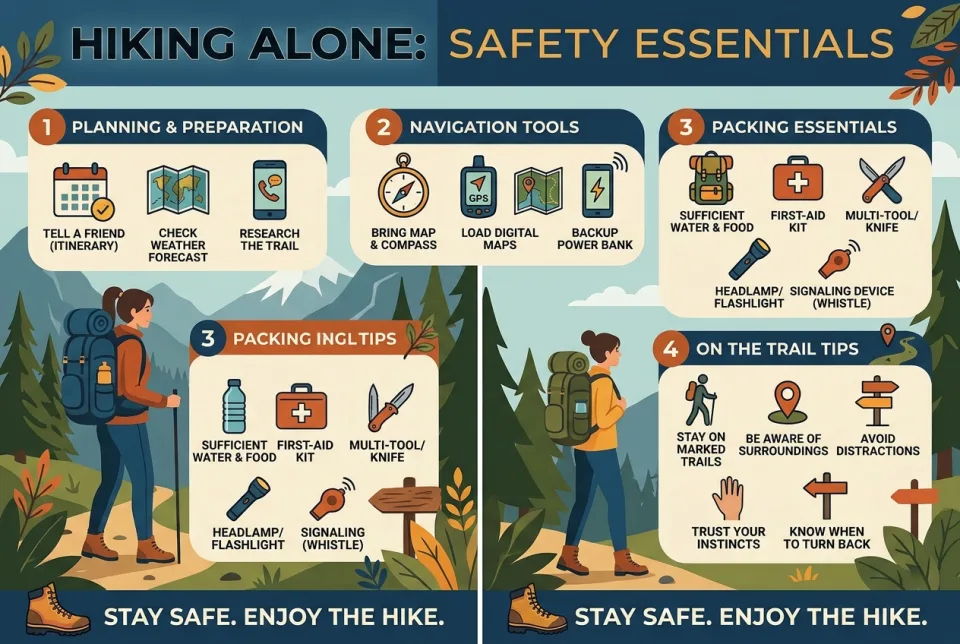
Hiking alone offers freedom and solitude, but it also means you are your own backup. Without a partner to help in an emergency, careful planning and smart decisions on the trail are essential. This guide covers the key safety essentials for solo hikers.
Before You Go
Proper preparation is your best defense. Start by choosing a trail that matches your experience and fitness level. Avoid overly remote or technical routes when hiking alone. Check the weather forecast and trail conditions, and be ready to change or cancel your plans if needed.
Always tell someone you trust your exact itinerary: the trail name, your planned route, your expected start and return times, and your vehicle description. Agree on a check-in time and what they should do if you do not contact them. Consider carrying a personal locator beacon or satellite messenger if you will be out of cell service.
Essential Gear
Pack the ten essentials, even for a short hike. These include:
- Navigation tools: map, compass, and a charged phone with offline maps.
- Sun protection: sunglasses, sunscreen, and a hat.
- Insulation: extra clothing layers, including a warm hat and gloves.
- Illumination: headlamp or flashlight with spare batteries.
- First aid supplies: a basic kit and any personal medications.
- Fire: waterproof matches or a lighter.
- Repair kit: multi-tool and duct tape.
- Nutrition: extra food beyond your planned meals.
- Hydration: extra water or a water filter.
- Emergency shelter: a lightweight emergency bivy or space blanket.
Also carry a whistle and a small mirror for signaling. Wear sturdy footwear and dress in layers.
On the Trail
Stick to your planned route and avoid shortcuts or unmarked trails. Pay attention to trail markers and landmarks. Move at a steady pace and take regular breaks to eat, drink, and check your navigation. Stay aware of changing weather and your surroundings. If you feel uneasy about a section, turn back. No summit is worth a risky solo scramble.
Keep your phone in a secure pocket and conserve battery by using airplane mode when you have no signal. If you encounter other hikers, it is fine to say hello, but avoid sharing that you are alone if it makes you uncomfortable.
What NOT to Do
- Do not rely solely on your phone for navigation; carry a map and compass.
- Do not deviate from your plan without informing someone.
- Do not push through pain, exhaustion, or bad weather.
- Do not approach wildlife or feed animals.
- Do not hike in the dark without proper lighting and experience.
When to Call for Help
If you are lost, injured, or caught in severe weather, stop and think. If you have cell service, call emergency services and give your location and situation. If you have no signal, use your whistle (three short blasts is a distress signal) and stay put if it is safe to do so. Make yourself visible and conserve resources.
After Your Hike
Check in with your contact person as soon as you have service. Let them know you are safe and back. Review what went well and what you could improve for next time.
Hiking alone can be a rewarding experience when you prepare properly and make conservative decisions. Always prioritize your safety over reaching a destination.
Sources & references
Spotted an error? Report it — we correct factual mistakes promptly.
Read next
Carbon monoxide detector alarm: what to do?
If your carbon monoxide detector sounds, treat it as an emergency: get everyone outside to fresh air and call for help. Learn the steps to take and mistakes to avoid.
Gasoline smell in the garage: what to do?
A strong gasoline smell in your garage is a fire and health hazard. Act quickly to eliminate ignition sources, ventilate, and find the source.
Elderly parent living alone: safety setup
A practical, room-by-room safety setup for an older adult living alone, covering falls, emergencies, medication, and daily check-ins.
BBQ gas canister safety checks: what to do?
A step-by-step guide to safely checking your BBQ gas canister and connections, including leak testing and what to do if you smell gas.
Related handy tools
Checklists, decision guides, scenarios and quizzes for the same situation.