Fence or gate fallen: what to do?
A fallen fence or gate can be a safety hazard and may leave your property insecure. Learn how to assess the situation, make it safe, and decide on repairs.
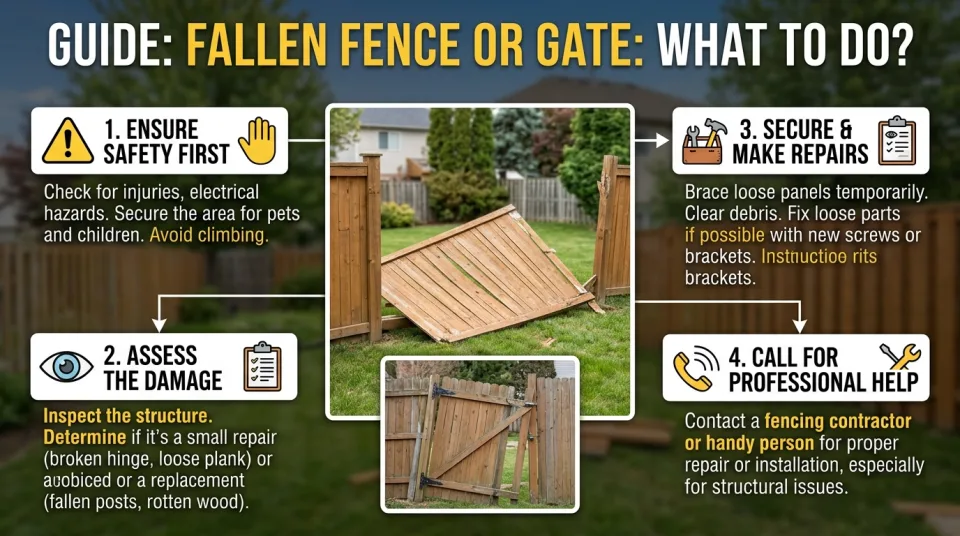
Quick answer
5 steps — read this before anything else
-
1
Check for injuries and call emergency services if anyone is hurt.
-
2
Keep people and pets away from the fallen structure.
-
3
Turn off power to electric gates or lights before touching anything.
-
4
Secure the area temporarily with barriers or tape.
-
5
Contact a professional for repairs if needed.
Warning
Never touch downed power lines or damaged electrical components. Call the utility company immediately.
A fallen fence or gate can be more than an inconvenience: it may pose a safety risk, leave your property open to intrusion, or damage nearby objects. The right steps depend on the cause (wind, impact, decay) and whether anyone is injured. This guide helps you respond safely and efficiently.
What is happening
Fences and gates can fall due to severe weather, vehicle impact, poor maintenance, soil erosion, or structural failure. The immediate concerns are personal injury, electrical hazards (if the gate is automated), and security.
Emergency warning
If anyone is injured or trapped, call local emergency services immediately. Do not attempt to move a heavy fallen structure if someone is pinned; wait for trained responders.
What to do first
- Check for injuries. Ensure everyone is safe. If someone is hurt, call emergency services and provide first aid if trained.
- Keep clear. Keep people and pets away from the fallen fence or gate. It may be unstable or have sharp edges.
- Turn off power. If the gate is electric or there are lights attached, switch off the power at the breaker before touching anything.
- Assess the damage. From a safe distance, look for downed power lines, gas leaks, or other hazards. If you suspect a gas leak, leave the area and call the gas emergency number.
- Secure the area. Use barriers, tape, or temporary fencing to block access. If the fence borders a road or public area, notify local authorities if it creates a traffic hazard.
What NOT to do
- Do not touch downed power lines or damaged electrical components. Call the utility company.
- Do not try to lift a heavy gate or fence alone. You could be injured or cause further collapse.
- Do not ignore the cause. If the fall was due to a vehicle, exchange details with the driver if safe, but do not block traffic.
- Do not leave the area unsecured if it poses a risk to others, especially children or pets.
When to call for help
Call emergency services if someone is injured, if there is a fire, gas leak, or downed power line, or if the fallen structure is blocking a road or creating an immediate danger. For non-emergency issues, contact a professional fence contractor or your local council if the fence is on public land.
What to monitor
After securing the area, monitor for further movement of the structure, especially in windy conditions. Check for signs of instability in nearby fences or gates. If the fence was electric, ensure the power remains off until a qualified person inspects it.
How to prevent it
- Inspect fences and gates regularly for loose posts, rust, or rot.
- Trim vegetation that may weaken the structure.
- Ensure gates are properly balanced and hinges are lubricated.
- After storms, check for damage and make repairs promptly.
Once the area is safe, arrange for professional repairs. If the fence is boundary-related, check property lines and local regulations before replacing it. For insurance claims (if applicable), contact your insurer after securing the site.
This is general information only. In an emergency, call your local emergency services.
Spotted an error? Report it — we correct factual mistakes promptly.
Read next
Card theft in the souk: what to do?
If your credit or debit card is stolen in a busy market, acting quickly can limit fraudulent charges. Here is a step-by-step guide to securing your accounts and reporting the theft.
Carbon monoxide detector alarm: what to do?
If your carbon monoxide detector sounds, treat it as an emergency: get everyone outside to fresh air and call for help. Learn the steps to take and mistakes to avoid.
Helmet fitting for skateboards and scooters: what to do?
A properly fitted helmet is the most effective way to protect your head while skateboarding or scootering. Learn how to check size, adjust straps, and confirm a secure fit before you ride.
BBQ gas canister safety checks: what to do?
A step-by-step guide to safely checking your BBQ gas canister and connections, including leak testing and what to do if you smell gas.
Related handy tools
Checklists, decision guides, scenarios and quizzes for the same situation.