Blocked toilet or overflowing drain: what to do?
A blocked toilet or overflowing drain can quickly turn into a mess or a health hazard. Here is how to stop the flow, clear a simple blockage safely, and know when to call a professional.
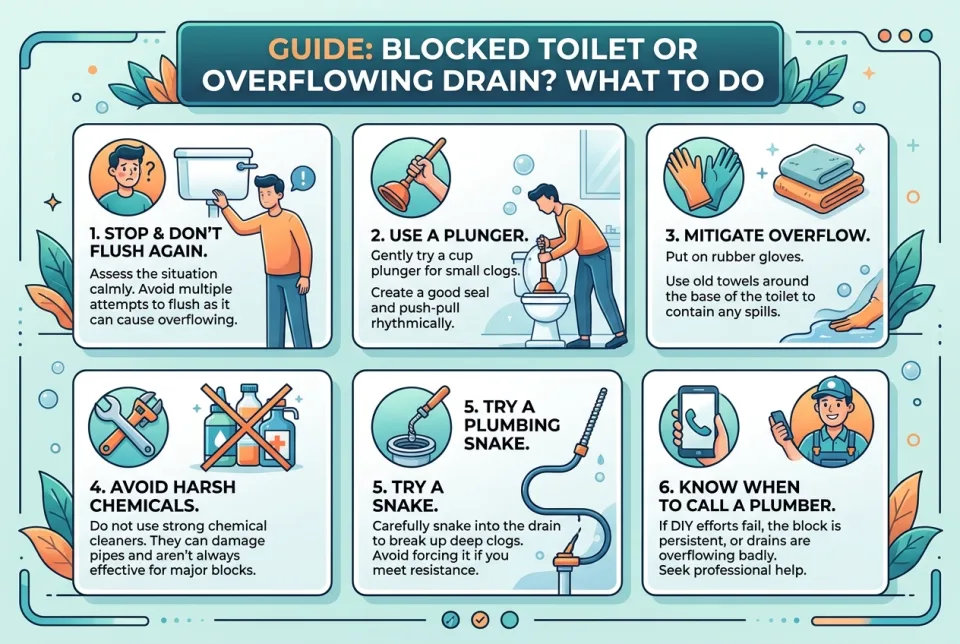
Quick answer
5 steps — read this before anything else
-
1
Stop flushing and turn off the water supply to the toilet or the mains if water keeps rising.
-
2
Keep people and pets away from the area and avoid contact with the waste water.
-
3
If it is safe, try a plunger or drain rod, never harsh chemicals first.
-
4
Call a plumber or your water utility if sewage is backing up or the blockage will not clear.
-
5
Clean and disinfect the area thoroughly afterwards and wash your hands.
Warning
Sewage and drain water can carry harmful bacteria. Avoid contact with skin, do not let children or pets near it, and wash and disinfect thoroughly afterwards. If water reaches electrical sockets or appliances, switch off the power and do not touch wet electrical items.
A blocked toilet or overflowing drain is unpleasant, but most cases are manageable if you act quickly and avoid making things worse. The two situations are different: a single toilet that will not flush is usually a local blockage, while water backing up from a floor drain, shower or outside gully often points to a problem in the shared drain or sewer. Treat any overflow involving sewage as a hygiene risk.
What to do first
- Stop adding water. Do not flush again. If the bowl is close to overflowing, lift the cistern lid and close the float valve or turn the isolation valve on the supply pipe. If water keeps rising, turn off the main water supply to the property.
- Protect the area. Keep children and pets away. Put on rubber gloves, and wear old shoes or boots if the floor is wet. Open a window or door for ventilation.
- Contain the overflow. Lay old towels or a bucket to catch water before it spreads to carpets or electrical fittings. If water is near sockets or appliances, switch off the power at the consumer unit and do not touch wet electrical items.
- Let standing water settle. Wait a few minutes. If the level in the bowl or drain falls, the blockage may be partial and further flushing (once) may clear it. If it does not fall, do not flush.
Clearing a simple toilet blockage
A plunger is the safest first tool. Place it over the outlet and push and pull firmly several times, keeping a good seal. A toilet auger (drain snake) can reach a blockage further along the trap. Hot (not boiling) water poured from a bucket can help soften waste. Never use a plunger on a drain that is already overflowing.
If the blockage is in a sink, bath or floor drain, a drain plunger or a drain rod may clear it. Remove visible hair or debris from the plug hole first.
What NOT to do
- Do not pour chemical drain cleaner into a toilet or a drain that is overflowing. It can splash back, damage pipes and create dangerous fumes, and it makes a plumber's job harder.
- Do not keep flushing to "see if it clears". Each flush adds more water.
- Do not use a plunger or rod on a drain that is backing up with sewage from the main sewer, you could force waste into other outlets.
- Do not ignore a smell of sewage or water rising in multiple drains, this usually needs a professional.
When to call for help
Call a plumber or drain specialist if the blockage does not clear with a plunger, if water backs up in more than one drain, if there is a strong sewage smell, or if waste is coming up through a floor drain or outside gully. Contact your water utility or local authority if sewage is overflowing outside the property or you suspect the public sewer is blocked, they are responsible for the main sewer in many areas. If the overflow reaches electrical fittings, treat it as an emergency and call an electrician.
Clean up and prevent it
After the water is gone, clean all affected surfaces with hot water and detergent, then disinfect. Wash your hands thoroughly with soap and water. Throw away towels used on sewage, or wash them separately at a high temperature. To prevent repeat blockages, only flush human waste and toilet paper, never wipes, sanitary products, fats or food scraps. Keep drains clear of hair and soap residue, and have outside drains checked if they block repeatedly.
If in doubt, stop the water and call a professional. A quick call is cheaper and safer than a flooded floor.
Spotted an error? Report it — we correct factual mistakes promptly.
Read next
Well pump losing pressure: what to do?
When your well pump loses pressure, quick checks can often restore it. Learn the safe steps to diagnose and fix the problem without damaging your system.
Leaking roof during rain: what to do?
A leaking roof during rain can quickly cause damage. Learn safe, immediate steps to contain the leak, protect your home, and prevent further problems.
Toilet keeps running after flushing: what to do?
A running toilet wastes water and money. Learn how to diagnose and fix common causes like a faulty flapper, stuck float, or leaking fill valve.
Water infiltration through the wall: what to do?
Water seeping through a wall can lead to structural damage and mold. Learn how to respond quickly and prevent further issues.
Related handy tools
Checklists, decision guides, scenarios and quizzes for the same situation.