Toilet keeps running after flushing: what to do?
A running toilet wastes water and money. Learn how to diagnose and fix common causes like a faulty flapper, stuck float, or leaking fill valve.
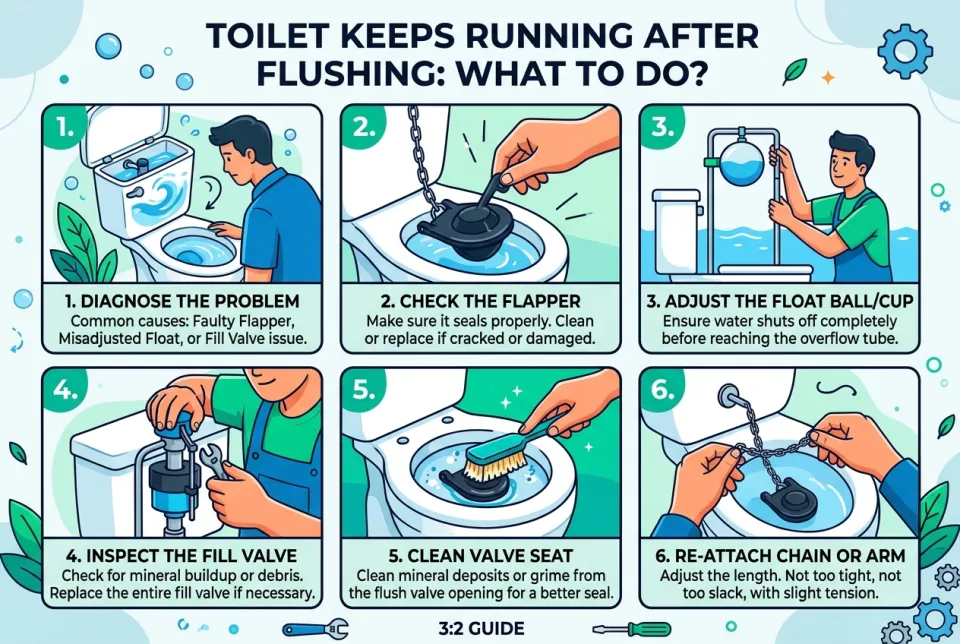
Quick answer
4 steps — read this before anything else
-
1
Lift the tank lid and check if the flapper is sealing properly.
-
2
Adjust or replace the flapper if it is warped or dirty.
-
3
Check the float arm or fill valve for proper water level.
-
4
Turn off the water supply if the toilet overflows.
Warning
If water is overflowing, turn off the water supply immediately to prevent flooding. Avoid contact with electrical outlets if water is present.
A toilet that keeps running after flushing is a common household issue that can waste hundreds of gallons of water per day. Fortunately, most causes are easy to diagnose and fix with basic tools. This guide will help you identify the problem and take the right steps.
What is happening
After a flush, the fill valve should refill the tank to a set level, then shut off. If water continues to flow into the bowl or the fill valve keeps running, you have a leak or misadjustment. The most common culprits are a worn flapper, a stuck float, or a faulty fill valve.
What to do first
- Turn off the water supply to the toilet if water is overflowing or you cannot stop the running. The shutoff valve is usually located behind or below the toilet tank.
- Remove the tank lid and set it aside carefully.
- Observe the water level and listen for water flowing. If water is flowing into the bowl, the flapper is likely the issue. If the fill valve is running but water is not flowing into the bowl, the fill valve or float may be faulty.
Step by step
1. Check the flapper
The flapper is the rubber seal at the bottom of the tank. Over time, it can warp, become dirty, or lose its seal. Lift the flapper and inspect it for debris or damage. Clean it with a soft cloth if dirty. If it is warped or cracked, replace it with a new flapper that matches your toilet model.
2. Adjust the float
If the water level is too high, it may be overflowing into the overflow tube. Adjust the float (either a ball float on an arm or a cup float on the fill valve) so the water level is about 1 inch below the top of the overflow tube. Refer to your toilet's manual for specific adjustment instructions.
3. Check the fill valve
If the fill valve does not shut off, it may be clogged or worn. Turn off the water supply, remove the valve cap, and clean any debris. If the valve is old, consider replacing it with a new fill valve.
4. Inspect the overflow tube
Ensure the overflow tube is not cracked and that the water level is below its top. If the tube is damaged, it may need replacement.
5. Test the repair
Turn the water supply back on and flush the toilet. Watch and listen for any continued running. If the problem persists, you may need to replace the flapper or fill valve entirely.
What NOT to do
- Do not ignore the problem. A running toilet can waste thousands of gallons of water per month and increase your water bill.
- Do not force the float or valve components. This can cause damage and lead to more expensive repairs.
- Do not use chemical cleaners in the tank as they can damage rubber parts.
When to call a professional
If you have tried these steps and the toilet still runs, or if you are uncomfortable performing repairs, call a licensed plumber. Also call a plumber if you notice water leaking onto the floor or if the toilet is cracked.
How to prevent it
Regularly check the flapper and fill valve for wear. Consider installing a water alarm or using dye tests to detect silent leaks. Replace worn parts promptly.
By following these steps, you can usually fix a running toilet yourself and save water. If in doubt, consult a professional.
Sources & references
Spotted an error? Report it — we correct factual mistakes promptly.
Frequently asked questions
Read next
Wet carpet after a leak: what to do?
A wet carpet after a leak can lead to mold and structural damage if not handled quickly. Learn the safe steps to dry it, prevent mold, and know when to call a professional.
Water infiltration through the wall: what to do?
Water seeping through a wall can lead to structural damage and mold. Learn how to respond quickly and prevent further issues.
Damp patches on basement walls after snow melts: what to do?
Spring thaw can push water through foundation walls and cause damp patches in your basement. Learn how to find the source, dry the area safely, and prevent future problems.
Refrigerator water line leaks: what to do?
A leaking refrigerator water line can cause serious water damage. Learn how to stop the leak, clean up safely, and prevent future problems.
Related handy tools
Checklists, decision guides, scenarios and quizzes for the same situation.