How to stop a nosebleed quickly
Most nosebleeds stop with simple first aid. Learn the correct steps to stop a nosebleed fast and when to get medical help.
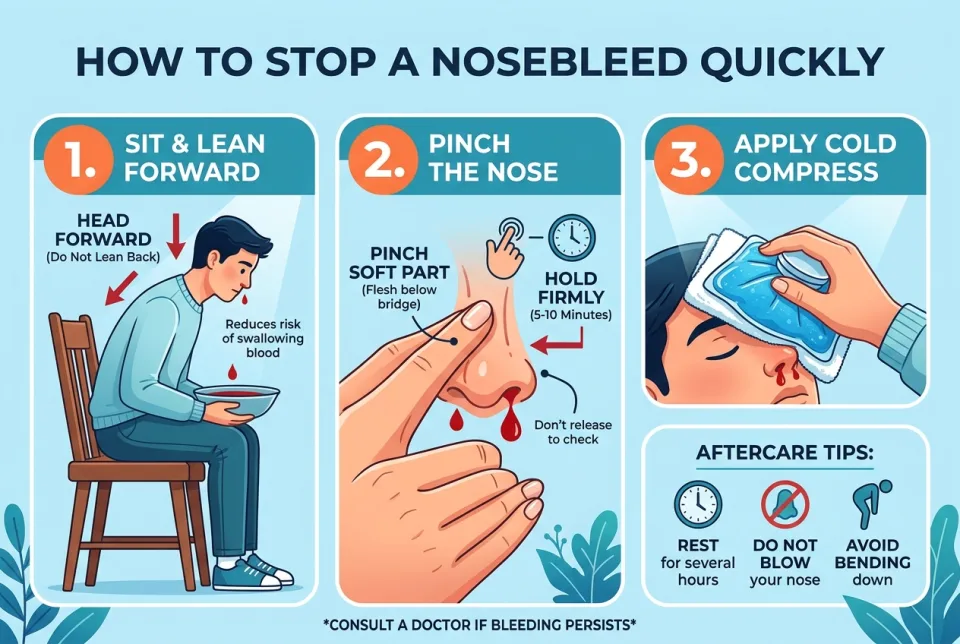
Quick answer
5 steps — read this before anything else
-
1
Sit upright and lean slightly forward to avoid swallowing blood.
-
2
Pinch the soft part of your nose firmly for 10 to 15 minutes without releasing.
-
3
Breathe through your mouth and stay calm.
-
4
Apply a cold pack to your nose or forehead if available.
-
5
Seek medical help if bleeding persists beyond 20 minutes or is heavy.
Warning
If bleeding is severe, does not stop after 20 minutes of pressure, or is accompanied by dizziness, fainting, or difficulty breathing, call emergency services immediately.
Important — please read
This content is general educational and informational only, and is not a substitute for professional medical advice, diagnosis or treatment. Always seek the advice of a qualified health provider with any questions you may have about a medical condition. Never disregard or delay seeking professional medical care because of something you read here. In an emergency or life-threatening situation, call your local emergency services (police, fire or ambulance) immediately.
Nosebleeds are common and usually not serious. Most stop within 10 to 15 minutes with simple first aid. Knowing the right steps can help you stop a nosebleed quickly and avoid complications.
What to do first
- Sit upright and lean slightly forward. This keeps blood from running down your throat, which can cause nausea or choking.
- Pinch the soft part of your nose (just below the bony bridge) firmly with your thumb and index finger. Hold continuously for 10 to 15 minutes without letting go to check.
- Breathe through your mouth and stay calm. Anxiety can raise blood pressure and prolong bleeding.
- Apply a cold pack (ice wrapped in a cloth) to your nose or forehead if available. Cold helps constrict blood vessels.
- After 10 to 15 minutes, gently release the pressure. If bleeding continues, repeat the pinch for another 10 minutes.
What NOT to do
- Do not tilt your head back. This sends blood into your throat and stomach, which can cause vomiting.
- Do not stuff tissues or cotton deep into your nose. This can irritate the lining and make bleeding worse.
- Do not lie down. Staying upright reduces pressure in the nose.
- Do not blow your nose for several hours after bleeding stops, as this can dislodge the clot.
- Do not pick or rub your nose in the hours following a nosebleed.
When to call for help
Call your local emergency services immediately if:
- Bleeding does not stop after 20 minutes of continuous pressure.
- Bleeding is very heavy or you feel faint, dizzy, or short of breath.
- You are taking blood-thinning medication or have a bleeding disorder.
- The nosebleed follows a head injury or a fall.
- You have trouble breathing or swallowing.
For less urgent concerns, contact a healthcare provider if nosebleeds are frequent, occur without warning, or interfere with daily life.
What to monitor
After the bleeding stops, watch for signs of rebleeding, such as a trickle of blood in the back of your throat. Avoid strenuous activity and hot drinks for a few hours. Keep your head elevated when resting.
How to prevent nosebleeds
- Keep the inside of your nose moist with a saline spray or a thin layer of petroleum jelly (if not allergic).
- Use a humidifier in dry environments.
- Avoid picking or blowing your nose forcefully.
- Trim fingernails to reduce the risk of injury.
- Wear protective gear during sports.
This is general information and not a substitute for professional medical advice. In an emergency, call your local emergency services.
Sources & references
Spotted an error? Report it — we correct factual mistakes promptly.
Read next
How to perform the Heimlich manoeuvre on an adult
The Heimlich manoeuvre (abdominal thrusts) is a first-aid technique to clear a severe airway obstruction in a conscious adult. Learn the correct steps and when to use it.
Kitchen smoke alarm goes off while cooking: what to do?
Learn how to safely handle a smoke alarm that activates while you are cooking, including how to silence it, prevent false alarms, and when to treat it as a real emergency.
Burglar alarm false trigger: what to do?
A false alarm is annoying but manageable. Disarm safely, verify no real intrusion, reset the system, and fix the cause so it does not happen again.
Ants invading the kitchen counter: what to do?
Ants on your kitchen counter are a common nuisance that you can manage with simple sanitation and targeted baiting. Learn the safe, effective steps to eliminate them and prevent their return.
Related handy tools
Checklists, decision guides, scenarios and quizzes for the same situation.