Harassment by phone or online: what to do?
Harassment by phone or online can be distressing and sometimes dangerous. Learn practical steps to protect yourself, document incidents, and seek help.
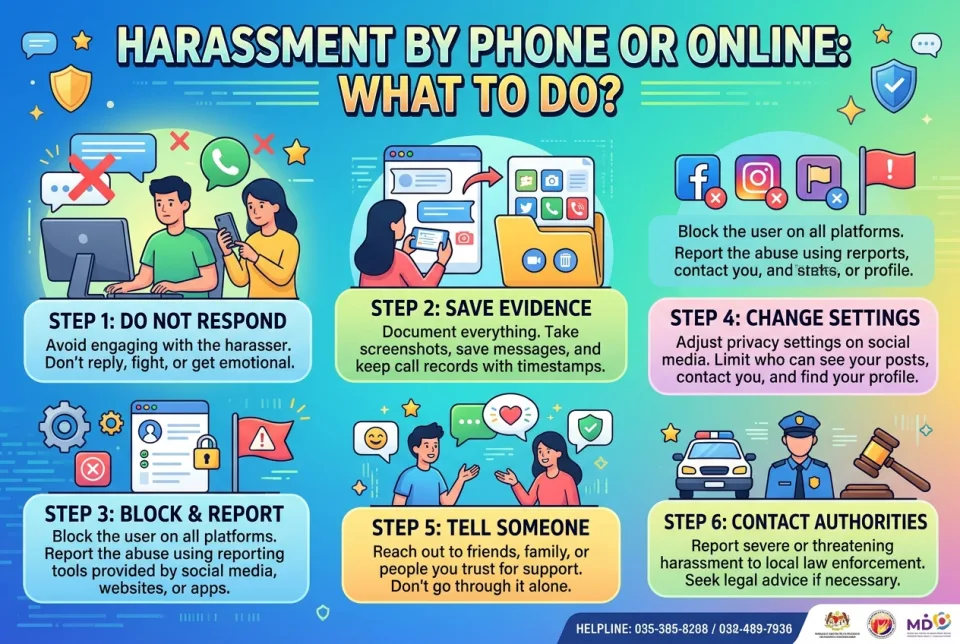
Quick answer
5 steps — read this before anything else
-
1
Do not respond to the harasser; avoid engaging or retaliating.
-
2
Save evidence: screenshots, call logs, voicemails, and messages.
-
3
Block the harasser on your phone and social media platforms.
-
4
Report to the platform and, if threats or stalking occur, to local police.
-
5
Seek support from trusted friends, family, or a helpline.
Warning
If you are in immediate danger or feel threatened, call your local emergency services right away.
Harassment by phone or online can leave you feeling anxious, violated, and unsure of what to do. Whether it is unwanted calls, texts, emails, or social media messages, there are steps you can take to protect yourself and stop the harassment.
What is happening
Harassment can take many forms: repeated unwanted calls, threatening or abusive messages, cyberstalking, doxxing (sharing private information), or impersonation. It may come from someone you know or a stranger. Regardless of the source, it is not your fault, and you have the right to take action.
Emergency warning
If you are in immediate danger or feel threatened, call your local emergency services right away. Do not hesitate if the harasser knows your location or has made credible threats.
What to do first
- Do not engage. Responding often encourages the harasser. Avoid replying, arguing, or retaliating.
- Save evidence. Take screenshots of messages, save voicemails, and keep a log of calls with dates and times. Do not delete anything, even if it is upsetting.
- Block the harasser. Use your phone's blocking features and block or mute the person on social media and messaging apps.
- Adjust privacy settings. Review your social media privacy settings to limit who can see your posts and contact you. Consider making your profiles private.
- Tell someone you trust. Share what is happening with a friend or family member for support and safety.
When to involve authorities
Contact local police if the harassment includes threats of violence, stalking, sexual harassment, or if you feel unsafe. In many places, repeated unwanted contact can be a crime. Provide the evidence you have collected. If the harassment is online, also report it to the platform (e.g., Facebook, Instagram, Twitter) using their reporting tools; they may remove content or ban the user.
What NOT to do
- Do not respond to the harasser or try to reason with them.
- Do not delete messages or call logs; they are evidence.
- Do not share personal information (address, workplace, schedule) publicly or with the harasser.
- Do not blame yourself; harassment is the harasser's responsibility.
What to monitor
Keep an eye on your accounts for unusual activity, such as password reset emails or login alerts. If you suspect your accounts are compromised, change your passwords and enable two-factor authentication. Also watch for any escalation in the harasser's behavior, such as showing up at your home or workplace, and report it immediately.
How to prevent it
While you cannot control others, you can reduce risk: use strong, unique passwords, enable two-factor authentication, avoid oversharing on social media, and regularly review your privacy settings. Consider using a secondary phone number or email for public profiles.
Support and self-care
Harassment can take a toll on your mental health. Talk to a counselor or a trusted support network. Many countries have helplines for harassment or cyberbullying; search for local resources or contact a victim support organization.
Remember: you are not alone, and help is available. Take action early to protect yourself and preserve evidence.
This is general information and not a substitute for professional legal or medical advice. In an emergency, call your local emergency services.
Spotted an error? Report it — we correct factual mistakes promptly.
Read next
Filing in small claims court: what to do?
Small claims court can resolve disputes over modest amounts without a lawyer. Learn the key steps to file, prepare, and present your case effectively.
Neighbor's tree hangs over my property: what to do?
Learn safe, legal steps to handle a neighbor's tree branches over your property, from documenting the issue to getting professional help and understanding your rights.
Disputing a utility bill that looks wrong: what to do?
A surprisingly high utility bill can be alarming. Learn how to check for errors, contact your provider, and resolve the dispute effectively.
Lost marriage or birth certificate: what to do?
Losing a vital record like a birth or marriage certificate can be stressful, but replacing it is usually straightforward. Learn the steps to get a certified copy from the right authority.
Related handy tools
Checklists, decision guides, scenarios and quizzes for the same situation.