Neighbor's tree hangs over my property: what to do?
Learn safe, legal steps to handle a neighbor's tree branches over your property, from documenting the issue to getting professional help and understanding your rights.
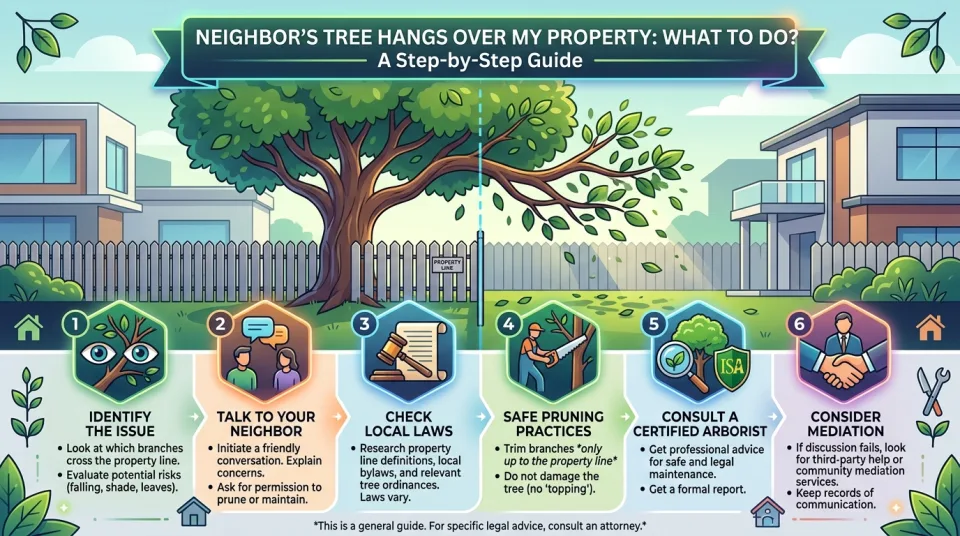
Quick answer
5 steps — read this before anything else
-
1
Document the overhang with dated photos and notes.
-
2
Check local tree and property laws or consult a legal expert.
-
3
Talk to your neighbor politely and propose a solution.
-
4
Hire a licensed arborist for assessment and safe pruning.
-
5
Avoid cutting branches on your neighbor's side without permission.
Warning
Never attempt to prune large branches yourself, especially near power lines. Contact a professional arborist or your utility company for assistance.
Discovering that a neighbor's tree extends over your property can be a source of tension. Whether the branches are a nuisance, pose a risk, or simply block sunlight, it's important to handle the situation carefully. This guide outlines practical and legal steps to resolve the issue without damaging relationships or breaking the law.
What is happening
In most jurisdictions, you have the right to trim branches that cross onto your property, but you must not cause harm to the tree or trespass on your neighbor's land. The tree's owner is typically responsible for its overall health and any damage it causes, but local laws vary. Understanding your rights and responsibilities is the first step.
What to do first
- Document the situation: Take clear, dated photos of the overhanging branches and any damage they cause (e.g., blocked gutters, cracks in a wall). Keep a written log of dates and observations.
- Research local regulations: Look up your municipality's tree ordinances or homeowner association rules. Many areas have specific guidelines about overhanging branches and property lines.
- Talk to your neighbor: Approach them calmly and explain your concerns. Propose a mutually agreeable solution, such as sharing the cost of professional pruning. Keep the conversation friendly and factual.
- Consult a licensed arborist: An arborist can assess the tree's health, identify risks, and recommend safe pruning methods. They can also provide a written report if needed.
- Consider mediation: If direct communication fails, a neutral mediator can help resolve disputes without going to court.
What NOT to do
- Don't cut branches on your neighbor's property without permission; this could be trespassing or illegal destruction of property.
- Don't prune excessively or improperly; cutting beyond the property line or harming the tree's health could make you liable.
- Don't ignore the problem if the tree is dead or diseased; it could fall and cause injury or damage.
- Don't resort to confrontation or harassment; this can escalate the situation and harm relationships.
When to call for help
Seek professional help if the tree is large, damaged, or poses an immediate hazard (e.g., hanging dead branches). If your neighbor is unresponsive or hostile, consult a lawyer specializing in property law. For urgent safety risks, contact your local emergency services or a certified arborist immediately.
What to monitor
Keep an eye on the tree's health and the overhang. Look for signs of disease (e.g., dead wood, fungus, cracks) and note any changes. If the tree becomes a hazard, document it and inform your neighbor in writing.
How to prevent it
Maintain open communication with your neighbor about tree care. Regularly inspect trees near property lines and address issues early. Consider planting trees away from boundaries in the future.
By following these steps, you can protect your property and maintain good relations with your neighbor. Always prioritize safety and legality, and when in doubt, seek professional advice.
Spotted an error? Report it — we correct factual mistakes promptly.
Read next
What Should You Do If a Contractor Takes Your Deposit and Never Starts the Work?
A contractor took your deposit but never started the job. Learn the practical steps to document the problem, demand your money back, and pursue legal options if needed.
What Should You Do If You Receive a Surprise Medical Bill?
A surprise medical bill can be confusing and stressful. Learn how to verify the charges, understand your rights under the No Surprises Act, and take action to dispute or reduce the bill.
What to Do in Case of a Layoff
Experiencing a job layoff can be overwhelming, but taking immediate, organized steps will help protect your finances, health coverage, and future career.
Burglary: what to do?
If you discover a burglary, your safety comes first. Learn the steps to take, what not to touch, and how to secure your home and report the crime.
Related handy tools
Checklists, decision guides, scenarios and quizzes for the same situation.