Insurance claim rejected: what to do?
A rejected insurance claim is not always final. Learn how to understand the reason, gather evidence, and appeal the decision effectively.
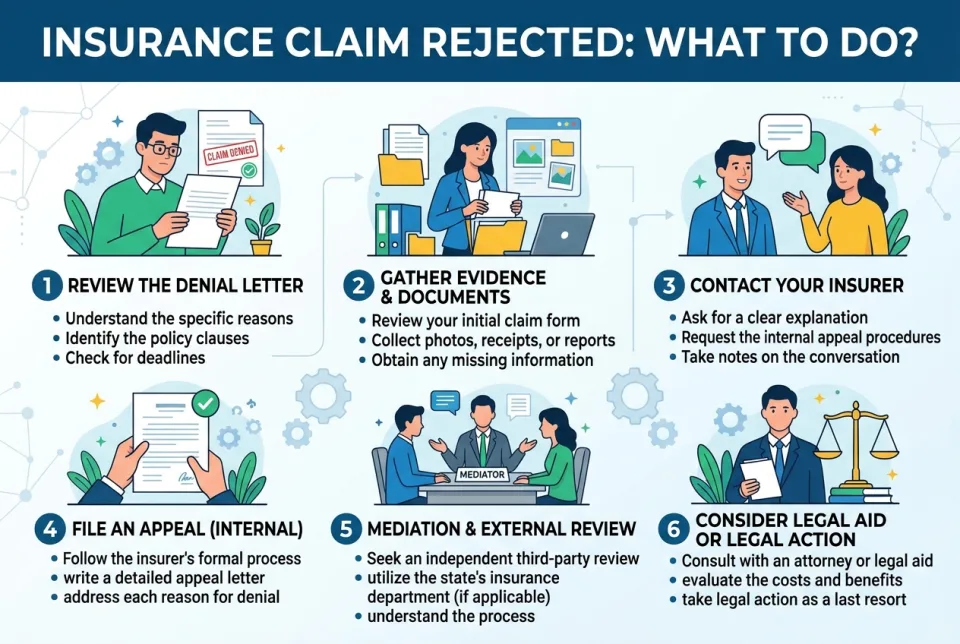
Quick answer
5 steps — read this before anything else
-
1
Read the rejection letter carefully to identify the exact reason.
-
2
Gather all supporting documents, photos, and records related to your claim.
-
3
Contact your insurer to ask for clarification and to discuss the decision.
-
4
Submit a formal appeal in writing, including any new or missing evidence.
-
5
If unresolved, escalate to the insurer's complaints team or an independent ombudsman.
Important — please read
This content is general educational and informational only, and is not a substitute for professional medical advice, diagnosis or treatment. Always seek the advice of a qualified health provider with any questions you may have about a medical condition. Never disregard or delay seeking professional medical care because of something you read here. In an emergency or life-threatening situation, call your local emergency services (police, fire or ambulance) immediately.
Receiving a letter saying your insurance claim has been rejected can be stressful and confusing. Before you panic, remember that a rejection is not always the final word. Insurers can make mistakes, and sometimes claims are denied because of missing information or a misunderstanding. This guide explains what to do step by step.
What is happening
An insurer rejects a claim when it believes the loss is not covered by your policy, when required information is missing, or when it suspects fraud or misrepresentation. The rejection letter should state the reason, but it may use technical language. Your first task is to understand exactly why the claim was denied.
What to do first
- Read the rejection letter carefully. Identify the specific policy clause or reason cited. If it is unclear, ask the insurer to explain in plain language.
- Review your policy documents. Check the sections on coverage, exclusions, and conditions. Confirm whether the reason given aligns with the policy wording.
- Gather evidence. Collect photos, receipts, medical records (if relevant), police reports, and any correspondence with the insurer. Make copies and keep originals safe.
- Contact your insurer. Call or write to ask for clarification. Sometimes a simple conversation can resolve a misunderstanding or reveal that additional documents are needed.
Step by step: how to appeal
- Submit a formal appeal in writing. Use email or a letter, and keep a copy. Clearly state that you are appealing the decision and reference your claim number.
- Provide new or missing evidence. If the rejection was due to lack of documentation, supply it now. If you believe the insurer misinterpreted the policy, explain why with specific references to the policy wording.
- Set a deadline. Ask for a response within a reasonable time, such as 14 to 30 days, and follow up if you do not hear back.
- Escalate to the insurer's complaints team. If the appeal is rejected or ignored, ask for the complaint to be reviewed by a senior team or the complaints department.
- Contact an independent ombudsman. In many countries, a free and independent financial ombudsman service can review your case if the insurer's final response is unsatisfactory. Check the official website for your country.
What NOT to do
- Do not ignore the rejection. Time limits for appeals or complaints may apply.
- Do not exaggerate or alter evidence. This can void your claim and may be considered fraud.
- Do not accept the decision without understanding it. Ask questions until you are clear on the reason.
- Do not miss deadlines. Keep track of any dates mentioned in the letter or policy.
When to seek professional help
If the amount is significant or the policy wording is complex, consider consulting a lawyer or a professional claims advocate. Many consumer advice organizations also offer free guidance. In some countries, you can contact a financial regulator or ombudsman for help.
How to prevent future problems
- Read your policy carefully before you need to claim, especially the exclusions and conditions.
- Keep detailed records and receipts for valuable items.
- Report incidents promptly and provide complete information.
- Ask your insurer to clarify anything you do not understand.
Remember, a rejection is not the end of the road. By acting promptly, staying organized, and using the appeal process, you can often overturn an unfair decision. Start by reviewing the letter and your policy today.
Spotted an error? Report it — we correct factual mistakes promptly.
Read next
Rental deposit dispute: what to do?
If your landlord won't return your deposit, you have options. Learn how to document the issue, request an itemized statement, and escalate your dispute effectively.
Burglary: what to do?
If you discover a burglary, your safety comes first. Learn the steps to take, what not to touch, and how to secure your home and report the crime.
Harassment by phone or online: what to do?
Harassment by phone or online can be distressing and sometimes dangerous. Learn practical steps to protect yourself, document incidents, and seek help.
Power of attorney needed: what to do?
A power of attorney lets someone you trust act on your behalf. Here is how to decide which type you need, who to choose, and how to put it in place correctly.
Related handy tools
Checklists, decision guides, scenarios and quizzes for the same situation.