Disputing a utility bill that looks wrong: what to do?
A surprisingly high utility bill can be alarming. Learn how to check for errors, contact your provider, and resolve the dispute effectively.
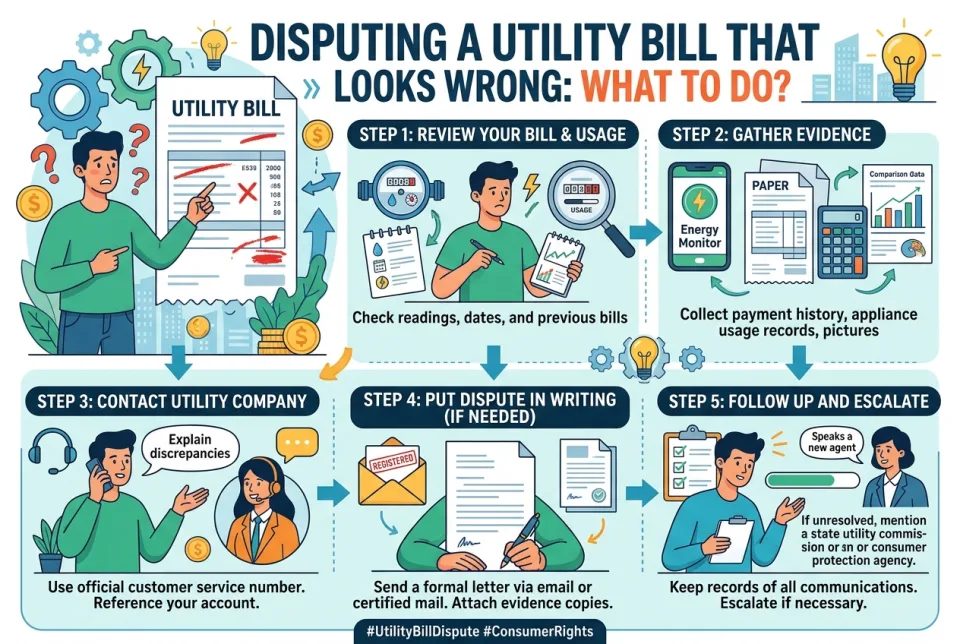
Quick answer
5 steps — read this before anything else
-
1
Check your meter reading and compare it to the bill.
-
2
Review your usage history for unusual spikes.
-
3
Contact your utility provider and explain the issue.
-
4
Request a formal review or dispute if needed.
-
5
Keep records of all communications.
Important — please read
This content is general educational and informational only, and is not a substitute for professional medical advice, diagnosis or treatment. Always seek the advice of a qualified health provider with any questions you may have about a medical condition. Never disregard or delay seeking professional medical care because of something you read here. In an emergency or life-threatening situation, call your local emergency services (police, fire or ambulance) immediately.
Opening a utility bill that is much higher than expected can be stressful. Before you panic, know that billing errors, meter misreads, and seasonal spikes are common. This guide walks you through the steps to dispute a utility bill that looks wrong, safely and effectively.
What is happening
Utility bills can be higher than usual for several reasons: a misread meter, a estimated bill based on past usage, a rate change, a leak, or a billing system error. Your goal is to identify the cause and, if it is an error, get the bill corrected.
Step by step: what to do first
- Check your meter reading. Locate your electricity or gas meter and note the current reading. Compare it to the reading on your bill. If they differ significantly, that is a red flag.
- Review your usage history. Look at the usage graph or numbers on your bill and compare with previous months. A sudden spike might indicate a leak or a problem with an appliance.
- Look for obvious errors. Check the billing period, the rate, and any extra fees. Sometimes a bill covers a longer period or includes a catch-up amount.
- Contact your utility provider. Call or use their online chat. Explain the issue calmly and ask them to review the bill. Have your account number and meter reading ready.
- Request a formal dispute. If the first person cannot help, ask to speak to a supervisor or file a formal dispute. Many utilities have a dedicated complaints process.
What NOT to do
- Do not ignore the bill. Unpaid bills can lead to late fees or service disconnection.
- Do not tamper with your meter. This is dangerous and illegal.
- Do not pay the disputed amount before resolving the issue. Pay only what you agree you owe, and state that you are disputing the rest.
- Do not lose your temper. Stay polite and factual; it gets better results.
When to escalate
If your provider does not resolve the issue within a reasonable time (often 30 days), you can escalate to your local consumer protection agency or the utility regulator in your area. Keep records of all calls, emails, and letters.
What to monitor
After the dispute is resolved, monitor your next few bills to ensure the correction was applied. Also, watch for any signs of a leak or faulty appliance if the high bill was due to actual usage.
How to prevent future issues
- Read your meter regularly and compare with your bill.
- Sign up for usage alerts if your utility offers them.
- Consider a budget billing plan to spread costs evenly.
Disputing a utility bill requires patience and organization, but it is your right as a consumer. Start by gathering facts, then communicate clearly with your provider. Most issues can be resolved without further escalation.
Spotted an error? Report it — we correct factual mistakes promptly.
Read next
What Should You Do If You Receive a Surprise Medical Bill?
A surprise medical bill can be confusing and stressful. Learn how to verify the charges, understand your rights under the No Surprises Act, and take action to dispute or reduce the bill.
Rental deposit dispute: what to do?
If your landlord won't return your deposit, you have options. Learn how to document the issue, request an itemized statement, and escalate your dispute effectively.
Received a court summons: what to do?
A court summons is a serious legal document that requires your immediate attention. Learn the steps to respond correctly and protect your rights.
Neighbor's tree hangs over my property: what to do?
Learn safe, legal steps to handle a neighbor's tree branches over your property, from documenting the issue to getting professional help and understanding your rights.
Related handy tools
Checklists, decision guides, scenarios and quizzes for the same situation.