Received a court summons: what to do?
A court summons is a serious legal document that requires your immediate attention. Learn the steps to respond correctly and protect your rights.
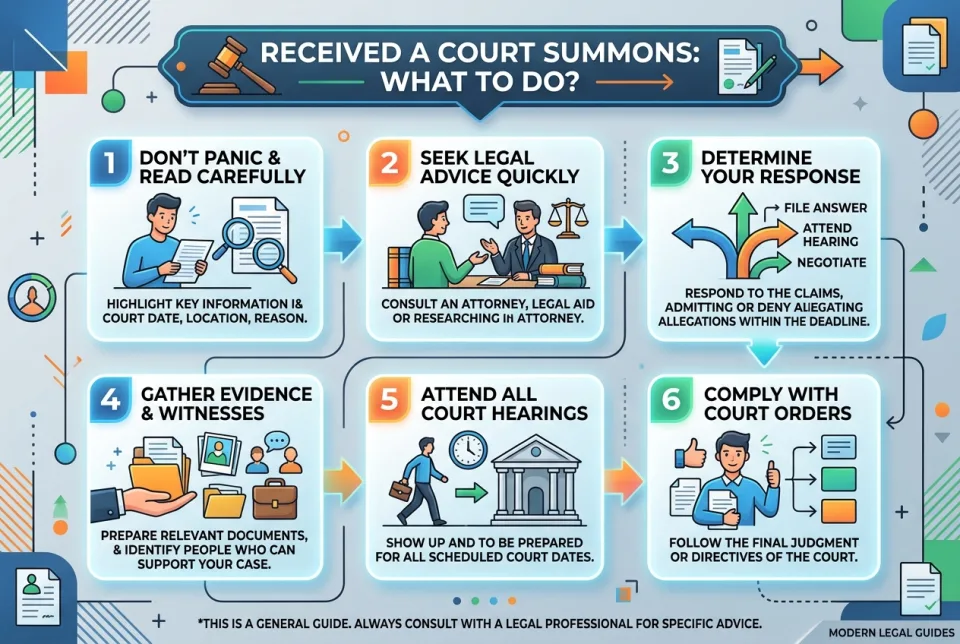
Quick answer
5 steps — read this before anything else
-
1
Read the summons carefully and note the deadline to respond.
-
2
Do not ignore it: missing the deadline can lead to a default judgment against you.
-
3
Contact a lawyer or legal aid organization for advice.
-
4
Gather any relevant documents and evidence.
-
5
Respond by the deadline, either personally or through an attorney.
Warning
Ignoring a court summons can result in a default judgment against you, leading to wage garnishment, bank account levies, or property liens. Act immediately.
Important — please read
This content is general educational and informational only, and is not a substitute for professional medical advice, diagnosis or treatment. Always seek the advice of a qualified health provider with any questions you may have about a medical condition. Never disregard or delay seeking professional medical care because of something you read here. In an emergency or life-threatening situation, call your local emergency services (police, fire or ambulance) immediately.
Receiving a court summons can be stressful, but it is important to act promptly and responsibly. A summons is a legal notice informing you that a lawsuit has been filed against you and that you must respond within a specified time. Ignoring it can have serious consequences, including a default judgment that may result in wage garnishment, property liens, or other enforcement actions.
What is happening
A summons is typically served along with a complaint that outlines the plaintiff's claims against you. The summons itself will state the court, the parties involved, and the deadline by which you must file a response (often called an answer). The deadline is usually a set number of days from the date of service, which varies by jurisdiction and the type of case.
Step by step: what to do first
- Read the documents carefully. Identify the court, the case number, the plaintiff, the claims, and the response deadline. Note whether the summons is for a civil, small claims, or other type of case.
- Mark the deadline on your calendar. Missing it can result in a default judgment. If you need more time, you may be able to request an extension from the court, but do so before the deadline.
- Do not ignore the summons. Even if you believe the lawsuit is mistaken or unfair, you must respond. Ignoring it will not make it go away.
- Seek legal advice. Contact a lawyer who handles the type of case you are facing. If you cannot afford one, look for legal aid services or self-help centers at the courthouse. Many courts have resources for self-represented litigants.
- Gather evidence. Collect any documents, contracts, receipts, emails, or other records related to the dispute. This will help you and your lawyer build a response.
- File your response. You must file a formal written answer with the court and serve a copy on the plaintiff (or their attorney) by the deadline. The answer should admit or deny each allegation and state any defenses you have. If you fail to respond, the court may enter a default judgment against you.
- Consider alternative dispute resolution. In some cases, mediation or settlement may be possible, but this should be discussed with your lawyer.
What NOT to do
- Do not ignore the summons. This is the most common and dangerous mistake.
- Do not contact the plaintiff directly if you are represented by a lawyer, and avoid discussing the case without legal advice.
- Do not miss the deadline for filing your response.
- Do not assume it will go away or that you can resolve it later.
When to seek professional care
You should consult a lawyer as soon as possible after receiving a summons. Legal procedures and deadlines are strict, and a lawyer can help you understand your rights, prepare a response, and represent you in court. If you cannot afford a lawyer, contact legal aid or a self-help center for guidance.
What to monitor
- Deadlines: Keep track of all dates set by the court.
- Court notices: Open all mail from the court promptly.
- Case status: If you file a response, monitor the court's docket for hearings or further orders.
This guide is general information and not legal advice. Laws vary by jurisdiction, and you should consult a qualified attorney for advice on your specific situation.
Spotted an error? Report it — we correct factual mistakes promptly.
Read next
What to Do in Case of a Layoff
Experiencing a job layoff can be overwhelming, but taking immediate, organized steps will help protect your finances, health coverage, and future career.
Rental deposit dispute: what to do?
If your landlord won't return your deposit, you have options. Learn how to document the issue, request an itemized statement, and escalate your dispute effectively.
Burglary: what to do?
If you discover a burglary, your safety comes first. Learn the steps to take, what not to touch, and how to secure your home and report the crime.
Filing in small claims court: what to do?
Small claims court can resolve disputes over modest amounts without a lawyer. Learn the key steps to file, prepare, and present your case effectively.
Related handy tools
Checklists, decision guides, scenarios and quizzes for the same situation.