Gas smell in the house: what to do?
A gas smell indoors can signal a dangerous leak. Act fast: avoid flames and sparks, get everyone out, and call the gas emergency line from a safe distance.
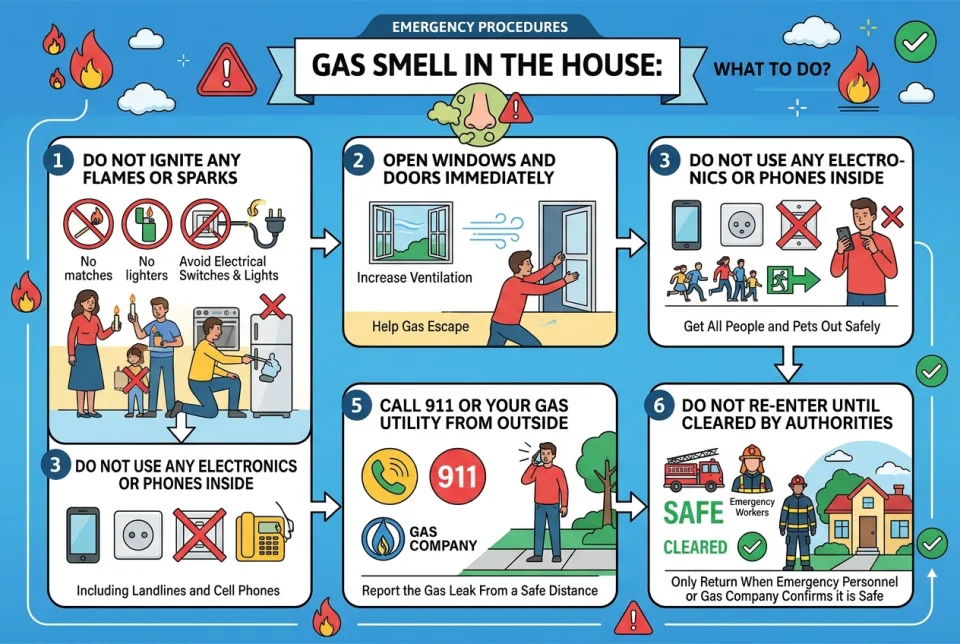
Quick answer
4 steps — read this before anything else
-
1
Do not turn on or off any electrical switches, lights, or appliances, and do not use your phone inside.
-
2
Get everyone out of the building immediately, leaving doors open behind you if possible.
-
3
From outside or a neighbor's home, call your gas emergency service or 911 (or local emergency number).
-
4
Do not re-enter until emergency responders say it is safe.
Warning
Gas leaks can cause explosion or fire. Do not create sparks, do not use electrical switches or phones inside, and evacuate immediately.
Important — please read
This content is general educational and informational only, and is not a substitute for professional medical advice, diagnosis or treatment. Always seek the advice of a qualified health provider with any questions you may have about a medical condition. Never disregard or delay seeking professional medical care because of something you read here. In an emergency or life-threatening situation, call your local emergency services (police, fire or ambulance) immediately.
If you smell gas inside your home, treat it as a potential emergency. Natural gas and propane are flammable, and a leak can lead to fire or explosion. The smell is usually added as a safety warning, so do not ignore it. Act quickly and calmly, and put safety first.
What to do first
- Do not touch electrical switches. Do not turn lights on or off, unplug appliances, or use doorbells, garage door openers, or any device that could create a spark.
- Do not use your phone inside. Cell phones and landlines can spark. Leave the building first, then call.
- Get everyone out immediately. Help children, older adults, and pets. Leave doors open behind you if you can do so safely, to help ventilate.
- Do not light matches, lighters, or candles. Do not smoke or vape.
- From a safe distance (outside, away from the building, or at a neighbor's), call your gas utility's emergency line or 911. If you are unsure who to call, call 911 and tell them you smell gas.
- Do not re-enter until emergency responders tell you it is safe. If you must shut off the gas, only do so if you can reach the valve safely without creating sparks, and follow your utility's instructions.
What NOT to do
- Do not try to find the leak yourself with a flame or by sniffing around appliances.
- Do not turn appliances or electronics on or off, including exhaust fans or range hoods.
- Do not assume the smell will go away on its own.
- Do not use elevators; use stairs.
- Do not re-enter to retrieve belongings.
When to call for help
Call emergency services immediately if you smell gas, hear a hissing sound, or see damaged gas lines. If anyone has symptoms such as headache, dizziness, nausea, or confusion, call 911 and mention possible gas exposure. Move to fresh air right away.
What to monitor
Once outside, stay clear of the building. Do not smoke or use lighters. Keep others away. Wait for emergency responders to give the all-clear. If you have a gas detector, follow its instructions, but never delay evacuation to check it.
How to prevent it
- Have gas appliances and lines inspected regularly by a qualified professional.
- Install a gas detector that meets safety standards, and test it as recommended.
- Know where your gas shutoff valve is and how to turn it off, but only do so in an emergency if instructed.
- Keep flammable items away from gas appliances.
After the emergency is resolved, ask the utility or a qualified technician to find and fix the leak before you use gas again. This is general information and not a substitute for professional advice. In an emergency, always call your local emergency services.
Sources & references
Spotted an error? Report it — we correct factual mistakes promptly.
Read next
Short circuit at home: what to do?
A short circuit can cause sparks, smoke, or fire. Learn the safe steps to take immediately and how to prevent future hazards.
Water heater leaking from the bottom: what to do?
A leaking water heater can cause water damage or become dangerous. Learn how to shut off the water and power safely, what the leak might mean, and when to call a professional.
Christmas lights trip the fuse: what to do?
When your holiday lights keep tripping the fuse, it is a sign of overload or a fault. Learn how to reset safely, find the cause, and prevent a fire hazard.
Heating oil smell in the house: what to do?
A heating oil smell indoors can signal a leak, spill, or faulty equipment. Act quickly to protect your health and property.
Related handy tools
Checklists, decision guides, scenarios and quizzes for the same situation.