Short circuit at home: what to do?
A short circuit can cause sparks, smoke, or fire. Learn the safe steps to take immediately and how to prevent future hazards.
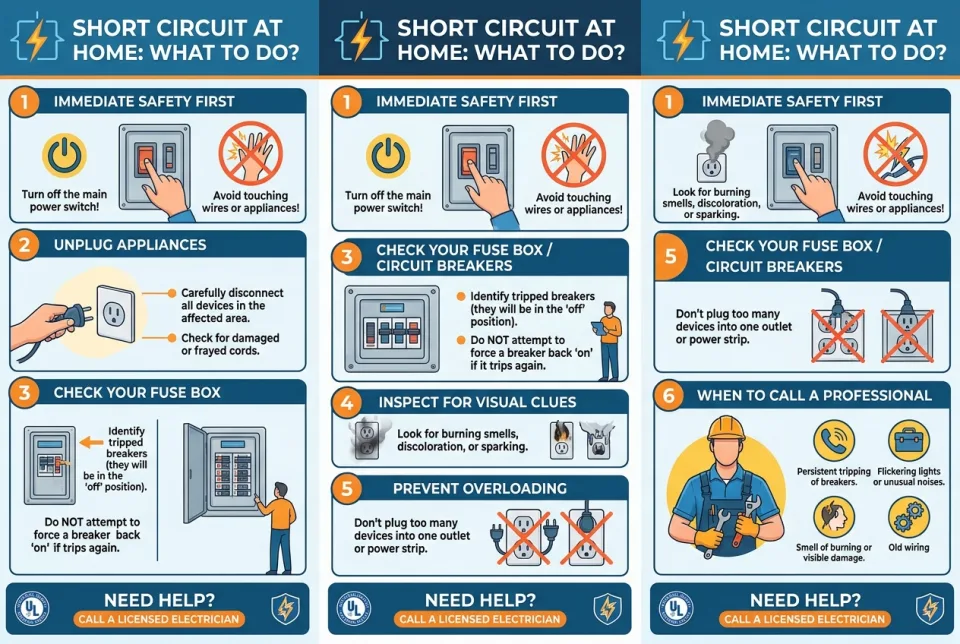
Quick answer
4 steps — read this before anything else
-
1
Turn off the main power at the breaker panel if it is safe to reach.
-
2
Do not touch the affected outlet, appliance, or wiring.
-
3
If you see fire or smoke, evacuate and call emergency services.
-
4
Have a qualified electrician inspect the circuit before using it again.
Warning
If there is fire, smoke, or someone has been shocked, call emergency services immediately. Do not touch damaged wiring or use water on an electrical fire.
Important — please read
This content is general educational and informational only, and is not a substitute for professional medical advice, diagnosis or treatment. Always seek the advice of a qualified health provider with any questions you may have about a medical condition. Never disregard or delay seeking professional medical care because of something you read here. In an emergency or life-threatening situation, call your local emergency services (police, fire or ambulance) immediately.
A short circuit happens when electrical current takes an unintended path with very little resistance, producing a sudden surge of heat and sparks. It can damage wiring, start a fire, or cause electric shock. Knowing what to do in the first few seconds can prevent injury and property damage.
Emergency warning
If you see flames, heavy smoke, or smell burning, treat it as a fire emergency. Leave the building immediately and call your local emergency services from a safe location. Do not try to fight the fire yourself unless it is small and you are trained to use a fire extinguisher.
What to do first
- Stay calm and keep your distance. Do not touch the outlet, switch, appliance, or any person who may be in contact with the electrical source.
- Turn off the power at the main breaker if you can do so safely and without touching anything wet or damaged. If the panel is in a flooded area or you must step in water to reach it, do not attempt it.
- Unplug the appliance only if the plug is undamaged and you can do so without touching metal parts. If there is any doubt, leave it alone.
- Check for smoke or fire. If you see or smell smoke, evacuate everyone and call emergency services.
- Call a qualified electrician. Do not reset the breaker until the cause has been found and fixed.
What NOT to do
- Do not touch the device or wiring with bare hands, especially if you are standing on a wet floor.
- Do not use water on an electrical fire. Water conducts electricity and can cause shock or spread the fire.
- Do not reset the breaker repeatedly. If it trips again, there is a serious fault.
- Do not ignore a burning smell or scorch marks. They indicate a hazard that needs professional attention.
- Do not attempt electrical repairs yourself unless you are qualified.
When to call for help
Call emergency services immediately if there is fire, smoke, or someone has been shocked and is unresponsive or confused. If the person is conscious but has burns or feels unwell, seek medical attention. For any electrical damage, contact a licensed electrician.
What to monitor
After the power is off, watch for any signs of fire in walls or ceilings, such as discoloration or a hot spot. If you suspect hidden damage, keep the power off and have an electrician inspect the entire circuit.
How to prevent short circuits
- Have your wiring inspected periodically by a licensed electrician, especially in older homes.
- Do not overload outlets or use damaged extension cords.
- Keep electrical devices away from water.
- Install ground fault circuit interrupters (GFCIs) in kitchens, bathrooms, and outdoor areas.
- Replace frayed or cracked cords immediately.
After a short circuit, the most important step is to have a professional verify that the circuit is safe before restoring power. Never take chances with electricity.
This is general information and not a substitute for professional electrical or medical advice. In an emergency, call your local emergency services.
Spotted an error? Report it — we correct factual mistakes promptly.
Read next
Christmas lights trip the fuse: what to do?
When your holiday lights keep tripping the fuse, it is a sign of overload or a fault. Learn how to reset safely, find the cause, and prevent a fire hazard.
Heating oil smell in the house: what to do?
A heating oil smell indoors can signal a leak, spill, or faulty equipment. Act quickly to protect your health and property.
Outlet stopped working: what to do?
A dead outlet can be a simple fix or a sign of a serious electrical hazard. Follow these safe steps to diagnose the problem without risking shock or fire.
Lights flickering in the house: what to do?
Flickering lights can signal anything from a loose bulb to a dangerous wiring fault. Learn how to assess the risk safely and when to call a professional.
Related handy tools
Checklists, decision guides, scenarios and quizzes for the same situation.