Power outage: what to do?
A power outage can disrupt lighting, heating, and communication. Stay safe and comfortable with these steps.
Quick answer
5 steps — read this before anything else
-
1
Check if neighbors have power to determine if it's a local or widespread outage.
-
2
Report the outage to your utility company using a phone or mobile app.
-
3
Turn off or unplug sensitive electronics to prevent damage from power surges.
-
4
Use flashlights instead of candles to reduce fire risk.
-
5
Keep refrigerator and freezer doors closed to preserve food.
Warning
Never use candles for light, run generators indoors, or touch downed power lines. These can cause fires, carbon monoxide poisoning, or electrocution.
Important — please read
This content is general educational and informational only, and is not a substitute for professional medical advice, diagnosis or treatment. Always seek the advice of a qualified health provider with any questions you may have about a medical condition. Never disregard or delay seeking professional medical care because of something you read here. In an emergency or life-threatening situation, call your local emergency services (police, fire or ambulance) immediately.
A power outage can happen unexpectedly due to storms, equipment failure, or other reasons. While most outages are brief, some can last for hours or even days. Knowing what to do can help you stay safe and comfortable.
What is happening
When the power goes out, your home loses electricity, affecting lights, appliances, heating or cooling systems, and possibly water supply if you rely on an electric pump. The cause could be a downed power line, a blown transformer, or a grid-wide issue. Your first step is to determine the scope of the outage.
Emergency warning
If you see downed power lines or smell gas, call 911 or your local emergency services immediately. Stay far away from downed lines and never touch them.
What to do first
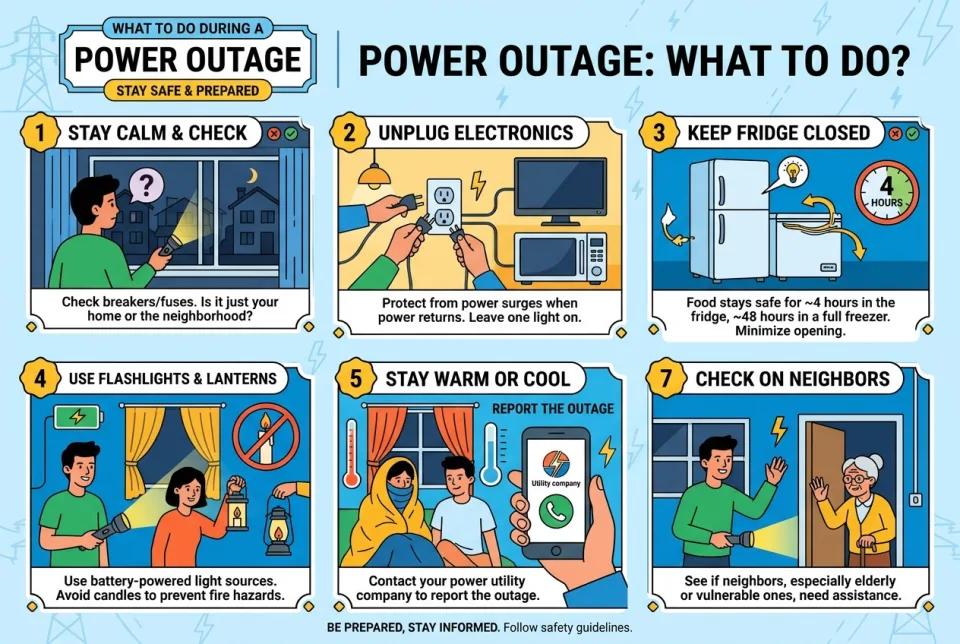
- Check your surroundings: Look outside to see if neighbors have power. If only your home is dark, check your circuit breaker panel for tripped switches. If the whole area is dark, it's likely a wider outage.
- Report the outage: Contact your utility company to report it. Use a cell phone or a landline (if it works) and have your account number ready.
- Turn off or unplug electronics: To avoid damage from a power surge when electricity returns, unplug sensitive devices like computers, TVs, and chargers. Leave one light on so you know when power is restored.
- Use safe lighting: Use flashlights or battery-powered lanterns. Avoid candles due to fire risk.
- Keep food safe: Keep refrigerator and freezer doors closed as much as possible. A closed refrigerator can keep food cold for about 4 hours; a full freezer for about 48 hours. If the outage lasts longer, consider using a cooler with ice.
What NOT to do
- Do not use candles for light; they are a major fire hazard.
- Do not run generators indoors or in attached garages. Carbon monoxide from generators is deadly and odorless. Only use them outdoors, away from windows and doors.
- Do not open the freezer or refrigerator unnecessarily; you'll let the cold air out.
- Do not touch downed power lines or anything in contact with them. Call the utility company and emergency services.
- Do not use your gas stove to heat your home; it can cause carbon monoxide buildup.
When to call for help
Call 911 if you see a downed power line, smell gas, or if someone is in danger. If you have a medical condition that requires electricity (e.g., home dialysis, oxygen concentrator), have a plan to relocate to a safe location with power. Contact your local emergency management office for information on warming or cooling centers if needed.
What to monitor
Keep an eye on the temperature inside your home. If it's extremely hot or cold, consider going to a shelter or a friend's house. Monitor local news or the utility company's website for updates on restoration. Use a battery-powered radio or your phone if cell service is available.
How to prevent it
Prepare an emergency kit with flashlights, batteries, a first aid kit, water, and non-perishable food. Consider installing a backup generator (professionally installed) or a battery backup for essential devices. Keep your freezer full to maintain temperature longer. Trim trees near power lines to prevent storm damage.
Stay calm and follow these steps to stay safe during a power outage. For more information, refer to official sources like Ready.gov or your local utility company.
This is general information and not a substitute for professional advice. In an emergency, call your local emergency services.
Sources & references
Spotted an error? Report it — we correct factual mistakes promptly.
Read next
Boiler pressure too low or too high: what to do?
Boiler pressure problems can stop your heating or damage the system. Learn safe steps to diagnose and correct low or high pressure, and when to call a professional.
Short circuit at home: what to do?
A short circuit can cause sparks, smoke, or fire. Learn the safe steps to take immediately and how to prevent future hazards.
Christmas lights trip the fuse: what to do?
When your holiday lights keep tripping the fuse, it is a sign of overload or a fault. Learn how to reset safely, find the cause, and prevent a fire hazard.
Power surge during a storm: what to do?
A power surge can damage electronics and start fires. Learn how to stay safe during and after a surge, and how to protect your home.
Related handy tools
Checklists, decision guides, scenarios and quizzes for the same situation.