Water heater leaking from the bottom: what to do?
A leaking water heater can cause water damage or become dangerous. Learn how to shut off the water and power safely, what the leak might mean, and when to call a professional.
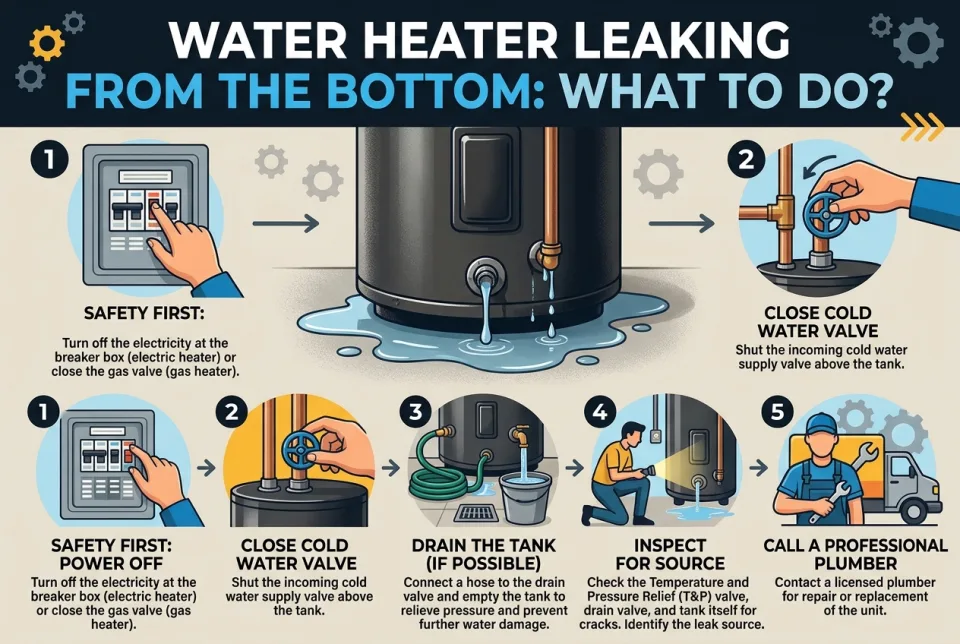
Quick answer
5 steps — read this before anything else
-
1
Shut off the water supply to the heater (turn the valve on the cold inlet pipe clockwise).
-
2
Turn off the power: flip the breaker for electric units or set the gas valve to 'pilot' or 'off' for gas units.
-
3
If water is near electrical outlets or the breaker panel, do not touch anything electrical; call an electrician or emergency services.
-
4
Place a bucket or towels to contain the leak and move valuables away.
-
5
Call a licensed plumber to inspect and repair the heater.
Warning
Water and electricity can cause fatal shock. If water is near electrical components, do not touch anything electrical; call emergency services.
A water heater leaking from the bottom is a common problem that can range from a minor nuisance to a serious hazard. The leak might come from a loose drain valve, a failed pressure relief valve, or a corroded tank. Because water and electricity or gas can be a dangerous combination, it is important to act quickly and safely.
What is happening
Water heaters have several potential leak points at the bottom: the drain valve, the temperature and pressure relief (TPR) valve, the inlet and outlet connections, and the tank itself. A leak from the tank usually means internal corrosion and often requires replacement. Leaks from valves or connections may be repairable.
Emergency warning
If water is pooling near electrical outlets, the breaker panel, or the heater's electrical components, do not touch anything electrical. Call your local emergency services or a licensed electrician immediately. If you smell gas, leave the area and call your gas utility or emergency services from a safe location.
What to do first
- Shut off the water supply. Locate the cold water inlet pipe on top of the heater and turn the valve clockwise until it stops. If there is no valve, turn off the main water supply to the house.
- Turn off the power. For an electric heater, switch off the circuit breaker that supplies the heater. For a gas heater, turn the gas control knob to 'pilot' or 'off' (do not turn it further).
- Contain the leak. Place buckets or towels under the leak and move nearby items away to prevent water damage.
- Open a hot water tap. This relieves pressure and helps stop the leak temporarily.
- Call a licensed plumber. Do not attempt to repair a leaking tank yourself; a professional can diagnose the source and advise on repair or replacement.
What NOT to do
- Do not ignore the leak; it can cause structural damage, mold, or electrical hazards.
- Do not attempt to weld or patch a corroded tank; it is unsafe and usually ineffective.
- Do not stand in water while operating electrical switches or breakers.
- Do not tamper with the TPR valve or cap it; it is a critical safety device.
- Do not turn the gas valve to 'on' if you smell gas; leave it off and call for help.
When to call for help
Call a plumber immediately if the leak is from the tank itself, if water is flowing steadily, or if you cannot stop the water supply. Call emergency services if there is any risk of electrical shock or a gas leak.
What to monitor
After shutting off the water and power, check for water spreading to other areas. Watch for signs of mold or musty odors in the coming days. If the heater is gas, do not relight the pilot until a professional has inspected it.
How to prevent it
- Have your water heater serviced annually by a qualified technician.
- Test the TPR valve yearly by lifting the lever and letting it snap back (if comfortable doing so).
- Install a drip pan under the heater with a drain line to a safe location.
- Consider replacing a tank that is over 10 years old or shows signs of rust.
Acting quickly can minimize damage. If you are unsure, call a licensed plumber for guidance. This is general information and not a substitute for professional advice.
Spotted an error? Report it — we correct factual mistakes promptly.
Read next
What Should You Do If Your Home Loses Water? 8 Things to Check and Prepare For
A sudden loss of water at home can be alarming. Learn the 8 key checks and preparations to handle it safely and efficiently.
What Should You Do If Your Home Loses Water?
A sudden loss of water at home can be caused by a burst pipe, a frozen line, a municipal outage, or a problem with your own plumbing. Here is a calm, step-by-step plan to check the right things and protect your home.
Water heater no hot water: what to do?
When your water heater stops making hot water, follow these steps to diagnose the problem safely. Learn when to call a professional and how to avoid dangerous mistakes.
Kitchen tap dripping constantly: what to do?
A dripping kitchen tap wastes water and can damage your sink area. Learn how to diagnose and fix common causes safely.
Related handy tools
Checklists, decision guides, scenarios and quizzes for the same situation.