Heating oil smell in the house: what to do?
A heating oil smell indoors can signal a leak, spill, or faulty equipment. Act quickly to protect your health and property.
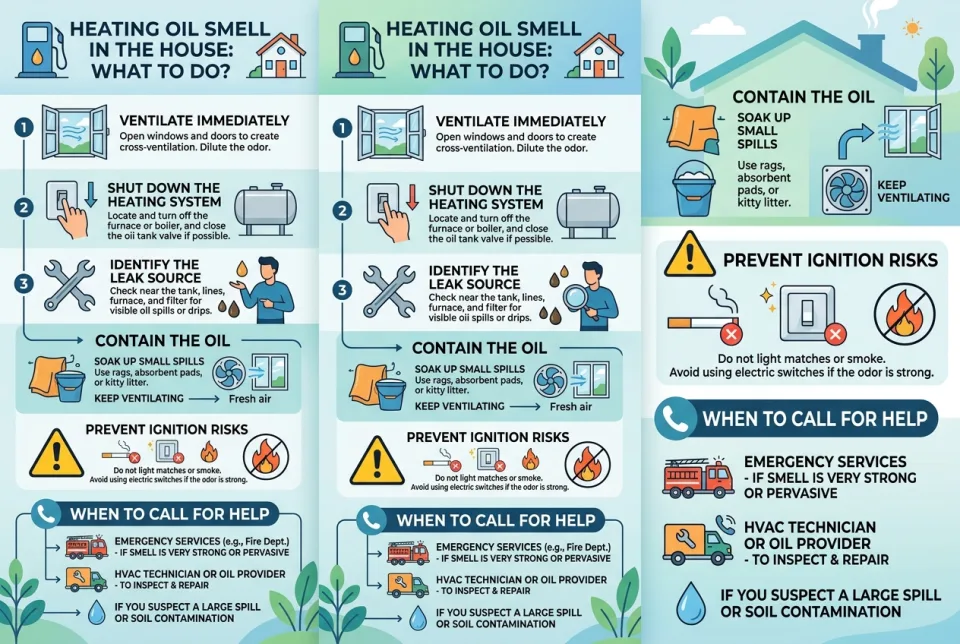
Quick answer
5 steps — read this before anything else
-
1
Evacuate everyone, including pets, and move to fresh air.
-
2
Call your heating oil provider or a qualified technician immediately.
-
3
Do not smoke, light flames, or operate electrical switches.
-
4
If you feel dizzy, nauseous, or short of breath, call emergency services.
-
5
Ventilate only if safe to do so, but avoid spreading fumes.
Warning
Heating oil is flammable and its vapors can be harmful. Do not ignite flames or operate electrical switches if you smell oil. Evacuate and call for help.
Important — please read
This content is general educational and informational only, and is not a substitute for professional medical advice, diagnosis or treatment. Always seek the advice of a qualified health provider with any questions you may have about a medical condition. Never disregard or delay seeking professional medical care because of something you read here. In an emergency or life-threatening situation, call your local emergency services (police, fire or ambulance) immediately.
A heating oil smell in your home is not something to ignore. Heating oil (also called fuel oil) is used in furnaces and boilers, and its distinct oily odor can indicate a leak, spill, or combustion problem. Even small amounts can irritate your eyes, nose, and throat, and prolonged exposure may cause headaches or dizziness. Because heating oil is flammable, any leak also poses a fire risk. This guide tells you what to do first, what to avoid, and when to get professional help.
What is happening?
Heating oil is a refined petroleum product. The smell you notice comes from volatile compounds evaporating from the oil. Common sources include a leak in the tank, fuel line, or connections; a spill during delivery; a faulty burner that is not burning fuel efficiently; or a clogged filter or nozzle. In some cases, the smell may come from a neighbor's tank or from exhaust fumes entering your home.
Emergency warning
If you smell heating oil strongly, or if you see a sheen on water or soil, treat it as a potential emergency. Heating oil vapors can be harmful, and the fuel is combustible. Do not ignore the smell or assume it will go away.
What to do first
- Evacuate. Get everyone, including pets, out of the house and into fresh air. Do not stop to gather belongings.
- Call for help. From a safe location, call your heating oil supplier or a licensed heating technician. If you cannot reach them, call the fire department using the local emergency number.
- Eliminate ignition sources. Do not smoke, use lighters, or strike matches. Do not turn on or off electrical switches, appliances, or lights. Do not use your phone inside the affected area.
- Ventilate only if safe. If the smell is faint and you are certain there is no major leak, open windows and doors to let fresh air in. But if the smell is strong or you see a spill, leave the house and let professionals handle ventilation.
- Check for symptoms. If anyone experiences dizziness, nausea, headache, or difficulty breathing, call emergency services immediately.
What NOT to do
- Do not try to find or fix the leak yourself. Heating oil systems require professional repair.
- Do not use electrical devices, including fans, to ventilate if you suspect a major leak or spill.
- Do not pour water on a heating oil spill; it can spread the oil and contaminate water sources.
- Do not ignore a persistent smell, even if it seems mild. Small leaks can worsen over time.
- Do not re-enter the house until a professional has declared it safe.
When to call for help
Call a professional heating technician or your oil supplier if you notice any of the following: a strong oil odor that persists, visible oil stains or sheen near the tank or lines, a leaking tank, or a burner that is not working properly. Call emergency services if you see a large spill, if the smell is overwhelming, or if anyone has symptoms like dizziness, confusion, or breathing difficulty.
What to monitor
After the immediate danger is addressed, monitor for recurring smells, especially after oil deliveries or when the heating system starts up. Keep an eye on your oil tank and lines for signs of corrosion, cracks, or wet spots. Also watch for symptoms in family members, such as headaches or nausea, which may indicate ongoing exposure.
How to prevent it
Regular maintenance is key. Have your heating system inspected and serviced annually by a qualified technician. Check your oil tank and fuel lines for signs of wear, and consider installing a leak detection device. During oil deliveries, ensure the delivery person has clear access and that the tank is properly vented. Never store flammable materials near the heating system.
If you smell heating oil, act promptly: evacuate, call for professional help, and avoid ignition sources. Your safety and the safety of your family come first.
This is general information and not a substitute for professional advice. In an emergency, call your local emergency services immediately.
Sources & references
Spotted an error? Report it — we correct factual mistakes promptly.
Read next
What to Do If Your Clothes Smell Bad After Washing?
Clothes that smell musty or sour after washing usually mean detergent residue, a dirty machine, or slow drying. Here are 8 practical tricks to fix it.
What Should You Do If Your Oven Stops Heating? 8 Things to Check First
When your oven stops heating, a few simple checks can often solve the problem. Learn 8 things to check before calling a professional.
What to Do If Your Oven Stops Heating: 8 Things to Check First
When your oven stops heating, a few simple checks can often solve the problem before you call a repair service. Here are eight things to check, in order, to get your oven working again safely.
Burned socket smell in the wall: what to do?
A burning smell from a wall socket is a serious fire hazard. Act quickly to cut power and get professional help.
Related handy tools
Checklists, decision guides, scenarios and quizzes for the same situation.