Power cut in Morocco: what to do?
A power cut in Morocco can be disruptive, but with the right steps you can stay safe and comfortable. Learn what to do when the lights go out.
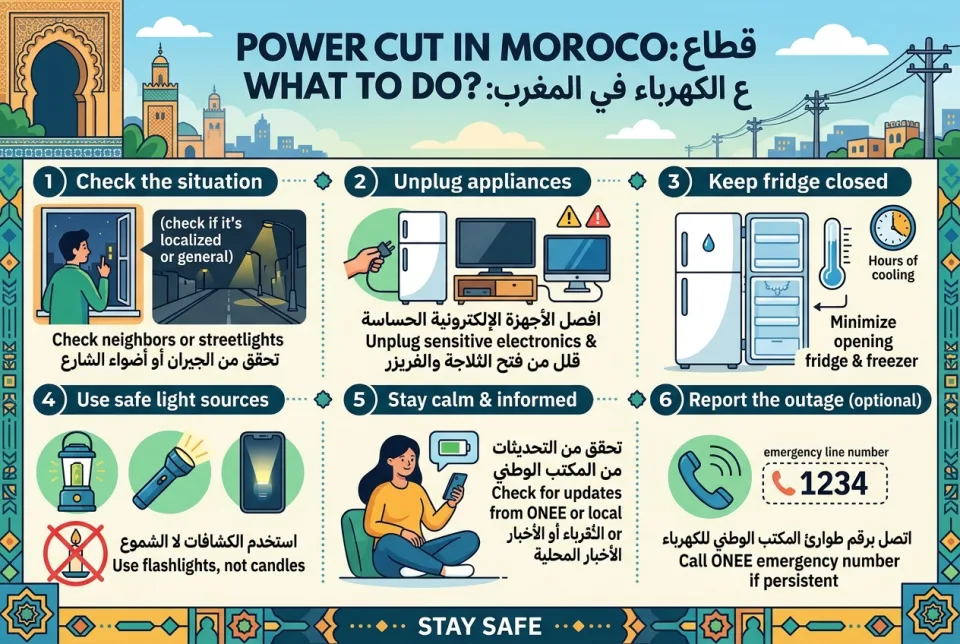
Quick answer
5 steps — read this before anything else
-
1
Stay calm and use a flashlight or phone light instead of candles.
-
2
Check if your neighbors also have power to determine if it's a local or area-wide outage.
-
3
Unplug sensitive electronics to protect them from surges when power returns.
-
4
Keep your refrigerator and freezer closed to preserve food.
-
5
Contact your local electricity provider if the outage lasts longer than a few hours.
Warning
Never use candles or open flames for light during a power cut due to fire risk. Never run a generator indoors or in an enclosed space; carbon monoxide can be fatal.
Power cuts can happen anywhere, and Morocco is no exception. Whether due to grid issues, weather, or maintenance, being prepared helps you handle the situation safely and with minimal disruption.
What is happening
A power cut means your home has lost electricity. This could be due to a problem with the national grid, a local transformer, or even a tripped circuit breaker in your home. The first step is to determine the scope of the outage.
What to do first
- Check your surroundings: Look out the window to see if neighboring buildings are also dark. If only your home is affected, check your circuit breaker panel. If the main switch has tripped, reset it once. If it trips again, call an electrician.
- Use safe lighting: Use a flashlight or your phone's flashlight. Avoid candles due to fire risk.
- Protect your appliances: Unplug sensitive electronics like computers and TVs to prevent damage from power surges when electricity returns. Keep your refrigerator and freezer closed to maintain temperature.
- Stay informed: If you have a battery-powered radio or a phone with internet, check local news or your electricity provider's website for updates.
- Report the outage: If the outage seems widespread or lasts more than a few hours, contact your local electricity provider. In Morocco, the main provider is ONEE (Office National de l'Electricité et de l'Eau Potable), but in some areas, private companies manage distribution.
What NOT to do
- Do not use candles or open flames for light; they pose a fire hazard.
- Do not open your refrigerator or freezer unnecessarily; keep them closed to preserve food.
- Do not touch electrical outlets or appliances with wet hands.
- Do not attempt to repair electrical equipment yourself unless you are qualified.
- Do not use a generator indoors; carbon monoxide is deadly.
When to call for help
Call your electricity provider if the outage is area-wide and lasts more than a few hours. If you suspect a downed power line, stay away and call the emergency services immediately. In case of fire or medical emergency, call the local emergency number (in Morocco, 15 for medical emergencies, 19 for police, 15 for fire brigade).
What to monitor
- Food safety: A refrigerator keeps food cold for about 4 hours if unopened; a full freezer for about 48 hours. Discard perishable food that has been above 4°C (40°F) for more than 2 hours.
- Vulnerable individuals: Check on elderly neighbors or those with medical equipment that requires power.
- Battery levels: Keep your phone charged for emergencies; consider a power bank.
How to prevent it
While you can't prevent grid outages, you can prepare: keep flashlights, batteries, and a battery-powered radio on hand. Consider a surge protector for electronics. If outages are frequent, a small UPS for essential devices or a portable power station can help. Ensure you have a safe alternative for heating or cooking that doesn't rely on electricity.
Stay calm, stay safe, and wait for updates. Most outages are resolved within a few hours. If you have concerns about medical equipment or safety, contact local authorities.
This information is for general guidance. Always follow instructions from local authorities and your electricity provider.
Sources & references
Spotted an error? Report it — we correct factual mistakes promptly.
Read next
Power surge during a storm: what to do?
A power surge can damage electronics and start fires. Learn how to stay safe during and after a surge, and how to protect your home.
Heating failure in winter: what to do?
When your heating stops in freezing weather, act quickly to stay warm and prevent pipes from bursting. Follow these steps to protect your home and health.
Overheating electrical outlet: what to do?
An overheating outlet can be a sign of a serious electrical hazard. Learn the safe steps to take and when to call for help.
Gas smell in the house: what to do?
A gas smell indoors can signal a dangerous leak. Act fast: avoid flames and sparks, get everyone out, and call the gas emergency line from a safe distance.
Related handy tools
Checklists, decision guides, scenarios and quizzes for the same situation.