Fake workers knocking at your door: spotting the scam
Door-to-door scammers pose as utility workers, roofers, or city inspectors to gain entry or pressure you into paying for fake services. Learn how to verify them and stay safe.
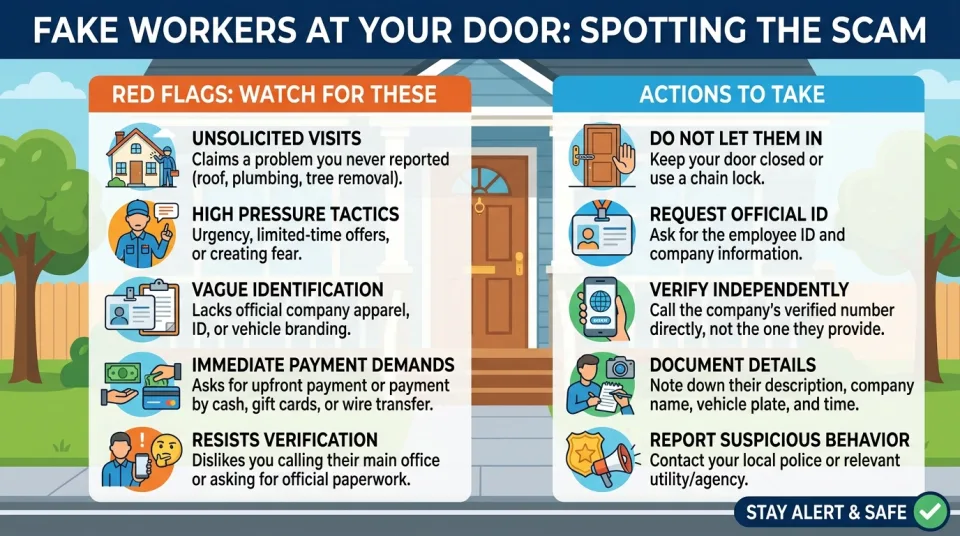
Quick answer
4 steps — read this before anything else
-
1
Do not open the door to anyone you did not invite; speak through the door or a window.
-
2
Ask for a company ID and a phone number, then call the company using a number you look up yourself.
-
3
Never pay cash or sign anything on the spot, and never let an unverified person inside.
-
4
If you feel threatened or they refuse to leave, call your local emergency services.
Warning
Never let an unverified person into your home. If someone tries to force entry or refuses to leave, call your local emergency services immediately.
Someone knocks and claims to be from the water company, the city, a roofing contractor, or a utility. They may say there is an emergency, a leak, or a mandatory inspection. Sometimes they wear a uniform or carry a clipboard. The goal is often to get inside your home, pressure you into paying for unnecessary work, or distract you while an accomplice enters. Knowing how to verify and respond keeps you in control.
What is happening
Fake-worker scams rely on urgency and authority. The person may claim there is a gas leak, a burst pipe, or a city-mandated inspection that requires immediate entry. Others offer unsolicited work such as roof repairs, driveway sealing, or tree trimming, often after a storm. They may demand cash up front, offer a "today only" discount, or ask to "check" something inside. Real utility and city workers follow clear procedures, and legitimate contractors do not pressure you at the door.
What to do first
- Do not open the door. Speak through the door or a window. Keep the door locked and the chain on if you have one.
- Ask for identification and a company phone number. A real worker will have a photo ID and a work order. Do not accept a phone number they give you as proof; look up the company or agency number yourself.
- Call to verify. Use a number from your own bill, the official website, or directory assistance. Ask the company if they sent someone to your address. If they did not, do not let the person in.
- If they claim an emergency, call the utility or your local emergency services yourself. Do not rely on their word. Real emergencies are handled by real responders.
- Ask them to leave and come back by appointment. Legitimate workers will accept this. If they refuse or become aggressive, call your local emergency services.
What NOT to do
- Do not let an unverified person inside, even "just to check" something.
- Do not pay cash, sign a contract, or agree to work on the spot.
- Do not leave the door unlocked or step outside leaving the door open.
- Do not share personal information such as your name, age, or whether you live alone.
- Do not be embarrassed to say no or to close the door. You owe no explanation.
When to call for help
Call your local emergency services if the person tries to force the door, refuses to leave, threatens you, or if you see them going to neighbors' doors in a way that seems threatening. If they leave, report the incident to your local police non-emergency line and to the company they claimed to represent. This helps warn others.
What to monitor
After the encounter, watch for follow-up calls or visits that reference the incident, and check that no one has tampered with your meter, locks, or property. If you gave any information, be alert for unusual contacts.
How to prevent it
Keep doors locked even when home. Use a peephole or a video doorbell if you have one. Ask utility companies about their identification and appointment policies, and post a "no solicitors" sign if allowed. Warn neighbors, especially older adults, about the scam pattern.
If someone at your door cannot be verified, do not let them in. Verify independently, and call local emergency services if you feel unsafe.
Spotted an error? Report it — we correct factual mistakes promptly.
Read next
Card theft in the souk: what to do?
If your credit or debit card is stolen in a busy market, acting quickly can limit fraudulent charges. Here is a step-by-step guide to securing your accounts and reporting the theft.
Carbon monoxide detector alarm: what to do?
If your carbon monoxide detector sounds, treat it as an emergency: get everyone outside to fresh air and call for help. Learn the steps to take and mistakes to avoid.
Elderly parent living alone: safety setup
A practical, room-by-room safety setup for an older adult living alone, covering falls, emergencies, medication, and daily check-ins.
BBQ gas canister safety checks: what to do?
A step-by-step guide to safely checking your BBQ gas canister and connections, including leak testing and what to do if you smell gas.
Related handy tools
Checklists, decision guides, scenarios and quizzes for the same situation.